


Connecting Africa’s Skilled Professionals

 ReConnect Africa is a unique website and online magazine for the African professional in the Diaspora. Packed with
essential information about careers, business and jobs, ReConnect Africa keeps you connected to the best of Africa.
ReConnect Africa is a unique website and online magazine for the African professional in the Diaspora. Packed with
essential information about careers, business and jobs, ReConnect Africa keeps you connected to the best of Africa.




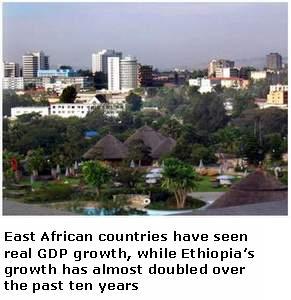 Growth across East African countries is bringing a wide range of opportunities for investors and the African diaspora
A recent forum sponsored by the London Chamber of Commerce and UK Trade & Investment highlighted the business and commercial opportunities on offer across East Africa today.
Chairing the event, John Small, Chief Executive of the Eastern Africa Association, underlined how perceptions of the African continent have now shifted from talk of aid to promoting economic development and growth.
"Africa has some of the fastest growing economies in the world," he said. "From oil and gas to agriculture – 60% of the land available for agriculture is in Africa – Africa is the last frontier."
Eastern African countries are beginning to make real progress and to move in a very positive direction, he added. The work being done to reduce tariffs within the East African Community will enable trade to be advanced, while the trade links between the Community and Ethiopia continue to grow. Opportunities for business are therefore not only restricted to one country but to the region. Four of the EAC countries are also a part of COMESA and inter-African trade is being increasingly recognised as the route to growth for these countries.
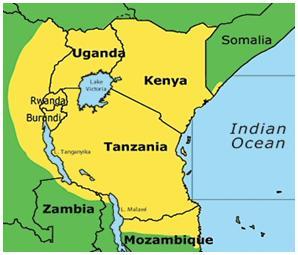
The East African Community is made up of five member states: Kenya, Uganda, Tanzania, Rwanda and Burundi. The Community enjoys customs union and a common market, while a harmonisation of the policies of member countries is underway.
Greg Gibson, head of UKTI's East African operations, set out the business case for the region, pointing out that over the past decade, sub-Saharan Africa's real GDP growth rate jumped to an annual average of 5.7%, up from 2.4% over the previous two decades.
Opportunities in East Africa, he said, come from all sectors and particularly from energy and power, tourism, oil and gas, ICT, banking and financial services, agriculture, construction, education and training, minerals and transportation and logistics. Kenya is seeing 200,000 tourists from the UK alone each year, with Uganda also getting a growing number of visitors. In Tanzania gas exploration is ongoing, with the gas find in Mozambique heightening interest in that country. The ICT sector has been revolutionised with the introduction of the new fibre optic cables and Kenya is aiming at becoming a financial services hub for the region. The country is also the largest exporter of tea in the world and exports over a billion roses each year.
The challenges for the region include poor infrastructure, with transportation a major problem. This offers opportunities for road, rail and airport construction as well as the spin-off activities from these. Although there is still a relatively high cost of doing business, and customs between the countries is slow, the EAC is working on improving cross-border transportation and streamlining business processes.
Despite these challenges, says Greg Gibson, "you need to be patient and you need to persevere."
In assessing the economic prospects for the region, Gregan Anderson of the business data analysis firm, Business Monitor, highlighted the strength of the emerging economies of the Far East and Africa in comparison with developed markets in Europe and North America.
In the coming years, emerging markets will vastly outperform developed states in terms of economic growth and sub-Saharan Africa will be among the world leaders, even relative to other emerging markets. In East Africa, he said, Uganda is likely to see the strongest growth, with its oil discovery "a game changer" for the country.
The East African countries have seen real GDP growth, while Ethiopia's growth has almost doubled over the past ten years. Private consumption will rise to over £200 million by the end of 2011, and an increased consumer customer base with greater purchasing power and rapidly growing populations all point to continued growth rates over the coming years.
 In Uganda, the country's agriculture-based economy has underpinned strong economic growth, averaging over 7% over the past decade, said Anderson.
Retail, construction, telecoms and tourism have all seen a massive expansion in recent years. Mobile phone subscriptions have gone up from 1.3 million in 2005 to 16.7 million in 2011. Tourist arrivals in Uganda have risen by nearly 100% since 2005 and will soon surpass one million. In 2011 tourism generated more than US$1 billion for the country.
Kenya, as the most developed economy in East Africa, has relatively deep financial markets, better transport links and more mature regulatory frameworks. The economy is dominated by agriculture (25% of GDP), transport and telecoms, trade and manufacturing. Further integration among East African nations will greatly benefit Kenya's banks, ports and overall economy.
The region is also likely to see strong growth in its population, with East African population growth rates expected to far exceed the global average between 2011 and 2021. Uganda's population is predicted to increase by 36%, while Kenya is expected to see a further 12.2 million people or 29% population growth.
Food insecurity is one of the weaknesses of the region, said Anderson, leading to price and currency volatility and inflationary pressures.
With emerging markets representing a huge opportunity for the future, sub-Saharan Africa is set to be a global leader in economic growth. Despite its challenges, and while political risks represent some degree of uncertainty, East Africa has immense potential, underpinned by economic diversity, growing populations, regional integration and rapid GDP growth.











 Keep yourself updated with our FREE newsletters now!