


Connecting Africa’s Skilled Professionals

 ReConnect Africa is a unique website and online magazine for the African professional in the Diaspora. Packed with
essential information about careers, business and jobs, ReConnect Africa keeps you connected to the best of Africa.
ReConnect Africa is a unique website and online magazine for the African professional in the Diaspora. Packed with
essential information about careers, business and jobs, ReConnect Africa keeps you connected to the best of Africa.




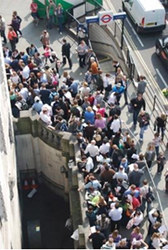 16,240 South Africans living abroad applied for and were granted permission for a special vote and, on April 15th, almost half of these voted in London.
As South Africa begins a new era in its political history, two South Africans living in London reflect on the significance of their vote that day.
 Twenty-five years ago, the crowds that gathered in Trafalgar Square to protest and demonstrate against apartheid South Africa played a major role in galvanising international opinion against apartheid and hastening its downfall.
Yesterday, South Africans gathered in their thousands in orderly queues to have their say in the future of the democratic South Africa in the same place that the demonstrators once stood.
With 7,427 South African voters marking their crosses in 12 hours, the South African High Commission was not only the largest voting station abroad but was also nearly twice the size of the largest one in South Africa – Joubert Park in Johannesburg, with between 3,000 to 4,000 voters, according to the Independent Electoral Commission (IEC).
I have never seen such a large group of South Africans behaving in such a subdued manner.
Perhaps it had something to do with being in the historic Trafalgar Square on an overcast – and sometimes wet – London Spring day.
Perhaps it had something to do with the tiny figure of Lord Nelson on his towering column peering out over Parliament Square where an animated statue of our own Nelson Mandela is flanked by the likes of Winston Churchill, Margaret Thatcher and General Jan Smuts, the only other South African in the Square.
Perhaps, it had to do with the fact that it was very early in the morning.
But I suspect it had more to do with the reverence of voting – the universal way for ordinary citizens to have a say in their country and the future.
They queued ten-deep across Trafalgar Square and the length of the facade of the iconic South Africa House.
It was a day on which South Africans filed onto South African soil in unprecedented numbers, thanks to a decision by the Constitutional Court – the cornerstone of South Africa's democracy – which required government to extend voting facilities to all South Africans abroad who are on the voters roll.
They waited quietly, patiently, reading the latest copy of The South African, chatting quietly about why they were in the UK, why they were voting, exchanging their memories, hopes and fears for their beloved country.
It also took me back to 1994 when I had felt so privileged to be part of the first election in which all South Africans were able to vote – most for the first time. The long queues snaked sometimes for kilometres and many South Africans got to know each other for the first time as they waited for hours to make their crosses.
Back then it was both a deeply moving, humbling and empowering experience.
And so it was again yesterday.
This time, the voters were mainly young, mainly white and all were united by the decision to have a say in their country and in choosing the next government.
It also took me back to the mid-1980's when I served as a correspondent for the South African morning group of newspapers – including the Rand Daily Mail and the Cape Times – when I covered almost constant demonstrations and protests by South African exiles and large numbers of committed members of the British public who played such a crucial role in ending apartheid.
Seldom in the history of freedom struggles has there been such a display of international solidarity by a nation as was the case with the British public's involvement in the Anti-Apartheid Movement.
Today photographic records of those protests are displayed on the walls of South Africa House and many famous faces are still recognisable – Thabo Mbeki, the late Harold Wilson, the late Archbishop Trevor Huddleston, Abdul Minty, Peter Hain, the alte Mike Terry and many more.
As I stood waiting and chatting to fellow South Africans, I was humbled that we would not be standing there voting in a democratic election in South Africa had it not been for the suffering and sacrifice of thousands of South Africans in resisting apartheid for all those years. Many gave their lives, many sacrificed family members and friends.
I was overcome by a deep humility tinged with pride.
 They say the early bird catches the fattest worm.
But my 3am start to the day has quite simply left me emotionally exhausted.
So I've decided to escape the friendly South Africans chatting away at Trafalgar Square about how long they have been here, where they work and how the economic climate has affected their lives and I've come to a spruce little coffee shop on the corner of William IV Street and St. Martin's Lane to gather my emotions.
Today when I rolled out of bed to prepare for an early morning live interview for the BBC World Service's Network Africa, I braved the chilly London breeze to which I have not yet acclimatised and joined thousands of South Africans in the winding queue that would eventually grant me my chance to vote in the 2009 national elections.
I thought that once I had made my mark, I would feel elated but instead I feel surprisingly emotional and nostalgic. It seems that between all the paper work, court applications and general fuss that led me to getting an opportunity to vote abroad, I truly underestimated the feeling that has now overcome me.
And as I sit a few inches from this big glass window and watch Londoners and tourists go about their way, I can't help but think of my home, South Africa; my sister who sent me a text message this morning to remind me to take both my identity documents as well as my passport to the High Commission, my grandmother's house in Monakgotla Drive, Dube, Soweto, a few kilometres from the historical Vilakazi Street where Nelson Mandela and Desmond Tutu once resided, the house filled with all of my childhood memories of South Africa in the eighties.
I think about my country's history and the sacrifices that have generously allowed me to be where I am right now... sipping coffee from a paper cup, a million miles away.
This morning when the radio presenter presumptuously asked me how I felt as an outsider voting in the South African election today, I wanted to tell him that I was the furthest thing from an outsider. I wanted to exclaim to the radio producers in their big foam earphones and to all the Africans around the world listening to the broadcast. I wanted to tell them how every single time I see a South African flag in the streets of London or on a Springbok jersey in the train, my heart jumps for joy.
I wanted to tell them how I prowl through the South African online newspapers to get an account of the daily news and how even though it just comes naturally when I meet up with some of my South African friends and our conversations are in Sesotho or Zulu, I feel closer than ever to my home. And that even though he considers me an outsider, I was filled with overwhelming pride when I saw South Africans from every corner of the United Kingdom come together to exercise their democratic right this morning.
I felt an immense amount of pride after holding my ballot paper in my hand and taking my time to go through every party name, taking a good look at the representative's picture alongside it, and finally making my mark on this historic day.
I think about the difference my vote will make to my country and there is that little tinkle in my heart that reminds me that there is much time to celebrate and truly be happy about today's occurrences. But for now, I only think about how I love my country with all of my heart.
Palesa Madumo is a consultant at the International Marketing Council of South Africa.








 Keep yourself updated with our FREE newsletters now!