


Connecting Africa’s Skilled Professionals

 ReConnect Africa is a unique website and online magazine for the African professional in the Diaspora. Packed with
essential information about careers, business and jobs, ReConnect Africa keeps you connected to the best of Africa.
ReConnect Africa is a unique website and online magazine for the African professional in the Diaspora. Packed with
essential information about careers, business and jobs, ReConnect Africa keeps you connected to the best of Africa.




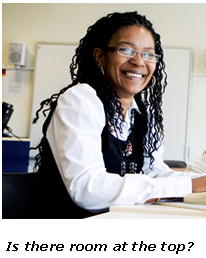 If 75% of corporate executives believe that having minorities in senior level positions helps promote new ideas and innovation, why do Black women make up only 1% of US corporate officers?
The findings of a new poll highlight how negative perceptions, the lack of strategic networking and the demands of work/life balance are holding Black American women back from the executive suite.
What's holding Black women in America back from making the top ranks in corporations? A poll commissioned by The Executive Leadership Council and conducted by Harris Interactive heard from 150 executives from a broad range of industries. What they had to say suggests that senior corporate executives really believe that it is important to their company’s success to have minorities in senior executive roles.
The findings from the survey – taken between November and December 2008 – showed that 75% of these executives believe that senior executives from minority groups are important in providing new ideas and innovation and better reflect the diversity of customers.
The poll, conducted immediately following the election of Barack Obama, occurred at a time when there was increased discussion of how the election of the first African-American President of the United States would impact opportunities for minorities seeking to move into the executive suite and on to corporate boards.
The findings showed that African-American women in particular face serious challenges in their climb up the corporate ladder.
The sample surveyed included respondents from companies with revenue of $1 billion and above annually. Respondents included CEOs, Chairmen/Executive Vice Presidents and Vice Presidents/Directors.
The findings showed that African-American women in particular face serious challenges in their climb up the corporate ladder. 31% of the surveyed executives attribute these challenges to weaker or less strategic networks available to African-American women.
The issue of capability – or the perception of it – featured strongly, with 24% citing inaccurate perceptions of African-American women's capabilities as slowing or preventing their rise up the ranks. 23% of respondents saw work/life balance demands as the third top barrier to executive success.
These findings came as little surprise to the survey commissioners.
"Frankly, the findings confirm what we found in our in-depth research completed earlier in 2008," said Carl Brooks, President and CEO of The Executive Leadership Council, the leading organization for the most senior level African-American executives in corporate America. Its Council members – more than 400 executives, one-third of them women –represent more than 280 Fortune 500 corporations.
The issue of capability – or the perception of it – featured strongly, with 24% citing inaccurate perceptions of African-American women's capabilities as slowing or preventing their rise up the ranks.
Founded in 1986, The Executive Leadership Council is an independent, non-profit corporation that provides African-American executives of major U.S. companies with a professional network and forum to offer perspective and direction on national and international business and public policy issues. It is the preeminent organization that recognizes the strengths, success, contributions, and impact of African-American corporate business leaders.
The organisation's earlier research, the Black Women Executives Research Initiative completed in 2008, was a year-long study of success factors and impediments for black women executives aspiring to the most senior positions in America's top companies.
That study examined success factors and impediments for black women executives as they aspire to the most senior positions in corporate America and included interviews with 76 black women executives, 18 CEOs, and 38 peers.
A number of The Executive Leadership Council (ELC) poll findings coincided with the earlier in-depth research, including:
 The issue of how Black women connect with their corporate superiors was also evident from the study.
"CEOs and black women executives seem to have a significant disconnect about how they view some of the behaviors and experiences of senior black corporate women," said Ancella Livers, Executive Director of the ELC's Institute for Leadership Development & Research.
One CEO was quoted as saying: "There is an issue whether black women have emphasized whether they have taken on the most challenging assignments, but are not getting credit for it and not getting the value for it. You want to anticipate what you want, and what you think is owed to you, and ask for it in advance."
This includes demanding constructive feedback to help women improve, something some respondents felt was lacking. As one of the black women executives interviewed said, "I didn't get feedback about why I wasn't considered for the General Manager role. I was given the feedback that 'this position is not for you' rather than hearing, 'this is what you need to do to become the GM.'"
When asked what major corporations can do to change the status quo and to increase the number of African-American female executives in their senior management teams, respondents offered a number of concrete suggestions.
Some of these changes included:
The detailed findings cover topics such as relationships, aspiration, feedback and coachability, experience leading to the executive suite, alignment of values, work/life balance, bias and other negative factors. The conclusion also provides a leadership framework for understanding what it takes to advance and discusses the implications for organizations and CEOs.
"Corporations need cultural change to attract African-American females and females in general."
Combined with its research, the Institute intends to use the survey results to finalize programs for senior and mid-level black women executives to help them strengthen strategic relationships with senior level men, build networks and increase visibility.
"Not only should senior executives cultivate more trusted and strategic relationships with high-potential black women executives, it is important for black women executives to have and execute detailed plans for advancement and demonstrate a passion for the values and culture of their companies," says Brooks.
"In spite of the barriers, many black women are skilled and ready to assume the responsibilities of the C-Suite. This work allows us to create a roadmap to help prepare mid-career black women who aspire to the highest levels of leadership in today’s corporations," said Dr. Livers.











 Keep yourself updated with our FREE newsletters now!