


Connecting Africa’s Skilled Professionals

 ReConnect Africa is a unique website and online magazine for the African professional in the Diaspora. Packed with
essential information about careers, business and jobs, ReConnect Africa keeps you connected to the best of Africa.
ReConnect Africa is a unique website and online magazine for the African professional in the Diaspora. Packed with
essential information about careers, business and jobs, ReConnect Africa keeps you connected to the best of Africa.




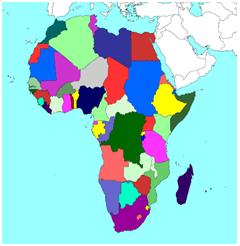 The 2012 Ibrahim Index of African Governance confirmed overall positive trends in governance on the continent, but revealed unfavourable shifts in some of Africa’s regional powerhouses
Africa has made considerable progress in recent years. New challenges arise, however, as the continent grapples with the question of translating material wealth into improved quality of life for citizens.
The Mo Ibrahim Foundation (MIF) invests in governance and leadership to catalyse Africa’s transformation. By providing tools and advocating for progressive leadership and responsible management, the Foundation works to bring about meaningful change in Africa.
The sixth Ibrahim Index of African Governance (IIAG), published late in 2012, revealed that governance in Africa has improved since 2000.
Established in 2007, the IIAG is the most comprehensive collection of quantitative data that provides an annual assessment of governance in every African country, with the exception of the Republic of Sudan and the Republic of South Sudan for which there are insufficient disaggregated data.
Compiled in partnership with experts from a number of African institutions, the IIAG provides a framework for citizens, public authorities and partners to assess the effective delivery of public goods and services. The IIAG provides a tool for current and future leadership and for all stakeholders to robustly assess policy outcomes. Data used in the compilation of the 2012 IIAG are from 2000 – 2011. The data therefore does not capture any possible progress in post-Arab Spring countries.
In the last 12 years, at the continental level, there have been improvements in 11 out the 14 sub-categories of the IIAG.
The largest improvements are shown in the sub-categories of Health, Rural Sector, and Gender, with all indicators showing improvements since 2000. At indicator level, of the 88 indicators included in the IIAG, the largest improvements appear in Cross-Border Tensions, Core International Human Rights Conventions, Legislation on Violence against Women, Ratio of External Debt Service to Exports, Digital Connectivity and Anti-Retroviral Treatment Provision.
However, while governance continues to improve in many countries, some of Africa’s regional powerhouses – Egypt, Kenya, Nigeria and South Africa – have shown unfavourable governance performance since 2006. Over the past six years, all four countries have declined in two of the four main IIAG categories – Safety & Rule of Law and Participation & Human Rights.
Each of these four countries deteriorated the most in the Participation sub-category, which assesses the extent to which citizens have the freedom to participate in the political process. South Africa and Kenya have also registered declines in Sustainable Economic Opportunity. And Nigeria, West Africa’s powerhouse, has for the first time this year fallen into the bottom ten governance performers on the continent.
Abdoulie Janneh, former Executive Secretary of the UN Economic Commission for Africa and Board Member of the Mo Ibrahim Foundation said: “Given the vast natural and human resources of these four regional powers, these governance results are a concern. Each of these countries plays a key role in the economic and political landscape of the continent. To continue to optimally play this role requires a sustained commitment to balanced and equitable governance.”
While West, Central and Southern Africa are slowly improving their overall governance scores, both North Africa and East Africa have registered declines. East Africa has now been overtaken by West Africa in the category of Sustainable Economic Opportunity. Two of the anchor countries of East Africa – Kenya and Uganda – have demonstrated deteriorations in Sustainable Economic Opportunity, dragging down the regional trends.
Overall, since 2006, the strongest continental performances are registered in the categories of Sustainable Economic Opportunity and Human Development, where there have been improvements in all sub-categories. Meanwhile, the categories of Safety & Rule of Law and Participation & Human Rights have registered declines, mainly due to regressions in three sub-categories: Rule of Law, Personal Safety and Rights.
This imbalance of governance performance between the four main categories of the IIAG was highlighted in the previous two editions of the IIAG, when Egypt, Libya and Tunisia stood out as cases in point. This characteristic, which appears across the continent, remains a concern.
Over the last six years, almost half (21) of the 52 African countries register increased imbalance between the four categories. The 2012 IIAG shows that five of the six most imbalanced countries belong to North Africa: Algeria, Egypt, Libya, Morocco and Tunisia. Not only does North Africa remain the most imbalanced region in Africa, it has also experienced the greatest regional governance deterioration since 2006. Contrary to the other four regions, North Africa is the only one that has deteriorated in the sub-categories of National Security, Public Management and Infrastructure.
Mo Ibrahim, Chair of the Mo Ibrahim Foundation said: “It is encouraging to note that the Millennium Development Goals have contributed to the improvement of all 52 countries in the Human Development category since 2000. But the post-MDG framework now has the potential to make similar improvements across the full package of goods and services that all citizens have the right to expect, and that governments have the responsibility to deliver.”
In all regions, the highest sub-category score in the Participation & Human Rights category was achieved in Gender. The notable exception is West Africa, which receives its lowest sub-category score in Gender. West Africa is underperforming in this core governance dimension in comparison to other Participation & Human Rights sub-categories.
Mary Robinson, former President of Ireland and Board Member of the Mo Ibrahim Foundation said: “Gender equality is a fundamental governance issue, as captured by the IIAG. It is not only a question of human rights. Africa’s women have the capacity to bring about remarkable change and therefore equity and equality between men and women is in the strategic interests of African leaders and governments.”
Over the last six years, Tanzania has climbed up the IIAG’s rankings, making it into the top ten for the first time. Angola, Liberia and Togo have left the IIAG’s group of the ten worst performers. They have been replaced by Eritrea, Guinea Bissau and Nigeria.
From 2000 to 2011, seven countries demonstrated a significant improvement in their overall governance score: Liberia, Angola, Sierra Leone, Rwanda, Congo, Democratic Republic of Congo and Zambia. One country, Madagascar, has significantly declined.
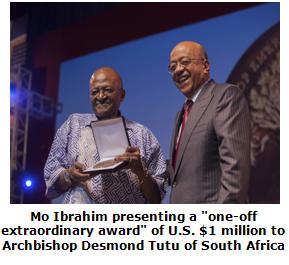 Significant improvements at category level have been registered in Safety & Rule of Law by Liberia and Sierra Leone, in Participation & Human Rights by Angola, Guinea and Liberia, in Sustainable Economic Opportunity by Angola, Liberia, Mauritius and Sierra Leone, and in Human Development by Niger.
Significant deteriorations have been registered in Safety & Rule of Law by Libya and Madagascar and in Participation & Human Rights by Madagascar.
The Mo Ibrahim Foundation continues to advocate addressing the paucity of African data and the importance of statistical autonomy within African countries.
Mo Ibrahim said: “Good governance is about harnessing a country’s resources to achieve the results any citizen living in the 21st century has a right to expect. One of Africa’s biggest leadership and governance challenges going forward is to master its own robust statistical system. Political sovereignty begins with data autonomy.”
In 2012, the Prize Committee of the Mo Ibrahim Foundation failed to select a winner for the Ibrahim Prize for Achievement in African Leadership. Established in 2007, the Ibrahim Prize celebrates excellence in African leadership and is an annual US$5 million award paid over 10 years and US$200,000 annually for life thereafter.
It was established to recognise to provide role models for the continent and enables Laureates to use their skills and experience at the continental level once they have left national office. It is awarded to a democratically elected former African Executive Head of State or Government who has left office in the previous three years; served her/his constitutionally mandated term; and demonstrated excellence in office.
Previous laureates, awarded for transformation of their countries and citizens’ lives during their tenure, are President Joaquim Chissano of Mozambique (2007), President Festus Mogae of Botswana (2008), President Pedro Pires of Cape Verde (2011) and President Nelson Mandela (Honorary).








 Keep yourself updated with our FREE newsletters now!