


Connecting Africa’s Skilled Professionals

 ReConnect Africa is a unique website and online magazine for the African professional in the Diaspora. Packed with
essential information about careers, business and jobs, ReConnect Africa keeps you connected to the best of Africa.
ReConnect Africa is a unique website and online magazine for the African professional in the Diaspora. Packed with
essential information about careers, business and jobs, ReConnect Africa keeps you connected to the best of Africa.




 Mark T. Jones of the Horn of Africa Business Association explains why media coverage of the Horn and East Africa is a case of looking through colanders
It has been fascinating to monitor the international media with regards to coverage of the Horn and East Africa over the last eighteen months.
Assuming that editors are even prepared to run a story at all, the stories have been depressingly predictable; ranging from stories of Somali pirates and militants, child soldiers and outbreaks of the Ebola virus in Uganda, and famine and inter-ethnic strive along the disputed border between South Sudan and its northern neighbour.
This frequently overlooked part of Africa is no stranger to climatic and geo-political woes, but equally, it is beginning to attract serious interest as a gateway into Africa and as an emerging economic zone in its own right. Negativity and well-worn stereotypes apart, there has been a frisson of interest from those interested in hydrocarbons.
Whilst thought of petro-dollars has excited some in the business press, the more discerning have noted serious investment in infrastructure along with signs of improved aviation links. IT, solar energy and livestock are all areas that look to have considerable potential.
When it comes to the Horn, rarely do journalists, analysts or policy makers see the whole picture; it is as if they appear to be looking at the region through colanders. For some, risk - both perceived and actual risk - frames every decision taken, while for others, much of East Africa and all of the Horn is viewed as a forbidding terra incognito.
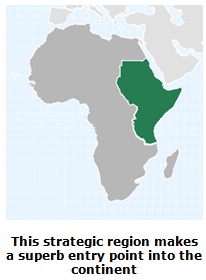
The Horn of Africa Business Association (HABA) is on a mission to address the knowledge deficit that currently exists. The Association works with the following countries: Djibouti, Eritrea, Ethiopia, Somalia and Somaliland (The Horn of Africa), Kenya, South Sudan, Sudan, and Uganda (The Greater Horn) as well as forging further business links with Burundi, Rwanda and Tanzania – a dozen countries that have a combined population approximately the size of the European Union.
Being in close proximity to Europe, the Middle East and South Asia, this strategic region makes a superb entry point into the continent. HABA is both a specialist consultancy and a membership organisation, one that is already assisting diaspora communities to harness their cultural knowledge, family connections and entrepreneurial drive to further develop the region.
Investment opportunities exist aplenty yet, equally, it is important that these are truly beneficial for local communities; not just in the short term, but for future generations. HABA feels that development must be responsible and, as such, is not afraid to voice its concerns about issues that blight lives and the environment.
 This principled and ethical stance is illustrated by the fact that as an organisation, HABA has been prepared to voice its concern about the fact that the landscape of the Horn of Africa is being denuded of trees in order to provide charcoal so that people in Saudi Arabia, the UAE and other Arab States can smoke shisha.
Whilst HABA has its headquarters in London, it is fortunate to have regional representatives in Kampala (Uganda), Nairobi (Kenya), Mogadishu (Somalia) and in Hargeisa (Somaliland), thus ensuring it has more extensive representation in the region than the UKTI.
One factor that no British citizen or UK registered company can afford to ignore is the implications arising from the Bribery Act (2010). This legislation sets out clear expectations with regard to probity and transparency, and investors ignore it at their peril.
 Much of the talk is of big business moving into the region, yet the real story of progress is to be found in the small successes, such as the case of the first dry cleaner/laundry to operate in Mogadishu for 30 years that was opened by a young entrepreneur in Somalia in 2012.
From agriculture and food processing to textiles and financial services, an increasingly interconnected continent affords a huge potential market and an exciting opportunity. As Vijay Mahan rightly concludes in his seminal work Africa Rising; “The African market is one on the move. If you are not invested or involved there, it may not be too late to participate in Africa’s rise.”
All of us would do well to take note and explore the possibilities for ourselves. What is required is a rational and informed approach to a part of Africa that is already proving a useful gateway into Central and Sub-Saharan Africa. HABA, for its part, is determined to help others to see and understand it more clearly.
Find out more about the Horn of Africa Business Association at http://www.ha-ba.com











 Keep yourself updated with our FREE newsletters now!