


Connecting Africa’s Skilled Professionals

 ReConnect Africa is a unique website and online magazine for the African professional in the Diaspora. Packed with
essential information about careers, business and jobs, ReConnect Africa keeps you connected to the best of Africa.
ReConnect Africa is a unique website and online magazine for the African professional in the Diaspora. Packed with
essential information about careers, business and jobs, ReConnect Africa keeps you connected to the best of Africa.














.jpg)

 In May 2006 we launched ReConnect Africa.com as the ‘go to’ place for professionals of African origin overseas

Communications guru Phil Yates offers some vital tips on how to make sure your press releases end up on the front page and not in the dustbin.
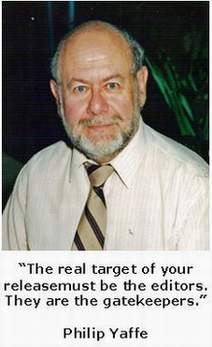 Have you been trying to drum up publicity for your business with no success? Recommending that you stop writing press releases and start writing news releases is not a play on words, but sound advice, says communications expert Philip Yaffe.
In common parlance, "press release" and "news release" mean the same thing. However, the terminology people use often betrays a fundamental difference in how they put this information together and how well it is accepted by the media.
Early in my career, I was editor of a daily newspaper and later a writer with The Wall Street Journal. One of my jobs was to screen submissions to decide which ones we would print and which ones we would throw away.
Approximately 80 – 85% of submissions failed the first screening; a life or death decision usually made within 60 seconds or less. On the other hand, the vast majority of those that survived this first screening also survived the second one and were ultimately published.
What made the difference? Basically, it was in how the author of the document viewed the material being submitted.
In both cases, the submitter had something to gain if we published the release, i.e. positive publicity. However, in the first case, the focus was on only how the submitter would benefit from publication. In the second, it was on both how the submitter and our readers would benefit.
If all this sounds a bit theoretical, here is an example to make it more concrete.
After leaving The Wall Street Journal, I was an account executive with a major international press relations agency. One of my subordinates presented me with a typically self-serving press release he wanted to distribute on behalf of his client.
The headline was something like: Egotistical Industries gains major new contract.
The first paragraph said something like:
"Tom Bighead today announced that Egotistical Industries has won a $350,000 contract to supply window sealants for the new sports centre currently under construction in Baden-Baden, Germany. Egotistical Industries was founded in 1989 by Mr. Bighead and his brother George, and is now considered to be the leading company in its field. Last year the company's sales were ...."
In the fifth paragraph, if anyone would read that far, we learned that the sealant the company would supply had the property of not freezing in cold weather, so work on the sports centre could be carried out in December, rather than waiting for warmer weather in March or April.
This of course was the true story. If you are a reader of a professional construction magazine, you couldn't care less that Egotistical Industries has a new contract. By contrast, you could be vitally interested in knowing that you could possibly gain three months on your construction schedule by using Egotistical's product.
More importantly, editors of professional construction magazines would view the release this way.
Remember: editors are vitally concerned about what their readers want to read, because if they lose readership, they lose their jobs. The real target of your release must be the editors. They are the gatekeepers. If they value the release, it gets published; if they don't, it doesn't.
We therefore rewrote the information into a news release with the headline: Windows in Baden-Baden Sports Centre will be sealed in the dead of winter, saving the contractor approximately $30,000 in labor costs. The first paragraph, and as many additional paragraphs as necessary, elaborated on this very attractive theme. The background information about the company came at the end of the release where it justifiably belonged.
Here's another example. As a marketing communication consultant, I was asked by a client to write a release announcing an important new service. I was told to limit the release to 400 words.
"Why 400 words?" I asked.
"Well, it's our policy to keep our releases short. Journalists like that."
The problem was that I couldn't find a way of saying everything that needed to be said in only 400 words. The client was insistent. I finally produced something at 400 words which the client felt was exactly what was wanted. But when the release was issued, no one published it.
The client called a few newspapers and magazines to find out why. The answer was that they just didn't see anything that would be of interest to their readers. I then called a couple of these newspapers and magazines and asked, "Do you think you readers would be interested in X."
"Yes, why didn't you put that in the release?"
Well, I had. But under the stricture of the 400-word limit, it had become so severely condensed as to be cryptic. It was there — if you knew what to look for. The function of an effective release is to give information, not challenge journalists to find it.
I rewrote the release. This time it came out to 650 words and was widely published. Why? Because it had been transformed from a press release, i.e. what the client wanted to say, into a news release — what journalists believed their readers wanted and needed to know.
Each time you start tapping at the keyboard, keep uppermost in mind the aspects that make a release a "news release."



