
Connecting Africa’s Skilled Professionals

 ReConnect Africa is a unique website and online magazine for the African professional in the Diaspora. Packed with
essential information about careers, business and jobs, ReConnect Africa keeps you connected to the best of Africa.
ReConnect Africa is a unique website and online magazine for the African professional in the Diaspora. Packed with
essential information about careers, business and jobs, ReConnect Africa keeps you connected to the best of Africa.



By Frances Williams
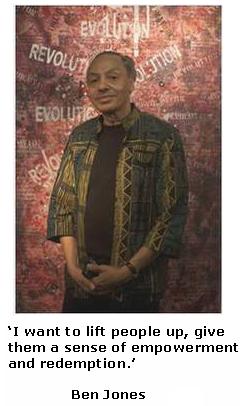
Born in New Jersey in 1941, Ben Jones has conducted over 50 art-related and cultural exchange visits to Cuba since the 1970’s, along with frequent exhibitions throughout Europe, Africa, Asia and Latin America.
For nearly five decades, Ben’s multimedia installations have reflected his travel and research in Africa, Europe, South America, United States and the Caribbean, including the Museum of Modern Art (New York, NY), Studio Museum of Harlem (New York, NY) and Museo Nacional de Bellas Artes (Havana, Cuba).
Ben Jones has lectured at universities, museums and cultural institutions worldwide including, Harvard University (Cambridge, MA), Howard University (Washington, DC), Savannah College of Art and Design (Savannah, GA), Wilfredo Lam Center (Havana, Cuba) and the University of Ghana to name a few. He holds degrees from MFA, Pratt Institute, Brooklyn, New York University (MA), and William Paterson University, Wayne (BA) and his exhibitions include: WASHED in the BLOOD, Southern Alleghenies Museum of Art, Altoona (2010); Chango-Change, Siguaraya Gallery, Berlin, Germany (2009); Deliverance, Jersey City Museum (2009); People I Love, Agape International Spiritual Center, Los Angeles (2008); El Espiritu de Los Abanicos, Centro Civico Las Sirenas, Seville, Spain (2007); Hammonds House, Atlanta, (2004), and The Havana Biennial, Havana, Cuba (2000). Ben currently lives and works in Jersey City
Ben has been cited by the Granma International of Havana, Cuba as one of the most important African-American artists of his generation. Having come to prominence during the Black Arts Movement of the 70’s, Jones fast became known for his ability to balance the political with the spiritual. His practice is routed in social activism and an enduring commitment towards imploring his viewers to seek and attain a higher level of consciousness and worldly awareness. As New York Times writer Benjamin Genocchio wrote, “Ben Jones has chosen to spend the better part of his career making art according to imperatives that have nothing to do with artistic fashion. That takes dedication."
The recent exhibition of Ben Jones’s work ‘Evolution – Revolution’ held at the Rich Mix Gallery, consisted of nine large-scale acrylic paintings and twenty drawings on paper.
With this exhibition, Ben referred to his diverse sources of inspiration with a new wallpaper series that examines contemporary political realities against the backdrop of the planet’s mounting ecological concerns. From a distance, the panels appear typically warm and repetitive in nature, but up close, they delve into serious topical issues. Thank you BP (2010) playfully documents the grim conflict between nature and big business; and Clear Truth Wallpaper (2010) is a prophetic and philosophical representation of potential and hope. Collectively, these images challenge current greed-derived inequalities that simultaneously harm rich and poor alike. They are a call for justice and greater concern for life on this planet.
Ben Jones is known for his striking use of colour and many of his paintings use bloody shades of red as a metaphor for the cleansing and purification of our decayed political and sociological thinking, contrasting with the literal and figurative greens and blues, which represent nature and the environment.
These powerful pieces castigate BP for the Gulf oil spill and the destruction of the environment, melding slogans of power and poetry with dramatic paintwork and dense layered colours. Ben weaves the words of poets and historical figures into the paintings, echoing voices from the past.
This collection demonstrates Ben Jones’ vision: ‘I want to lift people up, give them a sense of empowerment and redemption.’
On first starting to express himself through art....
I come from a family of 15 children and, being from the South, we constantly had relatives coming from other places to visit us in our house. As a little boy, I found myself drawing them all the time and by the age of 8 or 9, I was regularly doing drawings of the family. One day at school my teacher said ‘You can draw!’ and I just enjoyed doing what I was doing and carried on.
On growing up at a pivotal time for Black people in US history and its influence on his art....
Sometimes when you look back you see patterns that tell you who you are. As a little boy, my goal was always to be successful, so I used to organise stuff. In the summertime I would sell lemonade and organise everything to make it happen. At high school, I was involved in different types of clubs, again organising.
Looking back it’s clear now that I was always going to be an activist. In my last year of college, I had to attend a private institution to be able to take the Art History class that I needed in order to graduate. I loved to get there early to eat the food that the Black Southern cooks made and I would see Black students sitting around and talking about politics.
In 1963 I was one of the few Black students at Patterson State College, as it was at the time. A turning point for me was when I asked why we were only learning about White artists and was told that if Black artists were important enough, they would be in the text books. That offended me so much even though, at the time, I hadn’t made the link between art and politics.

In that same year, Martin Luther King was killed and that changed my life. I started getting involved with black organisations just as the US was going through a racial revolution with Black people and organisations challenging the racial status quo. Young people were at the forefront of these activities and I got involved with all of that.
After I graduated from College and got my Masters degree, I started teaching at high school until 1967 and then at university (at what is now New Jersey City University).
While there, I was approached by some Black students to be an advisor for the Black Freedom Society, a Black student organisation that they wanted to set up, and a role that I played for 20 years. New Jersey is a predominantly Black city and I worked with young children’s organisations helping young people to understand their history.
In the 1960’s everything was connected – whether it was politics, art, education or music. I started using popular Black entertainers and political figures in my art. I first started with Africa and introduced classes on African and Caribbean art, running Black workshops and taking Black students to art institutions.
On the style of Ben Jones....
I always say that Africa is the basis of my work. It’s my way of looking at the universe. It says that you are part of the universe; respect it and don’t just exploit it.
When I used to teach traditional African art, I made about 18 trips to Africa and visited almost every country in West Africa, as well as South Africa. The first country I visited was Ghana and the first thing I noticed was the child’s respect for the adult and how any adult could reprimand a child that was misbehaving. Over time, because of Western influences, our values are changing. But we have to be conscious of what those values are changing to.
With Africa, I think of natural things, things of the spirit. Rarely do you see Black people saying they don’t believe in a spiritual force.
On Black Consciousness and the Diaspora.........
The poet Amiri Baraka started an organisation that I joined back in the 1960’s and that time was all about consciousness. The times created a consciousness that came through into everything and it’s something you don’t really see today in the same way. Today we consume but we don’t make the sacrifice necessary to have our own.
The African diaspora has a challenge to organise. Elijah Muhammad once said “You have to have your own”. If you want people to meet you as an equal, you have to have your own – your own business, your own assets. Until you have your story, have your own businesses and know who you are, you can’t fully appreciate yourself or other people.
Being conscious empowers you and makes you responsible for who you are and for your history.
This is what I appreciate about Cuba. With all the problems they have there, they have learned that you have to be more self-reliant. I’ve visited Cuba so many times over the years that it is like a second home. The young people I meet there aspire to be something because the revolution made them have that mindset. If we don’t try to make the sacrifice and not get distracted, we won’t succeed. This is where consciousness comes in; whether it’s about our consumption, our health, our lifestyles, we need to be conscious of it and act upon it. If you don’t have this, you fall prey to those things that hurt us.
I don’t know if our people understand how power works in this world. To have power, you need to have control over the means of production, not just consume. You have to own your own and it’s all about consciousness.
I don’t think I’ll see this in my lifetime but I am clear about what’s in my head.
On the pieces that reflect the observation by poet Amiri Baraka that Jones’s work connects spirituality and politics (social life).........
 In my exhibition ‘Evolution – Revolution’, all the politics and spirituality are connected. In traditional Africa, there wasn’t a separation. Frequently, in traditional African sacrifices, blood was meant to be cleansing, purifying and a sacrifice.
Politics today, though, is about making deals. One of the pieces has ‘blood’ running through it and is the most representative of that connection in this collection. When the Iraq war was taking place, I was so incensed at the killing of innocent people that I wanted to use this piece to reflect that. I wanted to get the effect of blood on the canvas with red liquid. I used images of conscious Black figures and African symbols of spirituality.
On religion.........
Wherever I am in the world, I have to go to church on Sunday. But religion is just a structure. Spirituality is at a higher level and you are just using those structures to get up to reach that level of spirituality.
On believing he could be what he has become at a time when most people said he couldn’t.........
When you look back at your life and see certain patterns, it tells you who you are. As a little boy I was raised in the Catholic Church and one day when I was about 11, a White boy called me a ‘nigger’. I just replied: ‘Thank you, because I’m going to be better than you.’
I’ve always been an achiever. Coming from a family of 15 children, you have to fight for your place. Being poor, I always felt I had to prove myself; taking jobs here and there so I could buy good clothes and look like the other middle class kids.
But at college I was exposed to other influences and I found more clarity about my values through some of our Black role models like Aretha. She is to me a symbol of someone who knows who she is. She doesn’t need to articulate anything; you just have to look at her! She was born and raised in a home where her father was a preacher and was part of the community. She was exposed to the values of those around her. She is our real voice - and she knows where her power comes from.
On the influences in his life.........
My parents really pushed education. My mother was a domestic and had only a basic education but my father had gone to college. My mother taught us about sacrifice. Whenever I would ask her to buy me things that I had seen and wanted, she would say ‘Sure, you can have it – go work for it.’
And sometimes you need someone to bring you to where you need to be, even when you don’t see it. I had a White professor who brought me to teach at university. Although I was alarmed at the idea of teaching at university level, I realised that the other people there didn’t have more talent or ability than me.
On his message to aspiring Black artists.........
First, clearly know who you are. You have responsibilities and this means you have 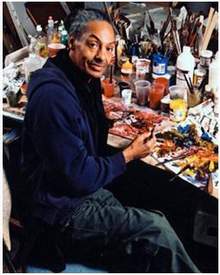 to know your history and world history and how world history impacted on your history. You have to know your connection to your people and to the world. Young people have to know that it’s not all about them – we are interdependent not just independent.
The other thing is the importance of hard work and sacrifice. Try to see the world, especially our people in the world, and see what you have in common and what’s different.
You have to go out and explore because you need to see the connections between your ideas and your life to your people and to the peoples of the world.
You also have to realize that we’re in a struggle to make sure that Africans, as a people, have our rightful place in the world.
On retiring from a teaching career of 44 years and approaching 70 years of age.........
I feel like I’m just beginning as an artist and that I have to get deeper. In May I will be 70 and I was so incensed at the Gulf spill and at BP for causing it that I feel I have to spend the next two or three years dealing with these things. The issues are really complex and very deep.
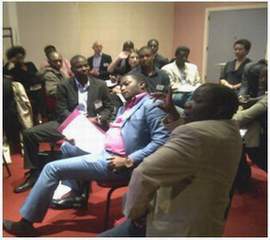 A new UK programme is aiming to increase the involvement of Africans in the Diaspora in international development
The Royal African Society and AFFORD are running a nation-wide initiative dedicated to enhancing the contribution of the African Diaspora to international development.
The recently launched Africa-UK Diaspora Engagement and Dialogue aims to increase the role of the Diaspora in Africa’s development and to ensure that the Diaspora inform debates about development priorities for Africa. The initiative intends to foster greater dialogue and engagement between policy makers and UK-based Africans working in development
As part of the initiative, AFFORD will be holding Diaspora advocacy training sessions around the UK, linked to Special Interest Group (SIG) meetings, and African Embassy Engagement meetings where policy-makers and embassy officials will discuss key issues with participants.
The African Foundation for Development (AFFORD) was founded as a UK registered charity in 1994 by a group of Africans in the UK, in response to concerns, that despite the vast number of Africans in the UK who organize themselves and contribute to Africa's development, Africans were effectively marginalized from mainstream development activity directed towards Africa. There was also a realization that different Africans can and should learn from each other.
Since its inception, AFFORD’s mission has been to enhance and expand the capacity of Africans in the diaspora to contribute to Africa's development. Through a range of programmes, the organisation has mobilized African diaspora communities/groups in the diaspora to invest their time, as well as their financial, intellectual, cultural, political and social capital to create/support small, micro & medium sized enterprises (SMMEs) that focus on providing employment opportunities for young people in DRC, Ghana, Nigeria, Sierra Leone and Uganda.
AFFORD seeks to achieve its mission through five strategic goals: to shift the balance of power to Africa; to influence the African development agenda; to root AFFORD firmly in Africa; to build a strong and sustainable organisation and strengthen its legitimacy and effectiveness. In recent years, AFFORD has concentrated on supporting the African diaspora in the UK to contribute to wealth and job creation in Africa.
The new programme, whose funders include Comic Relief and Common Ground Initiative, includes a number of Advocacy Training & Special Interest Group Sessions aimed at predominately diaspora African individuals or others linked to Diaspora/development organisations. Participants will need to demonstrate involvement, knowledge or interest in African development, UK policy development or specific advocacy themes.
 The format of the training will involve an intensive one-day course (from 9.30 to 5pm). The goal is to give trainees introductory knowledge and skills on how to engage with and influence policymakers and decision makers, within the Diaspora context of limited resources and networks, and the absence of significant representation in the corridors of power.
On separate dates there will be evening Special Interest Group activities and Embassy Meetings where participants can use their learning to engage policy makers and influencers directly.
The selected participants will be required to attend two sessions in each regional location. The first session will focus on ‘Introduction to Diaspora Advocacy’ and the second session on ‘Diaspora Engagement with Parliament and Partners’. A Certificate of Completion will be awarded at the end of the two sessions and SIGs.
 The recent launch of a new London-based Chamber of Commerce offers African and Caribbean owned businesses in the UK a new voice for business.
The new London-based African and Caribbean Chamber of Commerce launched last month at the House of Commons. The event in Portcullis House brought together Ambassadors and High Commissioners from over 20 African and Caribbean countries, along with MP’s, business leaders, economists, and journalists.
Working closely with Government and developmental agencies internationally, the African and Caribbean Chamber of Commerce and Enterprise, London, (ACCCE London) will support and empower black and minority–led businesses in the London and South East region.
Based upon the successful African and Caribbean Chamber launched in Bristol/South West in 2009, ACCCE London will facilitate trading between the UK and African and Caribbean countries and play a key part in strengthening the economy worldwide. Members will benefit from regular networking opportunities, business advice, and a range of training and mentoring programmes.
Members of ACCCE include more than 250 businesses from a wide range of sectors including: law; retail; accountancy; entertainment; marketing; ICT; journalism; public relations and design. Membership is open to anyone who supports the aims and ethos of ACCCE.
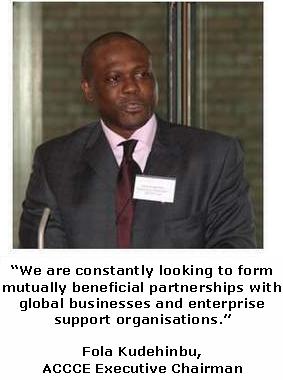
The key value that the ACCCE brings to the table, says ACCCE Executive Chairman, Fola Kudehinbu, is that “it provides an organisational structure to enable African & Caribbean owned and led businesses to articulate the key issues affecting them to UK government departments and agencies, other business organisations and African and Caribbean Embassies/High Commissions in the UK.”
As Kudehinbu explains, ““Since we launched the first Chamber in Bristol in 2009, we have forged powerful partnerships nationally and internationally. Of particular importance is our relationship with African & Caribbean Embassies and High Commissions in the UK and many Ambassadors and High Commissioners from African and Caribbean countries joined us in the House of Commons.”
A number of presentations during the launch highlighted the support from MPs of all political parties for the new Chamber, as well as from representatives of public and private sector organisations, who underscored the wide range of opportunities for investment in Africa and the Caribbean.
Ann Grant, Vice Chairman of Standard Chartered Capital Markets and former UK High Commissioner to South Africa, spoke of the positive return on investment that her company is achieving in Africa.
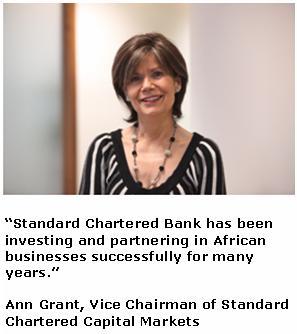 “Standard Chartered Bank has been investing and partnering in African businesses successfully for many years. We are encouraged and excited by the resurgence of interest in African business opportunities from the diaspora in the UK, represented by the launch of the African and Caribbean Chamber of Commerce.
I hope and expect that new business will flow, and wish the Chamber the very best of luck in making it real!”
The contribution of the skills within the African Diaspora to Africa’s development was also addressed by Frances Mensah Williams, Editor of ReConnect Africa, who noted that the so-called ‘brain drain’ from Africa also offers opportunities for ‘brain gain’ through the experience, contacts and links of Africans who have spent time working abroad.
“A significant part of Africa’s business landscape today has been transformed by the influence of and the direct and indirect participation of its Diaspora,” she said.
“Direct influence has come through investment in the form of new businesses creating much needed employment, and a host of joint ventures and skills and knowledge partnerships. The indirect influence is best illustrated by the billions of dollars remitted back into Africa by its non-resident citizens.”
The immediate goals of the ACCCE for the London Chamber are to establish itself as the principal voice of African & Caribbean owned and led businesses in London and South East England, to raise awareness of the range of services on offer and to build positive working relationships with potential partners, says Kudehinbu.
“With regards to ACCCE UK, our goals are to establish at least three more ACCCE branches in addition to Bristol and London by March 2012, to continue to promote the ACCCE brand in the UK and to continue our international programme in Africa and Caribbean through our "ACCCE Global" brand.”
“The Chamber has completed a number of successful export visits to Nigeria, South Africa and Jamaica with UKTI and, through ACCCE London, will continue to strengthen and improve its trading links with African and Caribbean countries.
“We are constantly looking to form mutually beneficial partnerships with global businesses and enterprise support organisations and naturally, our members will be the first to benefit from these unique and timely business opportunities,” he says
There is also a need to focus on developing young entrepreneurs within the Black business community, says Kudehinbu. The African and Caribbean Young Enterprise (ACYE) is the platform by which future business leaders (under 30 years old) are being encouraged and developed in business and enterprise creation. Over 100 members have so far joined ACYE Bristol and this successful model will also be implemented in London and the South East over the coming years.
Members of the London Chamber will receive numerous benefits from joining, says the Executive Chairman.
The African and Caribbean population in London is estimated to be around 2 million (15%) and this is set to grow in the next decade. African and Caribbean people have made London their home, contributing immensely not only to its rich cultural heritage, but also to its economic development.
Through the Chamber, African and Caribbean business owners can leverage this contribution to improve access and visibility and to have a voice in business policy decision making.
Africans in the UK can help to support the Chambers goals, says Kudehinbu, by becoming members of the Chamber in the first instance.
“They can also do so by promoting the values of ACCCE to their supporters and partners, encouraging other businesses to join ACCCE, and supporting our research and information programme through responding to our various consultation exercises.
“We look forward to continuing to support the business requirements of our unique and diverse business community nationally and internationally and leading by example.”
To find out more about the ACCCE, visit: www.ac3e.org
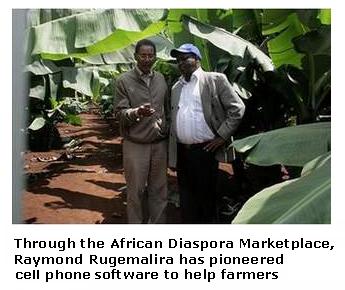 New research and an innovative programme are shedding light on African Diaspora entrepreneurs' motivations
At a time of renewed focus on the power of entrepreneurship to lift people out of poverty, a study by a George Washington University researcher finds that strong feelings of accomplishment, pride, duty and honor motivate many diaspora entrepreneurs to invest in their country of origin. The survey of participants in the African Diaspora Marketplace (ADM) found that diaspora investment motivations are complex, reflecting financial as well as personal drivers, including the sense that they can prevail over common barriers to business success.
The ADM is an entrepreneurial business program, supported jointly by USAID and Western Union, which seeks to boost economic opportunity in Sub-Saharan Africa through sustainable start-up and established enterprises by U.S.-based African diaspora. Earlier in 2010, more than 700 participants from 19 countries submitted business proposals for grants to match their own funds to support the execution of their business plans. Fourteen businesses in seven Sub-Saharan African countries were awarded matching grants of up to $100,000.
"Africa can see progress similar to what China has seen in less than a decade, and without substantial foreign direct investment. Just look at the flow of remittances to these countries. As businesspeople, we in the diaspora community want to contribute to economic development in our countries of origin. And we have the passion to succeed in creating opportunity," said ADM grantee Ronald Mutebi.
Mutebi is President of TEK Consults Group, which has been testing and distributing solar ovens in Africa. He is in the final stages of setting up a manufacturing plant in Uganda and has more than 1000 prospective buyers for his product.
Mutebi added, "The ADM to me was a first of its kind: A forum where the diaspora came to showcase our various enterprises and to learn and share as well as encourage one another that we are not alone in the struggle for economic empowerment of our brothers and sisters."
The survey found that diaspora investment motivation is driven by a variety of factors, including expectations of financial, emotional, social-status and political gains as well as family concerns.
While more than half of ADM participants maintained that they invest in their country of origin to create jobs and income for themselves (62%) and acquire personal financial independence (65%), approximately three fourths claimed that their country-of-origin investments would generate a feeling of accomplishment (83%), will help them feel better about themselves (79%), enhance their self pride (76%), and fulfill a sense of personal duty (72%).
"ADM participants invest from the heart out of care and concern for their families and country of origin. They want to make a difference," said Dr. Liesl Riddle, Research Fellow at The George Washington University Center for International Business Education and Research (GW-CIBER), and the study's leader.
"This is a great development opportunity for Africa: to match innovative entrepreneurial ideas and talent with much-needed funding to bring their visions to life."
"This research will help us begin to understand the key factors that enable diaspora investors to be successful. It is part of our process to identify best practices that can foster economic opportunity and help small businesses thrive in developing markets," said Aida Diarra, Western Union Regional Vice President, Economic Community of West African States.
Unique ADM business plans are beginning to take shape in several countries. Among them: Mutebi's TEK Consults Group, which is developing and implementing a comprehensive solar oven program in Uganda. TEK's program greatly decreases dependence on wood and agricultural waste products for cooking fuel, allowing time and money previously spent for cooking fuel to be spent more productively. Already, the first oven components have been shipped to be assembled in Uganda. The ovens are scheduled to appear in Ugandan markets in early 2011.
Earthwise Ferries is reestablishing, managing and operating a fast-ferry transportation system on Lake Victoria, with destinations in Uganda, Kenya and Tanzania. The first 150-passenger ferry, designed to run on diesel or straight vegetable oil, launched in December 2010 and is projected to reduce travel time on Lake Victoria by at least 60%. Earthwise has enlisted 600 indigenous farmers to grow sunflower seeds to produce the vegetable oil.
Uza-Mazao uses SMS messaging to bring unprecedented levels of efficiency to buyers and sellers of crops, farm produce, livestock or livestock products in Kenya. Transactions are conducted using an existing mobile-phone wallet system. Farmers are able to figure out what is in demand in their region so they can produce and distribute accordingly. In the first month, more than 2000 farmer co-operatives have registered for the service.
Individual entrepreneurs responding to the online survey of ADM participants perceive barriers that are similar to those documented through other major research on doing business in the region. Characteristics described in the environment include bureaucratic, financial capital and infrastructure barriers.
While direct investment was the primary investment interest of the diaspora entrepreneurs, the survey's respondents also expressed interest in investing in mutual funds consisting of firms based in their country of origin, purchasing government bonds issued by their country of origin and contributing to funds that would lend to small and medium enterprises in their country of origin.
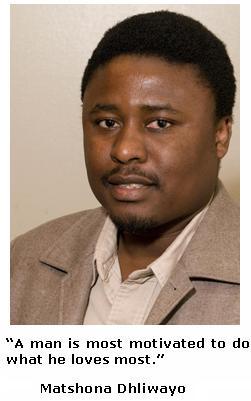 As we gather ourselves to begin another year, we share some inspirational words on motivation from Matshona Dhliwayo's book, '100 Miscellaneous Thoughts'.
Motivation is the desire and energy that sets one on the course to achieve a goal. Men are motivated by different factors; some are motivated from within, while others are motivated by others. Both can be effective, but the greatest motivation comes from within.
A man is most motivated to do what he loves most. If you truly love what you do, you won't care whether men give you awards or not, for the ultimate joy comes not from outside, but from within. Most great accomplishments in history were accomplished by those who pursued what they were most passionate about. What they woke up thinking about, what they went to sleep thinking about. Doing what they loved made their task easier.
A truly motivated man uses the pebbles of failure to build a bridge to success. The willingness to move forward from failure is one good sign that you are motivated. A motivated individual can be optimistic, but he is much greater than an optimist because an optimist's hope can be shattered more easily. When others doubt or oppose a truly motivated individual, his hope lives on. The greatest of men use obstacles and opposition to propel them to their goals.
A truly motivated individual generously allocates whatever time he has towards his objectives. If a man is motivated to conquer the world, he will spend time organizing his army; if a man is motivated to know more about the world, he will travel or study; if a man truly loves a woman, he will be motivated to please her, he will be motivated to do things he would not have normally done to win her heart. Because he is motivated, whatever price he pays is negligent compared to winning her over.
When a man is motivated he works wholeheartedly. Because he enjoys what he does, he puts in more than the required effort to complete the task. He not only achieves more, but the quality of his work is superior. Excellence comes from diligence and he achieves diligence because he cares about the end product having invested much in it.
A man should not expect the world to hand him anything; he must know what he desires and pursue it. And if there are others pursuing the same thing one factor may separate those who acquire it and those who do not: desire. He who desires something the most fights the hardest. While wisdom is another important factor, working hard is always wise, never foolish. Each day a man lives he must be motivated to pursue a noble objective. If a man does this daily, he can accomplish much in a lifetime.
Motivation is the key to your emancipation; you find what you seek.
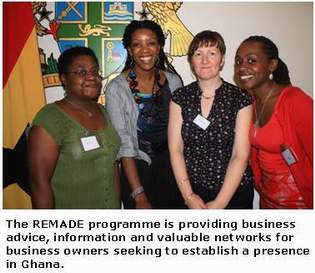 How the REMADE project is helping new and expanding businesses to tackle the challenges and succeed in Ghana
Africa is becoming the land of discovery again but this time it is being discovered by people from the African Diaspora. Many Africans around the world are increasingly looking to the countries of their heritage as fertile ground for them to settle down roots, start new ventures and contribute meaningfully to economic growth and sustainable development.
As an investment destination, many countries on the African continent offer exciting opportunities with a degree of risk but with a promise of high returns.
Starting or expanding a business in any country is hard work. Doing so in Ghana can be a minefield for the unwary. While the country continues to experience high growth and the government is actively encouraging new business from those beyond its shores, it takes patience, contacts, information and guidance to succeed.
To assist those in the Diaspora who have recognised this opportunity and relish the challenge, the REMADE project, run through a partnership between UK-based AFFORD and IntEnt (International Enterprise) is aimed at supporting those who are ready to start a business or a branch of their business in Ghana.
The programme is providing business advice, information and valuable networks for business owners seeking to establish a presence in Ghana.
"Overall, people have really benefited from the network opportunities," says Elvina Quaison, the REMADE Project Manager. "Businesses are given a chance through this programme to assess and have a better view of what they are doing and what they need to do to succeed."
Working with REMADE has helped many businesses take a different and more effective approach to their business planning for Ghana.
"One of the key constraints people have is trying to do their research and business planning alongside regular work commitments," says Quaison.
"A benefit of having a Business Adviser through REMADE is that they help you stay motivated and keep on track and focused on your goals."
Security for the money someone wishes to invest in business is also an issue of concern for those who have worked hard to build a nest egg.
"Without a Companies House equivalent, this can be a worry for people and we offer pathways to networks on issues such as land tenure for our clients," she adds.
Starting a business is often a lonely experience and can be much worse for the business owner based in the UK and setting up in Ghana without a partner or support on the ground.
"REMADE offers you partners on the ground, including IntEnt Ghana, who supply business advisors and a business club in Ghana, and the Ghana Investment Promotion Council (GIPC) who offer support and guidance as well as official directions for starting a business," says Quaison.
Eugene Opoku, REMADE Client
The programme also provides direct links to those who can make the process of setting up and running a business much easier and quicker. Partners such as EMPRETEC provide business advice and have bases in all the major cities in Ghana, enabling the programme to help those setting up a business in any location in Ghana and across any sector. Links with financial institutions also offer pathways to financial advice and financing.
 Deciding on which type of business to establish is a crucial factor in predicting success in a market such as Ghana and the REMADE programme is set up to help business owners make the right decisions, says the Project Manager.
"Knowing whether your business idea is viable and will actually work in Ghana is critical," she says. "Our advisers provide feedback and analysis of your business idea and input into it to strengthen and improve it and make it more likely to succeed."
Between advisers in the UK and in Ghana, the programme can help provide you with an international perspective and open your business not only to factors you should consider and address, but also to opportunities you may not have considered or recognised, she adds.
"Our network also enables us to help clients to find a market in Ghana for their business and to provide links to other businesses that may provide a ready market for a client's service."
The REMADE Project could be for you if you have 50% or more of your start up costs and you are ready to start your business in Ghana now. By providing one to one business support and market research in Ghana, the REMADE project can be an invaluable support for African business owners.
Being part of the REMADE project provides a client with a business advisor who is knowledgeable about setting up businesses internationally, as well as training sessions and support to develop your business plan until it is at a point where it can be used to attract investment and support for a market research trip to Ghana.
Yaa Djei-Bohyen, REMADE Client 2009
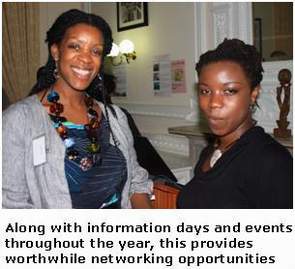
The project offers two packages for entrepreneurs and, for a nominal annual amount clients will also benefit from becoming a member of the Business Club. Along with information days and events throughout the year, this provides worthwhile networking opportunities, a 15% discount on annual subscription to African Business Magazine plus a one year free subscription to African Banker Magazine, talks from leading business people, discussion forums and an online networking group.
"REMADE is about helping you to see if you have made the right decision and then helping you move your idea and yourself forward," says the programme managers. "We will work with you as an individual and help develop your business idea or business expansion."
Philip Bentum, REMADE Client 2009
Full details of the REMADE programme and how to apply to participate can be found on the AFFORD website and via the following link:
http://www.afford-uk.org/index.php?option=com_content&task=view&id=92&Itemid=181
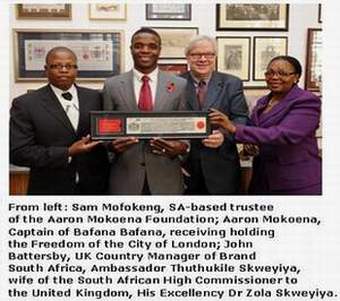 An Extraordinary Week for South Africa in London
Standing before the robed Chamberlain's Clerk, Murray Craig, and a top-hatted orderly with a long red jacket and a distinctly Dickensian air, Aaron Mokoena performed the ancient ritual of obedience to the Queen and the Lord Mayor of the City of London.
The Bafana captain, surrounded by tradition stretching back almost 1000 years in the heart of London's financial heart known as the "square mile", was totally comfortable in his own skin while clearly moved by the magnitude of the honour being bestowed on him as his wife and daughter and colleagues looked on.
Mokoena is only the second South African to receive the freedom of the city. The first was President Nelson Mandela back in 1996 on a State visit to Britain.
And as the Clerk pointed out, President Mandela was not the first Nelson to receive the honour. England's own Lord Nelson of Waterloo and Trafalgar fame received the freedom of the city in 1797 and his parchment hangs in the same chamber as that of Mr Mandela.
The original purpose was to bestow the freedom to trade but it has now become a symbolic rather than functional honour for the 1800 or so who receive it annually. Other famous names to have been award freeman status include Winston Churchill, Benjamin Disraeli, Nehru, Theodore Roosevelt, Florence Nightingale and Margaret Thatcher.
The ceremony for Mokoena was held only two days before the first Lord Mayor to have openly declared his strong South African connections, Michael Bear, was sworn in as the 683rd Lord Mayor to the singing and dancing of a group of Zulu warriors in traditional gear who braved the cold to parade through the streets of London and then sing from a barge in the Thames.
Alderman Bear was born in Kenya and studied at Wits University and worked in South Africa for some years. His wife was born in Klerksdorp.
The Mayor of City of London Corporation, which runs the financial centre, is not to be confused with the Mayor of London who is elected for renewable five-year terms and presides over the City of Westminster – the area that tourists would define as London.
The Lord Mayor is elected for a once-only 12-month period by the head of the livery companies of old which today are all financial services companies. He represents London's banks and financial institutions in the global economy. During his one-year term he travels abroad about 30 times and makes some 750 speeches.
Because he is traditionally elected by the livery companies – and not appointed by the Crown – the Lord Mayor has to make the journey to Westminster to swear allegiance to the reigning Monarch. Anyone awarded the freedom of the City by the Lord Mayor has to do the same.
Which brings us back to Aaron Mokoena.
The Clerk, who presented Mokoena with a framed parchment scroll proclaiming him a Freeman of the City, then held up a little red book as though presenting an errant football/soccer player with a red card.
"This, you will need to study and follow the rules for leading a righteous life," he said, pointing out that the current Chamberlain was the 37th in a continuous line going back to 1294.
The freeman ceremony goes back to 1237 and the first Lord Mayor was elected in 1189.
Mokoena gracefully thanked the clerk on behalf of the Lord Mayor and the official photographer began a long session to record the magic moment.
"London is such a fantastic city and to be presented with this award, as a South African playing football in the UK, is a very proud moment for my country, my family and myself," Mokoena said.
On 11th June, Mokoena carried the hopes and aspirations of millions of South Africans as he led Bafana Bafana onto the field in the Johannesburg stadium for the match against Mexico which produced the Tshabalala moment – widely regarded as the goal of the tournament.
When it came time for Bafana to bow out of the tournament, Mokoena's guiding hand was crucial in transforming those aspirations of victory into those of being dignified hosts of a triumphant World Cup.
Mokoena reflects in his own stature and dignity the gains that South Africa has made as a country in hosting the 2010 World Cup: national identity, pride, confidence and resilience.
In that sense, he symbolises the legacy of the World Cup: reflecting the values of South Africa's own transition to democracy, gearing for growth, nation-building and forging a modest but crucial space in the global economy as an active participant in a changing world.
He is also a symbol of the huge asset South Africa enjoys in its global citizens abroad.
Mokoena has played club football/soccer – in recent years for Portsmouth – and has travelled abroad for almost a decade of his life.
In that sense he is a global South African with a contextualised sense of his country's place in the world and South Africa's potential to leverage its unique history and transition and the diversity of its people for the good of all its people.
Mokoena is mobbed by young autograph hunters wherever he goes in Britain and the youth look to him as football/soccer hero.
But he is clearly far more than a football/soccer icon. He has dedicated himself 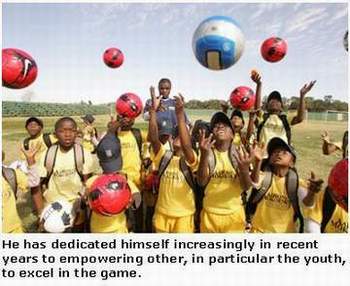 increasingly in recent years to empowering other, in particular the youth, to excel in the game that has given him so much and made him the magnanimous human being that he is today.
Mokoena, whose days as a professional player are likely to come to an end in the next three to four years, has a new passion: reaching out to the youth of his hometown of Boipatong in Sedibeng and the wider Gauteng region – and eventually nationwide – to identify and offer training, coaching and mentoring to talented young players at school level.
In so doing, the coaches and mentors will look for the qualities of leadership that will serve the country beyond the football/soccer field.
To this end, Mokoena and a group of dedicated colleagues in South Africa and the UK founded the Aaron Mokoena Foundation to establish his academy and a team of coaches and mentors.
Mokoena's team mates at Portsmouth are as enthusiastic as he is about the venture and have vowed to assist him.
His passion reflects - and is helping to forge - a new approach to sport and mega-sporting events globally. It is increasingly about the legacy rather than the victory and conquest which has made football/soccer and Olympic sports the highly competitive multi-billion dollar industries they are today.
In a changing world - and one which needs to become more sustainable, inclusive and equal – nurturing the human spirit becomes part of its triumph.
It means embracing the generosity of the human spirit as represented by South Africa's four Nobel Peace Laureates: the late Chief Albert Luthuli, Presidents Nelson Mandela and FW de Klerk and Archbishop Desmond Tutu.
That spirit has been movingly captured in the String Quartet of Peace, four string instruments crafted by Cape Town luthier Brian Lisus, which will play the beautiful piece Uxolo (reconciliation in Zulu and Xhosa) composed by the South African-born Eugene Skeef in the UK in various global capitals in the year ahead.
It was that spirit the predominated when Aaron Mokoena received his freeman status in what was an extraordinary week for South Africa in London.
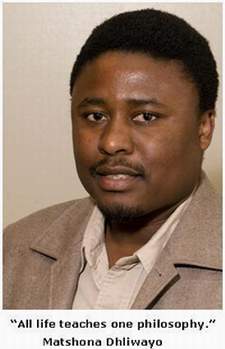 100 MISCELLANEOUS THOUGHTS is a recently published book of 100 essays by Zimbabwean-born Matshona Dhliwayo.
ReConnect Africa (RCA): Tell us about yourself and your background before coming to Canada.
Matshona Dhliwayo (MD): I am an entrepreneur/philosopher/writer. I was born in Zimbabwe not long after its independence. My father was well to do and I received a good education. I was an “A” student until the age of 14 when I discovered two vices that almost ruined my life: whiskey and wayward women. My grades began to drop, my descent into the bottle and brothels occupied my time. I hurt not only myself, but others around me.
At the age of nineteen, when Zimbabwe began experiencing political turmoil, my father bought me a plane ticket to Canada and cautioned me, as most African fathers do, to excel in my studies. To him, education was the answer to all of a man’s problems, the key to his destiny. I did not know what lay ahead; all I wanted was to leave Zimbabwe.
RCA: What have been some of the main challenges you have faced in your life so far?
MD: Homelessness in Canada, depression, alcoholism, and other addictions too shameful to mention. However, the greatest challenge by far is overcoming myself. Whatever obstacles I faced in life were not greater than my self destructive will, my lack of wisdom and my mistaking intelligence for wisdom.
RCA: What inspired you to write ‘100 Miscellaneous Thoughts’?
MD: God. As an ex-atheist, I am still shaken when I mention this, but I would not be telling the truth if I said the inspiration came from anywhere else.
RCA: How do you think your past experiences have prepared you for what you do today?
MD: I wrote a poem that will answer your question concisely:
I’ve lived in a mansion,
I’ve lived in a ghetto,
I’ve dined with aristocrats,
I’ve dined with gangsters,
I’ve saved a life and I’ve destroyed a few,
I’ve been an atheist and I’ve fought the devil,
I’ve seen light and I’ve sat in darkness,
I’ve been to the mountain top and I’ve sunk in the valley,
I’ve debated intellectuals and I’ve practiced folly.
All life teaches one philosophy.
RCA: What are the main lessons you want to teach through your book?
MD: I want people to know that wisdom is supreme, that knowledge must be acquired and that to give up on your dreams is to give up on life itself.
RCA: How does your African heritage impact on your life and teaching today?
MD: Africa, and particularly West Africa, according to prominent US proverb scholar Wolfgang Mieder, has a richer store of proverbs than most places in the world. This demonstrates the superior wisdom our ancestors had and I am proud of my heritage. I am a descendant of great men and women. In a nutshell:
I was born an African,
I will live as an African,
I learned as an African,
I will teach as an African and die an African;
God willing on African soil.
There are laws to everything, including success. Success is a result of investing time and energy in ideas and people. It is a result of recognizing a need, finding a way to fulfil it and putting a price tag on it.
Most successful people think differently, and hence end up in a different place. They hold on, even while everyone else is letting go. Even when they become successful, it’s not the end of a journey, but the beginning of a new one. Highly successful men and women press on their entire lives. The long road to success is fraught with defeat and setbacks, minor and devastating, each one setting us straight on course for an even greater task ahead. Success is found by whoever is willing to drive all the way up moles, mountains, and often lonely hills. It’s a lot like mining; you just keep digging until you strike gold.
Success is birthed in boardrooms, nurtured on desks, in hallways, until it is able to crawl out of the building, walk right into streets, onto store shelves, and jog away in the arms of a satisfied consumer. Success is fostered by finding out everything that could possibly go wrong on your particular mission and providing suitable solutions beforehand.
Copyright © 2010 by Matshona Dhliwayo
RCA: How can our readers buy a copy of the book?
MD: Readers can buy a copy of 100 MISCELLANEOUS THOUGHTS at www.100miscellaneousthoughts.com The e-book is available at amazon.com. 50% of all profits at the end of the year will be donated to orphans and a further 20% will be donated to a community center.
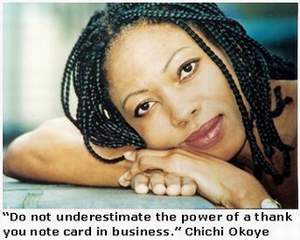 Business owners will find it difficult to establish, develop, and maintain successful relationships with customers if they do not show them appreciation, says Chichi Okoye
Many people believe that marketing is just about advertising or sales. This view of marketing is centred on the transaction, and often, very little thought is given to nurturing customer relationships. Customers are often not given the recognition they deserve. I consider this a short-term approach to marketing.
Relationship marketing has a different focus. Here, the goal is to develop long-term relationships with clients, customers and business associates. Naturally, people who practice this type of marketing also want to build profitable businesses. They know, however, that cultivating and nurturing strong relationships with customers and clients will encourage customer loyalty over time. And this, in turn, is more likely to result in business growth and success.
Many business owners will find it difficult to establish, develop, and maintain successful relationships with customers if they do not show them appreciation. I do not know anyone who likes to be treated simply as a source of revenue by businesses. We all want to be appreciated, as demonstrated by these sayings:
"When you praise someone for something they have done, they will do even better." – Nigerian (Igbo) proverb.
"Someone who receives a gift with gratitude will receive even more from the giver, later on." – Ghanaian (Twi) proverb.
"There is more hunger for love and appreciation in this world than for bread." Mother Teresa
"The deepest principle in human nature is the craving to be appreciated." William James
Business owners can show appreciation to their clients by sending thank you notes or cards. How many times have you received one of these from someone you did business with? And how would you feel if you received a heartfelt thank-you card in the mail (without any promotional material) after you purchased a product or service?
Now picture this scenario. You visit an optician and buy a new pair of glasses for hundreds of pounds. A week later you receive a card thanking you for your purchase, and wishing you a clearer vision with your new glasses. Wouldn’t you want to continue doing business with that optician? I know I would.
And yet many opticians, and indeed other business owners, do not seem to understand how important it is to show appreciation to their clients and customers. Many businesses are quick to send out promotional materials by email and post. Needless to say, many of these emails and letters leave the recipients cold and they are often consigned to the trash can online and offline. A note or card thanking the customer or client for their business and referrals would go a long way towards making them feel appreciated.
Many business owners know the importance of standing out from the crowd of competitors and the value of creating loyal clients and customers. Sending thank you cards will help business owners to achieve both goals.
Do not underestimate the power of a thank you note card in business. Sales trainer Tom Hopkins says:
"Because I understood that building relationships is what selling is all about, I began early in my career to send thank you notes to people. I set a goal to send ten thank you notes every day. That goal meant that I had to meet and get the names of at least ten people every day. I sent thank you notes to people I met briefly, people I showed properties to, people I talked with on the telephone, and people I actually helped to own new homes. I became a thank you note fool. And guess what happened? By the end of my third year in sales, my business was 100% referrals! The people I had expressed gratitude to were happy to send me new clients as a reward for making them feel appreciated and important."
That is the power of business thank you cards. I like sending them to everyone, especially my clients because I know that customers are the lifeblood of any business. I have also received thank you cards from some of my clients, and this has validated for me the importance of nurturing long-term relationships with my customers. Sales and advertising have their place in marketing, but for small business professionals, a relationship-based strategy is essential to long-term success.
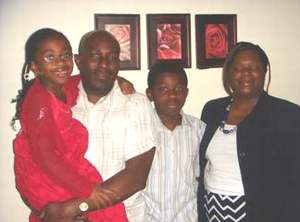 With increasing opportunities for business and careers in Africa, the lure of home has become ever stronger for many Africans living in the West.
ReConnect Africa spoke to Amanda Tetteh, a London-based Local Government Officer, about her plans to move to Ghana in search of a better quality of life and future.
ReConnect Africa (RCA): What made you decide that it was time to think about returning home?
Amanda Tetteh (AT): My husband and I came to the decision rather suddenly. We were at a junction in our lives where our son would soon be moving up to secondary school, and this also coincided with the year when there were several killings of young people. Also we were both at or approaching 40, and looking to the future as to what we could further achieve.
We felt that although living in the UK was rewarding if you worked hard, and that London was a beautiful and diverse city in which to live, it also had its limitations and restrictions as to how far one could achieve or prosper.
When my son was born, my husband purchased some land in Ghana. At the time I thought that would make a lovely holiday home or a place to retire. Bit by bit over the years, we managed to complete the house, and this also coincided with our son moving up to secondary school.
Then we had the light bulb moment; what about living in Ghana! The government was stable and the economy was growing rapidly. We had a mortgage-free home, there were lots opportunities to work hard in your own business there and, most important of all, a safe and disciplined environment in which to raise and nurture a family.
RCA: What have you found to be the main challenges of life in the UK?
 AT: We found that we work hard and for that we are suitably rewarded; however there is a glass ceiling in this country. Yes, you can aspire to achieve, but the ratio of ethnic minorities who do so is very limited. .
Also, as a married working family, we feel penalised and restricted as England currently does not support or encourage middle income married couples and, with that, the responsibility of ensuring that we raise a future society filled with balanced individuals.
RCA: What do you anticipate will be the key benefits of home in terms of quality of life and the future?
AT: Mortgage free, Director of a business, first-class education for our children, a safe environment, less stress, progression, overall a better standard of life, more free time to spend with the family, need I go on……?
RCA: How are you and your family preparing for the transition?
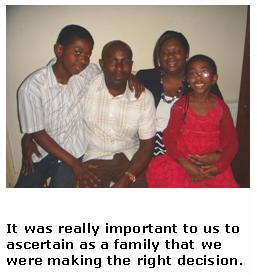
AT: My heritage is St Lucian and I was born and bred in England, where a part of my heart will always be. It was really important to us to ascertain as a family that we were making the right decision and we all went back to Ghana in the summer of 2008. Prior to this, I had visited Ghana in 1996 and 2006 and, on both occasions, I thought Ghana would be a lovely place to retire or to spend holidays; especially in 2006 when the growth in construction was remarkable.
When we went back in 2008, the transformation was phenomenal. I felt inwardly charged with the hope of achieving something great. We visited friends and family and I was impressed by their standard of life, (as a working mother, it was great to see the support in place) and the positive images and role models of black people.
We also spoke with other professional people along the way regarding health care, education and business, about all of which their comments were favorable.
We looked at a selection of international schools and found the standards to be comparable with the UK and also the same syllabus was studied. We looked at what avenues of work were available and if our current skills could be transferred, which they could, although we are hoping to establish a business rather than to work for some one else. This would be the preferred choice and something which we would struggle to achieve in the UK.
We were in Ghana for six weeks and during that time the children settled in really well and any preconceptions were dispelled.
RCA: What do you think will be the key challenges for you and your family once you return?
AT: Mosquitoes, language, acceptance, all of which will be overcome by determination, a positive attitude, modern technology and Faith.
RCA: What do hope to take back home as a result of your experiences overseas?
AT: My background is in catering and food safety. In my current role I oversee 25 schools in relation to the school meals service, which also encompasses repairs and maintenance of the kitchens. Once established, I would really like to give something back to the less fortunate, whether that be free school meals or activities for children from all backgrounds, as there is currently a divide which I hope in time will reduce.
RCA: What's the best advice you can offer someone who is thinking of returning?
AT: Don't be afraid. Do your homework, find out how you are going to sustain yourself long term, network, find your USP, (unique selling point).
We are currently only at the infancy of our new adventure. It will be hard but, with perseverance, the rewards will be great, not only from a financial perspective but also in terms of individual personal growth as well as enlightenment for our young family.
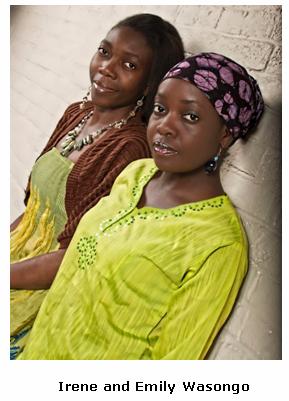 Turning dreams into reality can happen at any age – as 22 year old Emily Wasonga has proven.
ReConnect Africa spoke to Emily and Irene about life in America and the challenges and rewards of running a business.
ReConnect Africa (RCA): You were both born in Nairobi, Kenya. What brought the two of you from Kenya to the United States?
Emily & Irene: Our parents won the Green Card lottery while we were in Botswana. We ended up spending some time in South Africa preparing our paperwork and in February 2004, we moved with our mother to the US and my dad and sister followed in August when he had finished his contract and my sister was done with her first year of college.
RCA: When did you discover your passion for making jewellery?
Emily: Irene discovered her passion for making jewelry as a teenager. 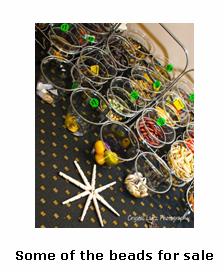 She wanted to remain as fashionable as her age mates, but that was expensive. So she started creating her own pieces from old jewellery and beads.
I started making jewellery by mistake. I really liked to design clothing mainly, but bags and shoes as well. I thought we had hit a landmine when Irene started making jewelry because I realised she could make the accessories to match my designs. I found out, though, that she didn't want to necessarily make designs I came up with!
So I picked up the tools and got to work. Next thing you know, we would be counting our money and going to bead stores together and staying up late into the night making our creations together.
Our parents used to ask us what we planned on doing with all the beads and materials we kept buying and we would always joke, well one day when we have a store, we'll put them to use. It's not a joke anymore - the store is here and every bead/ tool is being put to use.
 RCA: What were some of the challenges in starting your own business?
Irene: Balancing everything - the shop, the family (I am married and I have a 22 month old son), and everything else I have to do.
Emily: I guess showing people that this is no longer just a hobby. We want our business to grow and succeed. People, however, still see it as the hobby and don't understand our passion and plans. I guess we just have to stop trying to explain where we want to take this and get it to where we want it to be.
RCA: Have you found your youth to be a barrier to success?
Irene and Emily: We don't think so – I think it shows that we are serious and focused on what we want to achieve in life.
RCA: Tell us about the shop and how you combine the retail side with teaching others your craft?
We have a bead section and a beading room. We also have strands of beads for sale. So if customers come in and look through our prepared merchandise and would like something different, they can go right ahead and work on it, and we are there to help.
We think teaching the craft encourages people to be creative, especially people who may have thought they were not creative at all. 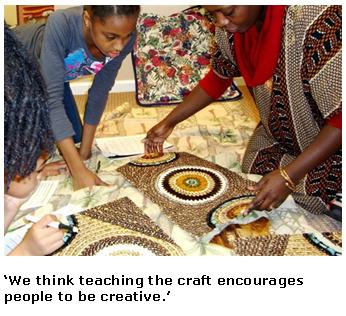 This Mother's Day was the best because we got to see husbands come in and come up with some pretty amazing pieces of work. One of the men who stopped by to customize his wife's Mother's Day package has actually started jewellery making ever since.
We charge $10 for 1 hour 45 minutes. Our beads starts from 25c and our bead strands start at $5- $20. We learnt from others as we taught ourselves and so we would like to keep that culture going.
RCA: How have you integrated into American society and what do you miss about Kenya?
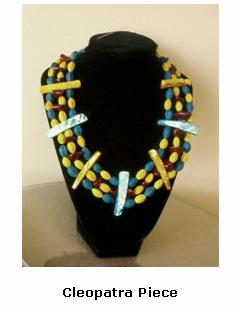
Irene: Well, as far as integration goes, I think seeing how best we have integrated into American society would require someone to look at our work. Our beads come from various parts of the world; some come from African markets, others from El Salvador, and some from right here in the US. It's rare to ever find a piece that is made up of distinctly one type of bead from one part of the world. We fuse the cultures just the way we were brought up.
Emily: I guess we've also learnt how to not compare, but instead learn from American culture, as well as offer what we have from our upbringing to others. Instead of saying things like 'well, we do this and this in Africa', it's become more of understanding why the American culture is the way it is, appreciating that and still being who you feel you need to be.
Irene: What do we miss? Public transportation!
Emily: Open air markets and the availability of things like carpenters, seamstresses, shops (that you could walk to). We miss the humility of life back home sometimes.
RCA: Where do you see your business going over the coming years?
Irene: (jokingly) We want to have a super store the size of Wal-mart! Seriously, though, we would like to grow and open other branches. We would love to have branches in Kenya.
 Emily: I would love for us to have representatives selling our items and the funds helping them- for instance, International students in the US needing an extra way to pay school fees and so forth, signing up to sell our creations to meet this goal.
I would also love for our brand to become a major label in the world.
RCA: What advice can you offer someone who is daunted by the challenges of following their dream?
Irene and Emily: Try - and when one door gets shut, then you look for the open window. Before we had the store, we applied for grants and got turned down. There were so many who told us it was just a hobby.
So when the grants didn't come through, we looked at ourselves and said if we can't get this dream done through grant support, we have to be the ones to make it come to life. And that is what we have done.
We are still growing. Every day is a challenge but we know where we want to be in the future so we keep pushing. If it's your dream and you have enough passion, it's about finding the right way to make it come to life sometimes.
Pictures by Crystal Lenz Photography
 With remittances to Africa from the Diaspora providing huge financial flows (for some governments the figure is between 10 and 40% of GDP) and with total estimates ranging from $20 to $40 billion a year, finding safe, economical and easy ways to send money home has never been more important.
Proving that it isn't only the multinational money transfer companies that can fill this need, Fadugu, a company set up in 2007, has been successfully assisting people to send money to Sierra Leone.
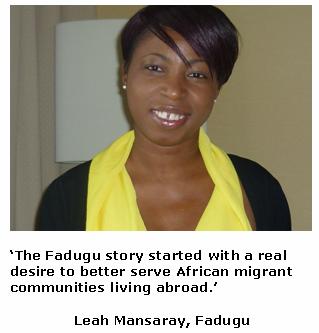
With its new services now also offering fast and simple money transfer services to Ghana and Nigeria, ReConnect Africa spoke to Sierra Leonean Leah Mansaray, the founder and CEO of Fadugu, about the company's incredible success to date.
ReConnect Africa (RCA): What made you decide to set up Fadugu?
Leah Mansaray: As a Sierra Leonean migrant living in the UK, I send money back home to friends and family quite frequently. So it must have been about 7 years ago when, whilst visiting in Syracuse, New York, I tried sending money back home. It was the first time the lack of money transfer choice became obvious to me. The only available money transfer was charging as much as 12% of the transfer amount while, at that time, it would have cost me as little as 5% from the UK.
I thought: this can't be right! So I started to research the remittance industry with a focus on Africa and specifically my home country, Sierra Leone. I found out that as much as 70% of formal transfers to Africa go through one particular money transfer service provider, as opposed to the 20% market share it has in other parts of the world where it operates and where the market is much more competitive.
I found out that not only is the money transfer market dominated by one player, but that their fees when sending to most sub-Saharan African countries were, relatively speaking, much higher - a reflection of their near monopolistic share of the African market.
With my background in software development, I decided to explore different models to see how we could use technology to serve the African market better through fairer pricing and with an application that would be accessible to anyone living abroad with access to the internet. So the story of Fadugu started.
RCA: What are the main challenges for people in getting money back to Africa when they live and work in the UK?
Leah Mansaray: Up until recently, migrants sending money home from the UK had much more choice of money transfer service providers. However, since the introduction of the new payments directive that came into effect on the 1st of November 2009, this is no longer the case. Smaller niche service players providing great service to specific migrant corridors have since had to cease operations as most could no longer meet the new EU payments directive.
{mosimage} This means that we have moved to a situation where you have a few large-sized money transfer providers who are working to consolidate the money transfer service even more.
RCA: What are some of the dangers in the methods currently used by people to send money home?
Leah Mansaray: To sometimes avoid transfer fees, people send money home through friends and family travelling back home.
The natural danger with this lies in having to trust another individual with the safe delivery of your funds. This is why using regulated and registered institutions offering fair transfer fees should be a preferred choice.
RCA: What sets Fadugu and its services apart from the competition?
Leah Mansaray: The Fadugu story started with a real desire to better serve African migrant communities living abroad.
We have a technology-enabled business model that allows us to drive down costs and pass on all the savings to our customers, enabling us to offer Fee Free transfers.
RCA: What are the main benefits of using Fadugu's services?
Leah Mansaray: Most importantly, we offer all our customers Fee Free transfers into all the countries where we operate. Our aim is simple; to disrupt the current money transfer market with our Fee Free model.
{mosimage} Our approach is to work with other local money transfer partners to offer extensive cash pick-up locations. Working with local domestic mobile money transfer operators means that, in those recipient countries, our customers will be able to send money directly to any mobile phone in that country.
The relationship with our international banking partner, HSBC, allows us to offer direct bank transfer as a payout option and competitive exchange rates.
RCA: What other products do you plan to launch in the future?
Leah Mansaray: We have a number of things coming up:
These are just some of the things we are working on to offer our customers a wholesome money transfer service that meets the specific needs of the African migrant community.
RCA: What's the best advice you can offer someone who wants to send money back home?
Leah Mansaray: Everyone should try and shop around for the money transfer partner that most closely meets their needs; don't just use the money transfer provider that appears to shout the loudest or the one that can be seen on every street corner.
There are useful online resource portals such as the sendmoneyhome.org website that provides detailed information on different money transfer operators and it is a good place to start when looking to make comparisons.
Also, it is important to send money back home through formal channels, not least because of the indirect benefit it has on our economies back home in terms of generating foreign exchange reserves for our home countries. This, in turn, affects the country's exchange rate, ultimately impacting on what our families back home pay for their goods and services.
Find out more about Fadugu's services by visiting: www.fadugu.com
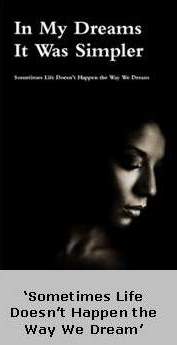
 Take nine writers, create nine Nigerian characters, throw in a plot involving best friends, a wife, a mistress, an irresistible charmer and a dollop of mystery, and what do you get?
The story revolves around the six friends, a man, his wife, his mistress, a handsome man of mystery and a man with a shady past. Thrown together through a series of interrelated events, the story’s twists and turns leave the reader in constant suspense. The book’s chapters follow the thoughts of the nine characters: Lola, Titi, Funmi, Maureen, Dayo, Folake, Dolapo, Temmy and Wole.
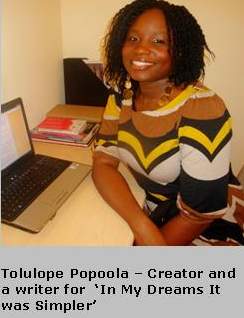
ReConnect Africa talks to Tolulope Popoola, the founder of the writing group, about the creation of the novel and what it says about relationships between African professionals in the Diaspora today.
ReConnect Africa (RCA): What inspired you to create the blog in the first place?
Tolulope Popoola (TP): The blog grew out of a short story. I got the idea for the initial short story when I was looking through a friend’s wedding album on Facebook. I thought the groom looked like a cousin of mine who was already married to someone else. The potential drama of that situation got my imagination going, and a few days later I wrote a short story titled My Dilemma and put it on my blog and as a note on Facebook.
To my surprise, a lot of people left comments asking for a continuation to the story. One particular comment said the story was dramatic and could be turned into a series. That caught my attention and I thought it was a great idea, so I decided to expand the plot and the characters. Then I invited some bloggers to join me in writing the series. Seven of them were interested, and a few weeks later we created the blog and the series began in May 2009.
RCA: Your characters are all Nigerian professionals, mostly in the UK. What do you think the plot says about the state of relationships between Nigerian/African men and women in the Diaspora?
TP: The plot reveals that the modern Nigerian/African female is torn between the old and the new. She has to choose between maintaining her culture and the demands it places on her, between expressing her independence, and her need for a lifelong partner. She wants more out of her relationships and she does not want to repeat the mistakes of her mother's generation.
African men have the harder task of meeting and adjusting to the changing expectations of their women. They might have the traditional ideas of a woman's place in society, but exposure to Western influences gives us a chance to question some aspects of our culture. There are no set rules anymore; every couple now has to find out what works for them. The traditional roles for women have changed and men need to keep up with the present.
RCA: How have readers reacted to the characters and the plot?
TP: Our readers have reacted very positively to the characters and the plot, and they are very involved in the storylines. We’ve had so many people telling us how much they enjoy following the blog and eagerly look forward to our weekly updates. People have told me that they can relate to the characters and their lives because the story includes themes that affect the modern young female – such as relationships, fidelity, secrets, moral dilemmas, friendships, cultural conflicts and career choices.
Almost anybody in their twenties or thirties can immediately identify with the characters and their lives. A lady read the book and said it felt like she was watching a movie because it was so real. It’s great because it started online, so it caught the attention of people who read blogs or surf the web looking for entertaining content.
RCA: The story ends on a note of suspense. What are your plans for a sequel?
TP: There will be a sequel to the first book. We have started writing Season 2 on the blog already, and we plan to compile all the posts into a book when the season ends. We hope to have the second book published before the end of the year.
RCA: How do you balance the blog and writing with your own professional responsibilities?
 TP: I write full-time at the moment, so apart from the series, I write articles and short stories for magazines and I’m working on a novel. I also try to maintain my three blogs, so it’s pretty much non-stop.
I practically spend most of my day on my laptop, and I have to be really organised with my time. But I love writing, and I quit my accounting career to do it two years ago, so I’m not complaining.
RCA: What advice do you have for would-be African writers today?
TP: Keep reading and writing. Read great books by other writers, and practice writing everyday.
There is no better way to improve your work. And be resilient in doing it, even when you get discouraging comments. Pick yourself up and continue. Also, try to create your own opportunities, work on your own ideas and bring them to life.
Tolulope Popoola (aka Favoured Girl) is a writer and lover of books and all things literature. Previously an Accountant until she rediscovered her love for writing in 2006 and became a full-time writer in 2008, she is the creator and one of the writers for the fiction series and book, In My Dreams It Was Simpler. She is currently working on a novel and a collection of short stories.
‘In My Dreams It was Simpler’ is now available for sale on Amazon and Lulu.
 In his review of this collection of essays*, Onyekachi Wambu looks at how governments can integrate the contributions of their Diaspora communities into national development programmes and policies.
First it is important to declare an interest. The organisation I work with, the African Foundation for Development – AFFORD, has since 1994 been engaged in the issues at the heart of this book. Namely, enhancing and expanding the contributions that one particular diaspora – the African one – makes to development in their countries of origin.
The focus of the work has been threefold – first, making the diaspora themselves much more effective as agents of transformation. Second, engaging and integrating their efforts into the development policies of their host countries and other international agencies and finally, integrating their efforts into the programmes and policies of their countries of origin.
It is really this third area of AFFORD's work that this extremely useful book expands on. Through four essays it explores how the resources of diasporas abroad are being harnessed by home governments around the world. The issue of diaspora engagement has jumped up the policy agenda for most home governments in response to the huge financial flows represented by remittances (for some governments the figure is between 10 and 40 per cent of GDP) and the importance of skills and knowledge transfer, given the loss of highly skilled people in the brain drain. However, the knowledge and research has not kept up with developments, remaining anecdotal, country specific or abstract.
Dovelyn Agunias' essay kicks off the book with a much needed overview of how 30 developing countries in Asia, Africa, the Middle East, Eastern Europe and Central and South America are institutionalising diaspora engagement within their governments. The definition of the 'scattered seeds' is wide, and includes temporary and permanent migrants. As you would expect, the approaches to institutionalising involvement are wide and diverse, from distinct diaspora ministries, institutions at all levels of government (including consulates and embassies abroad), to creating quasi-government institutions.
India, Syria, Haiti, Georgia, Bangladesh are amongst those which have dedicated ministries. The ministries aim to inform those abroad of conditions on the ground. For instance, the Ministry for Overseas Indian Affairs runs a three week 'Know India' internship programme among second and subsequent generations – to encourage investment, skills and knowledge sharing, and ultimately return and settlement.
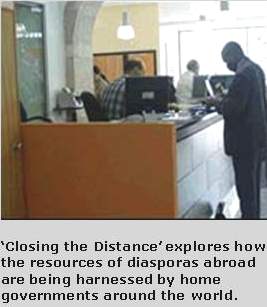 Agunias' research suggests that success or failure for the various interventions at whichever level depends on how seriously the governments have undertaken the initial research with their diasporas before setting up the agency (the process of building trust with diasporas is key); the resources that are committed (many of the initiatives have noble goals and ambitions but are under resourced); avoiding bureaucratic rivalries; and ensuring that diaspora engagement is linked and integrated into national development plans.
The next three essays move beyond an overview to case studies of specific countries written by insiders. Patricia Tomas, the former secretary of labour and employment and currently chairperson of the Development Bank of Philippines, considers the experience of Philippines in 'Protecting overseas Filipino workers: The government's role in the contract labour migration cycle'.
Dr Badara Macalou, who is Minister for Malians abroad and African integration, reflects on 'Creating partnerships with diasporas – The Malian experience'. Finally, Carlos Gutierrez, consul general of Mexico in Sacramento, California and former executive director, Institute of Mexicans Abroad, looks at the important and ground breaking work of the 'The Institute of Mexicans Abroad: An effort to empower the diaspora'.
Since the 1970s the Philippines has been a pioneer in sending out temporary workers to the Middle East. Each year up to a million overseas Filipino workers (OFWs) are deployed (generating up 10 per cent of Gross National Product (GNP) from their remittances). The government's major effort is directed at ensuring the administrative structures to process these huge numbers and the safety and rights of the OFWs, in order to protect such an important sector of the economy. There is less focus on engaging or harnessing the resources of the broader diaspora of permanently settled Filipinos or their descendants – or indeed recognising migration as a development tool.
This latter approach is precisely what Mali has attempted to do since the return of democracy to the country in 1991, with permanently settled Malians and their descendants abroad being designated the '9th region of Mali'. Dr Badara Macalou notes that the vast majority of Malians abroad (over two million) live in neighbouring Cote D'Ivoire, with only three per cent living in Europe. However it is the latter group that send back three-quarters of the remittances, which sets up an interesting policy balancing act between the large numbers in neighbouring countries who are not as economically active, educated or skilled, compared to those in Europe, where special targeting delivers major rewards.
Through the High Council of Malians Abroad (HCME), members of the diaspora in over 50 countries can feed their ideas back to the Malian government (and into the ministry of Malians Abroad and African Integration. Dr Macalou stresses that the focus is on consultation and partnership (with nationals and international agencies) in driving forward delivery in areas such as bringing back skilled professionals for short periods, given the resource constraints of the Malian government.
Meanwhile the Mexican government has developed many of the most innovative programmes in this area as it engages with its 12 million Mexican born migrants in the US and their 19 million descendants. Carlos Gutierrez eloquently describes the working of the government's Institute of Mexicans Abroad (IME), which focuses both on integration in the US as well as development in Mexico – all facilitated through the 50 consulates in the US. Communities are encouraged by the government to organise themselves frequently through their region of origin, to federate these grassroots bodies into larger bodies, which can then deliver major programmes such as the 'Three-for-one-programme' where a dollar generated by a diaspora organisation can attract matching dollars from the local, state, and federal government. It has meant that diaspora has been able to initiate major infrastructural projects, with their elected representatives present at the point of delivery.
Comparing three very different approaches in 'Closing the Distance' demonstrates what has always been clear in this area – that while countries can learn from each other, it is their own national priorities and understanding of the needs of their migrants and diasporas that should drive policy. There are overarching principles that all need to take on board such as the need to for governments to build social capital and relationships of trust with their diasporas abroad. This means consulting widely with their diasporas and creating the durable and transparent structures that can allow for meaning engagement.
'Closing the Distance' has added a lot of really useful knowledge in our understanding of the issues migration and development.
*Dovelyn R. Agunias, ed., Migration Policy Institute 2009
This article was first published in Pambazuka News
 On February 19th – 20th, the Africa Business Club at Harvard Business School will present its 12th Annual Africa Business Conference which will focus on the theme "A Continent Comes of Age: Defining a New Era in African Business."
The largest African student-run conference will bring together pre-eminent keynote speakers, expert panellists, and over 900 students and professionals from across the globe to Harvard Business School's (HBS) campus in Boston to discuss and debate this important phase in Africa's development. The conference also includes prospective students' events, a career fair, fashion show, concert and networking receptions.
"A Continent Comes of Age: Defining a New Era in African Business."
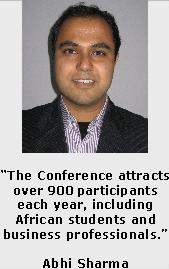 Over the last decade, Africa has gained tremendous ground in terms of economic growth and political stability, but there still remain many challenges to address. Since the last conference, a fibre optic cable connected an ever-growing number of African countries with the rest of the world, the UK and DRC announced a partnership to rebuild the country's road and rail systems, and the introduction of new agricultural technologies significantly increased the continent's food production.
The theme of this year's conference which, say the organisers, is open to everyone is "A Continent Comes of Age: Defining a New Era in African Business."
"The Conference attracts over 900 participants each year, including African students and business professionals from around the world," explains Abhi Sharma, the Co-Conference chair of the HBS African Business Club Conference.
"The HBS Africa Business Conference provides a unique forum for discussion around the opportunities and challenges confronting business people in Africa. The event presents attendees with an excellent opportunity to learn more about the continent and network with business and community leaders, corporate sponsors, current and prospective HBS students, HBS alumni, students from other graduate programs and educators from around the world."
"This year's Conference will focus on what the future holds for Africa," says Sharma. "We believe 2010 represents a landmark year for Africa. In 2010, over 15 African countries celebrate their 50th anniversaries of independence and the World Cup comes to South Africa. Despite these achievements, challenges that persist continue to attract the wrong kind of attention to the continent. We believe this juxtaposition presents us with an opportunity to think about what lies ahead for African businesses and how we can work toward actively shaping this future."
violence in Zimbabwe and Uganda has raised questions about the political stability of African countries, high profile Somali pirate attacks drew new attention to existing concerns about the safety of doing business on the continent, and international media coverage of refugee and health crises foster the perception that Africa is not a viable business location, says Sharma.
With this in mind, discussion at the 2010 Harvard Business School Africa Business Conference will focus on answering questions such as:
Throughout the conference, distinguished keynote speakers and panellists will offer their perspectives on these questions, and conference participants will be given the opportunity to engage them and fellow participants in meaningful discussions about defining a new era in African business.
The Africa Business Club at Harvard Business School was founded twelve years ago to promote awareness of business opportunities in Africa. Each year, the Club hosts the HBS Africa Business Conference, the world's largest student-run conference on business in Africa.
 The Club's current Co-Presidents are Kayode Ogunro and Farai Shonhiwa. The Co-Chairs of this year's Africa Business Conference are Erin Frackleton and Abhi Sharma.
This is an event for anyone with an interest in Africa's future, says Sharma.
"Don't miss this unique opportunity for learning and networking with like-minded individuals who are passionate about making a difference in Africa!"
 Nigerian-born Dele Ogun talks about his first book ‘The Law, the Lawyers and the Lawless’ which chronicles his life in the UK and his career with the Law.
Born in Lagos in the early 1960’s into a newly independent Nigeria, Dele Ogun grew up in his father’s village of Aiyede on the south-west coast, where he lived until the age of seven, when he was sent to join his parents in London.
In his first book ‘The Law, the Lawyers and the Lawless’, Dele – born Akindele Ogunetimoju – tells the story of his early years in the UK and his efforts to assimilate into British culture without losing his own. It traces his journey from a Yoruba schoolboy newly arrived in London to his success in establishing the first black-led commercial law practice in England.
Struggling with dyslexia, yet with an unquenchable ambition to be a lawyer, Dele’s book offers a compelling insight into the challenges of breaking into the cloistered and often privileged world of lawyers, judges and the British legal profession and charts some of the lawful and lawless encounters he faces along the way.
ReConnect Africa spoke to Dele Ogun about his career and his new book.
RCA: What inspired you to write ‘The Law, the Lawyers & the Lawless’?
DO: I had an African-American law partner for many years who used to speak of the “first-black” syndrome which is a common theme in America where opportunities were only opened up to the black community in the 60’s. Our discussions caused me to reflect on the milestones of my own journey, from village life in Nigeria to professional life in Britain, and to realise that I was one of that transitional generation with a story to tell.
RCA: In the book it is clear that it is your understanding of your strengths that directs your career development. What steps do you think people can take to do the same for themselves?
DO: All of our potential is to be found in the genes that we inherit at birth and our achievements are simply the extent to which we understand our individual bequests and supplement them with acquired skills. I am of that school of thought that says that self-knowledge is the greatest education of all and from an early age I have been in dialogue with myself: seeking to understand my likes and my dislikes and critically assessing my strengths and my weaknesses. Once you have carried out this self-appraisal honestly, you can then begin to work on your weaknesses to produce an enhanced you.
RCA: How far do you think the legal profession in the UK has come in terms of opportunity and access for ethnic minorities?
DO: When I first started knocking on the doors of the profession in the mid 80’s it was very much a new phenomenon, especially in the field of commercial law. Though many others have since walked the walk, the pathway is still stony compared with , say, the U.S.A. Getting into commercial law practice in the UK is still hard and staying in is harder still.
However, the experience of different ethnic minority groups is not uniform: Caribbeans still get interviews more easily because of their inherited British names (other things being equal); Asians are making it through to partnership in the commercial practices more often for the simple reason that the Indian sub-continent has taken off commercially; the African lawyer still has the double burden of the name that doesn’t belong and the continent that is economically in decline.
'The Law, the Lawyers and the Lawless’ – A Review
A heavy workload, looming deadlines and a compelling case for catching up on lost sleep were all put aside to read this engaging, engrossing, enlightening and extremely entertaining account of Dele Ogun’s life.
Told with astonishing honesty in these times where image often reigns supreme, as well as a confidence that never crosses into smugness, ‘The Law, The Lawyers & The Lawless’ is the story of one man’s quest to understand his strengths and to push against those obstacles that stand between him and his goal.
In the course of so doing, he acquires new insights that open the door to fresh opportunities and reaches a sober and mature redefinition of success.
This book by Dele Ogun – born Akindele Ogunetimoju – showcases his natural talents as a legal advocate and his instincts as an entrepreneur unafraid to push against the boundaries of the status quo. It displays the wit and charm of this born orator as well as the grace and compassion of someone who must surely be ranked high on the list of role models for today’s African Diaspora youth.
This book is a ‘must read’ for anyone who appreciates these qualities!
Frances Williams
Editor, ReConnect Africa
RCA: You combined your legal skills and entrepreneurial flair when you set up your law firm. What advice do you have for other lawyers who might want to follow this route?
DO: There will be highs and there will be lows! It is a joy to have the freedom to be the kind of lawyer you want to be and, at the same time, to be a decision maker.
For example, I mix transactional work with advocacy which would have been impossible in my former life as an employed lawyer in a major City firm. I also recently decided to rebrand the firm from Ogun@Law to Akin & Law LLP which is the kind of judgment call that C.E.O.s in commercial establishments have to make.
The lows are when you see your business overdraft spiralling because the pay day you were looking forward to just didn’t go to plan.
RCA: How would you say your Nigerian origins contributed to developing the kind of person and lawyer you have become?
DO: It is hard work being a Nigerian, at least for those of us who cannot live by the value systems that are prevalent in the country at the moment: try as you might you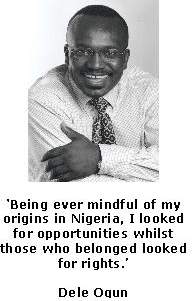 cannot escape the bad odour generated by bad leadership and fanned by the international media. However, it is because the good Nigerian cannot count on any favours from home or abroad that accounts for our resilience.
Being ever mindful of my origins in Nigeria, I looked for opportunities whilst those who belonged looked for rights. My origins made me realise that I could not expect to walk into jobs like a native and this led me to think about the pathways where I would stand a better chance of progression.
RCA: Your book provides a fascinating commentary on events in Nigeria. As an African living and working in the UK, how do you view your personal responsibility to the development of Nigeria and of Africa as a whole?
DO: Africans at home often think that those of us who have been abroad for long do not understand the problems of the homeland because, as my people would say, “you are not on ground”. They fail to understand the two factors that mean that the view from abroad can be a lot clearer. The first factor is that since the trade routes tour homeland were first opened up, the events “on ground” have been umbilically conjoined with strategic calculations abroad.
The second factor is the greater access to a greater range of information that those of us abroad have. Whether we like it or not, by virtue of our vantage point, those of us abroad have the responsibility for the development of our homeland since the failings back home will continue to feed the prejudice of the racists and the arrogant claims of the supremacists in the foreign lands where we and our children may have taken refuge.
The problem with many of us at present is that we are using up all our energies trying to leave our children a financial legacy and putting nothing aside for the work that needs to be done to give them the more enduring legacy of membership of a race that is respected in the world.
RCA: How can readers buy a copy of ‘The Law, the Lawyers & the Lawless’?
DO: You can buy the book on www.amazon.co.uk or simply ask your local book shop to order it.
 A new study asks whether enough is being done to balance ethnicity in the US tax profession.
The tax profession in America is under a tremendous pressure for change, according to a recent study, "Minorities in Tax 2010" and one area which is significantly impacted is the evolution of diversity within the profession and how this compares to the overall United States' civilian labour pool.
The study, conducted by TaxDiversity, a web site dedicated to strengthening the tax profession through diversity, analyses and compares findings from 2002 with those of 2008 to answer the question Are we doing enough to balance ethnicity in the tax profession?'
The tax profession has made very limited strides in attracting and advancing minorities and, more alarmingly, appears to lack the necessary catalysts to propel the number of minorities to levels that would compare with other professions.
The bottom line, say the organisers of the study, is that the tax profession is still White-dominated, although the growing trend of White retirement in tax will lead to significant opportunities for the other three major minority groups identified in this study: Asians, Blacks, and Hispanics.
The tax profession has made very limited strides in attracting and advancing minorities.
However, according to the data within the report, even though some areas of positive change have been noted since 2002, "the tax profession at large is simply not doing enough to attract, retain, and advance minorities into long-term career positions, especially positions in senior management."
Using data from the United States Bureau of Labor, the Internal Revenue Service (IRS) and the Big 4 public accounting firms, the reports authors note that while the percentage of the White population in the Degreed Civilian Labor Force (CLF) has remained constant since 2002 at 78%, between 2002 and 2008 there has been a decrease of 20% in the Black population, while Asians and Hispanics have seen an increase of 14% and 20% respectively. Yet, new Accounting graduates appear to be more diverse, with the proportion of White to Non-White accounting graduates having shifted from a ratio of 75%: 25% in 2002 to 68%:32% in 2008.
Within the Government (Public Sector), minority candidates overall are well represented, although Black candidates are more attracted to the IRS (20% representation in 2008nearly a 10% increase annually over 6 years) than to the Private Sector (4% representation in 2008 is a 4% increase annually over 6 years) and have a better representation in the IRS than in the overall CLF.
Within the private sector, it is clear, says the study, that at all career levels Blacks are under-represented, but especially at the senior level, where the percentage of Black professionals drops to only 2% (although that represents a 100% increase from 2002 to 2008).
By contrast, Asians are well-represented at all staff levels although there is a slight drop off at the senior level, while Hispanics seem to have made little-to-no progress in the private Sector, showing a 15% increase over 6 years at all staff levels.
On one hand, while the private sector continues to show progress in recruiting a pipeline of more diverse candidate pool at junior levels, they also, on the other hand, continue to face challenges in retaining these diverse candidates at the more senior levels. The picture for minorities within corporate in-house tax departments also shows that minority candidates are under-represented at 6% as opposed to 12% in accounting in the private sector.
The key findings from the report show that Asians in America have made the most significant jump in representation (up over 30%) over the six years and now make up nearly 20% of the workforce in public accounting.
Blacks, by contrast made a 25% increase, while Hispanics only increased 20% in the same period. However, even though Blacks have made an increase, they still only represent 4% in accounting in this sector and are not moving into senior management at the same rate as Asians and Hispanics.
 Due to retirement, a significant decrease in the White population has been seen in the government sector, and White accountants are exiting the tax profession at a faster rate as a whole. The percentage of Blacks in government sector tax has increased dramatically (12% to 20%) as Blacks are using government service as their primary entrance path into tax.
When it comes to overall tax industry trends, though, Blacks are not integrating effectively into public accounting or reaching management positions while, in tax at least, Hispanics generally mirror their civilian work force employment percentage.
A key reason why the number of Black students who choose to major in accounting during college still remains low is that significant misperceptions exist about the accounting profession, according to a study conducted by the CPA Journal, "Examining Minorities' Perceptions of Accounting."
These misperceptions begin before students enter college, with the findings from the study suggesting that high-school teachers and counsellors "are important influences on students' choice of a major and that the accounting profession should reach out to Black students when they are still in high school to dispel myths and stereotypes about the practice of accounting.
The problem of diversity is prevalent in the tax industry and, according to the report, if things are left unchanged, "the tax profession will continue to struggle to achieve an ethnic balance."
The report recommends some key initiatives to positively influence diversity in tax, from improving the influx of diverse tax employees to more effective career advancement of minorities in the field.
Within the private sector, the authors of the report recommend that accounting firms take a far broader approach to recruiting and include a larger pool of schools with accounting programs, as well as encourage second-tier schools to enhance their tax and accounting courses.
If things are left unchanged, "the tax profession will continue to struggle to achieve an ethnic balance."
As Blacks and Hispanics are less likely to attend schools that accounting firms traditionally recruit from, they urge firms to extend their traditional recruiting practices while also creating more advanced education partnerships with recent graduates to help them reach their academic potential and integrate faster into more senior level positions. Mentoring programmes will also help to connect senior accounting professionals with new talent coming into the profession.
Corporate tax departments, they say, should adopt more aggressive internship programmes to close the gap in attracting young and diverse tax candidates and escalate such employees, once they are on board, through effective training, education, and mentoring programs.
"The challenges of diversity in the tax profession are not easily met without an industry-wide recognition that business as usual will simply not work any longer," says the report. The tax profession must do a better job of recruiting, training, and elevating diverse professionals in the field. Though there have been some strides made in the last six years, the bottom line is more efforts must be made on all fronts as the profession continues to face growing employment and workload demands on all levels and areas in tax."
For more information: "Minorities in Tax 2010" and www.TaxDiversity.com
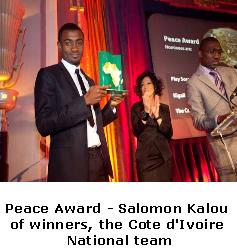 The recent SCORE4africa Awards was an opportunity to reward those using the power of football to transform lives in Africa.
Michael Essien, Diambars, the Senegalese academy set up by the former Arsenal player Patrick Vieira, and Didier Drogba and the Cote dIvoire national team, were among the big winners at the prestigious SCORE4africa Awards held in London.
The Awards, which took place at the end of November, celebrate the power of football to transform lives, honouring those who are using football for development purposes in Africa. The lucky winners received their awards in front of a star studded audience of fellow footballers, politicians and business people, including Salomon Kalou, Diomansy Kamara and Kagisho Dikgacoi, George Elokobi, Sports Minister, Gerry Sutcliffe, MP and the South African High Commissioner, HE Dr Zola Skweyiya.
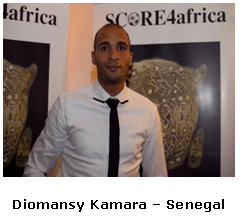 Chelsea mid-fielder Essien walked away with the People's Choice Award for best African Ambassador in the Premier League, beating off a strong challenge from Didier Drogba and Nwankwo Kanu. While Didier Drogba and colleagues Salomon Kalou, Kolo Toure and Emmanuel Eboue, from the Cote dIvoire national team were recognised for their contributions to peace and reconciliation during the civil war in their home country, which split the country between the north and the south.
Salomon Kalou, speaking on behalf of the Cote D'Ivoire National team said: 'Our country went through a difficult time during the troubles. Our football team stayed together. Football helped in the peace process. As we go to the World Cup, we hope the county can unite behind the team and we can help further with reconciliation.'
'Our country went through a difficult time during the troubles. Our football team stayed together. Football helped in the peace process.'
It was a disappointing night for Man City striker Craig Bellamy, who was nominated in two categories but was pipped to the post by Patrick Vieiras Diambars, who won for best education project using football and for the best football Foundation.
 SCORE4Africa is a social enterprise wholly owned by the African Foundation for Development (AFFORD), a UK Registered Charity. The founders and organisers of SCORE4africa believe that football can help transform lives and they seek to recognise, reward and encourage those individuals, organisations, players, academies and institutions using football as a tool to drive positive change in Africa.
The organisation holds an annual awards ceremony and supports the foundation of social enterprises in Africa. It celebrates the partnerships that create sustainable development and allocates 30% of surplus funds by this event to developing LIVING FOOTBALL Community Hubs. 70% of surplus funds raised go to AFFORDs SEEDA (Supporting Entrepreneurs and Enterprise Development in Africa) project.
The SEEDA project, in partnership with Comic Relief and the University of Sierra Leone, has led to the creation of five business centres in Sierra Leone between 2007 and 2009. These have to date trained 25 business coaches who provide practical business support to 100s of local businesses and entrepreneurs.
 Grassroots organisations using football for development were also recognised at the Awards. Alive and Kicking, who have created a leather ball-making business employing over 20 people, won the Enterprise Award for second year, while Kick4Life, an HIV project won the Health Award.
Cameroun football legend Roger Milla was given the Lifetime Achievement Award. In his acceptance speech he called on African players to do more off the pitch.
'It's been a very exciting competition, reflecting the high profile individuals and grassroots organisations making a difference through football,' said Onyekachi Wambu, one of the event's organisers.
Co-event organiser, Ayo Alli, added: 'The strength of the winners reflects the growing importance to development in Africa and is a challenge to the entire football world to do more.'
'The strength of the winners reflects the growing importance to development in Africa and is a challenge to the entire football world to do more.'
Finally, HE Dr Zola Skweyiya welcomed the SCORE4africa initiative and promised the gathered audience that South Africa and Africa were ready to host the 2010 World Cup next year.
Judges for the awards included Marcel Desailly, Nancy DellOlio, Lord Newby, Nada Hook from the FA, Brian Oliver, Sports Editor of The Observer, Farayi Mungazi from BBC World Service Africa, and Gibril Faal, Chair of the African Diaspora charity, AFFORD.
 Businesses owned by Black, Latina and Asian women are growing at a faster rate than all U.S. firms in terms of growth of revenues and number of employees.
The number of companies owned by women of colour has skyrocketed over the past decade making them the nation's fastest-growing segment of all privately held firms, recent studies show.
The Center for Women’s Business Research in a recent study places the number of firms now owned at least 50 percent by women of colour at 2.3 million, providing 1.7 million jobs and generating $235 billion in revenues.
The report shows that businesses owned by Latinas and Black and Asian women are growing at a faster rate than all U.S. firms in terms of growth of revenues and number of employees.
Margaret A. Smith, chair of the Center for Women's Business Research, notes that "the face of women entrepreneurship is changing."
Today, women of colour represent 26 percent of all women business owners - up from 20 percent just a few years ago. These business owners are a vital driver of economic growth in every community and a vibrant source of suppliers and customers. As of 2008, there were 2.3 million firms [that were] 50 percent or more owned by women of colour, providing 1.7 million jobs and generating $235 billion in revenues."
Today, women of colour represent 26 percent of all women business owners - up from 20 percent just a few years ago.
According to the study, businesses at least 50 percent owned by Latinas and Black and Asian women grew twice as fast in terms of revenue (35 percent versus 15 percent) and three times as fast in terms of number (30 percent versus 9 percent).
Among Latinas and Black and Asian women (as of 2008), Black women owned the second highest number of firms (734,664), employed 281,055 people, and had revenues of more than $32 billion. Latinas had the largest number of businesses, owning nearly 747,108 firms, employing 430,000 workers and generating revenues of $62 billion. Asian-American women's companies outpaced all others in growth in numbers, employment and receipts.
A report by the U.S. Department of Commerce's Minority Business Development Agency concluded that minority women entrepreneurs are establishing businesses twice as fast as male minority business owners - and more than four times the rate of non-minority men and women.
The number of firms owned at least 51 percent by women of color increased 57 percent between 1997 and 2002 to nearly 1.5 million companies with $111 billion in gross receipts. By contrast, minority male-owned firms increased 31 percent, all women-owned businesses jumped 20 percent, and all male-owned firms increased by 16 percent.
 The MBDA study said women of color have expanded predominantly into the health care and social assistance fields. It found that to be the case for 35 percent of African-American business owners, 23 percent of Latina business owners, and 15 percent of Asian entrepreneurs. Asian women entrepreneurs, however, were more likely to own firms offering "other services," or 23 percent.
"Women see entrepreneurship as the key to freedom – providing flexibility and wealth creation," said Ronald N. Langston, MBDA's national director. "Women are taking advantage of their talents and experience establishing businesses throughout our communities at astounding rates. Many choose entrepreneurship as a way to battle the glass ceiling that still, unfortunately exists in corporate America."
Despite the rapid growth in numbers, minority business women have yet to reach parity based on population and they trail minority male-owned businesses in gross receipts and employees, the MBDA report concluded.
Minority women entrepreneurs are establishing businesses twice as fast as male minority business owners.
According to experts in US entrepreneurial studies said the growth in minority women-owned businesses is a phenomenon underscoring the strides in education, opportunity and access to capital made by women of colour as they increasingly invest in their own ventures rather than fight limitations imposed by corporate America.
Some point to the fact that, with fewer barriers to capital, better education among young entrepreneurs, and a discovery of second-career opportunities for older women, it is inevitable that increased numbers of women – and minority women – own businesses.
The perception and reality of a glass ceiling in regard to gender and race is also cited by experts as a reason for frustration with traditional employment, driving minority women to choose to pursue other avenues where they are not dealing with negative behaviour and therefore choosing to be their own boss.
For more from the Center for Women's Business Research, visit http://www.nfwbo.org
 As she re-launches her book 'Vicissitude' and career development programme, we talk to Helen Tucker about her personal journey and overcoming vicissitudes.
'Vicissitude': a variation in circumstances or fortune at different times in your life; a regular change or succession from one thing to another, or one part of a cycle to the next; a change or variation.
Helen Tucker (HT): The inspiration behind 'Vicissitude' I suppose comes from the true meaning of the word 'vicissitude' - I was going through a 'variation of circumstances and fortune' in my life and I either could have laid it to bed or develop it - and I went for the latter.
What I did was to step out of my comfort zone and take time out from being a mother, sister, aunt, wife (at the time), my job and really focus on who I was, where I was heading and what I really wanted from life. This self-analysis became the blueprint of the award winning career development programme I have since developed. I used my MBA to research, analyse and gather information about women who were highly qualified but were not utilizing their skills or their potential to get ahead and be in positions were they could make a difference, increase their income, create a less stressful life and be happy!
I found that just like me they didn’t take time out, it was as simple as that and, in some parts, as challenging: time to focus on influences in their lives, what motivated them, what was holding them back. Action they could take - having a 10 year plan, networking to climb the corporate ladder, get a job or become self-employed if they desired – were the challenges they had to face and to tackle. However, once accomplished, this brought about a positive change or a variation in their lives.
HT: I launched the first edition 5 years ago. This second edition is more of a challenge because I have put more of who I am in the book - a semi autobiography, I guess.
The first one just simply targeted the steps of the Career Development Programme while this one delves into much more about my life and others' and some of the challenges faced. I'm not one for sharing my personal life with people, let alone have it written and in print! But I wanted to not only leave a legacy for my children (I have started my autobiography) but this also maps out how I got where I am today by using some of the tried and tested steps that I have delivered for over a decade to those who want to make a change.
 I consider myself so wealthy with knowledge, wisdom health and blessings. It's not always about the money, which in honesty was my initial focus when I started my business. Life is much more than that. It's a case of understanding what is really important in life. As I have matured, my values and beliefs have also changed and I have consolidated my experience over the years to streamline my Career Coaching services.
HT: I surprise myself! I embark on mini journeys which bring me closer to what I want from life and particular goals, but I don't see life as an ultimate goal that I have to achieve. I now enjoy my journey in life; being a Christian, I give thanks every day. I am also inspired by the people I am around; friends and family, and most of all, clients. They give me a great insight into their own plight and challenges and the satisfaction that what I have developed and gained over the years is helping others to make decisions that are positive and that make a difference in their lives. I see myself as a catalyst helping people to achieve what they want but fear what others would say or do to not support them.
I am always looking at new ways of doing things and attend workshops for fun or for personal or professional development. My work as a career coach has also taken me further afield and widened my own options to the possibilities of working in the Middle East, the Caribbean or various parts of the UK.
I have been fortunate to travel extensively with my work and to seek out possibilities which, in turn, have enriched my outlook on life. This year I have travelled to Qatar, Dubai, Canada and, before the year is out, to Sierra Leone for personal as well as business opportunities. A 9-5 job would not have afforded me that - or the time!
HT: Although I was born in the UK, my family is from Sierra Leone and has strong traditions in that their expectations were quite high and that is what I have tried to instill into my children, but with some flexibility. For me, recognizing that my children are individuals and are different in how they study or have varying ambitions is important.
My son wanted to mix study and work so is now doing an internship with an international company and based in West Africa. By so doing, he is not only gaining work experience and building his skills, but experiencing African culture and preparing and encouraging himself to travel to other countries. My eldest daughter studied psychology and counseling and my youngest daughter is studying for her GCSE's.
When my family arrived in the UK in the late 1950’s it was a lot harsher than what young people face today. This has certainly shaped my values and belief system in the early stages of raising my children. And, as the word 'Vicissitude' suggests, changes in my life have changed some of my beliefs to be a lot more diverse, flexible and to promote today’s opportunities to my children, whilst still retaining some of the African values instilled in me.
HT: I have had feedback from the first edition that the steps really helped people gain a better insight of who they are and what they want without feeling guilty.
Other people can make you feel guilty for spending time on yourself, improving yourself, being happy, only because sometimes they cannot find that 'true self' potion themselves and may not want you to gain confidence because they feel that they would be left behind.
Reading and taking the self development steps in the book enhances any relationship because if you know who you are, then you are better at engaging with other people and developing a much more meaningful relationship with those who want to be around you. I will also add that many of us have 'toxic' people around us and dealing with them may mean that a new pattern of behaviour has to be adopted and adhered to for them to see that you have changed.
Sometime it's changing yourself that can help build a relationship but also cutting ties with the ones that hold you back.
HT: I like this question! Well, I continuously step back from what I am doing, whether it's for a long break, like a weekend away, or only a short break i.e. an hour's pampering.
I treat myself and acknowledge that I have many blessings that have enriched my life so I am grateful for what I have done and have experienced. I also laugh a lot, which is my secret for keeping young! Also, not always taking life so seriously, and remembering that we are on this earth for a purpose. I found my purpose early enough in my life to make a difference. Some people don't know what their purpose is and invariably follow other peoples' visions or dreams and end up being lonely, bitter and ill.
I have had a couple of close friends who have passed away over the years or have become ill with cancer. One who really inspired me was a close friend; we both taught at a further education college and after some personal challenges in her life she became seriously ill. She decided then that life was too short and made a total u-turn and followed her dream. She amazed me and inspired me to embark on living life to the max, whichever path I took.
Many other influences have motivated me: from books to reading your website ReConnect Africa.com, with all the positive interviews, jobs, career advice that help people access information when it comes to career development or change! And also, CD's of people who say what they are doing and just do it!
Each day is an inspiration because I get up each morning. Some people, unfortunately, don't get to see the morning.
HT: The book 'Vicissitude' can be obtained via Amazon and from my website. I also promote it whilst running the Career Development workshops and will be running a series of seminars in Luton in November - so check out my website to get an update on dates and venues. www.dupignyconsulting.com or email me at Helen@dupignyconsuting.com
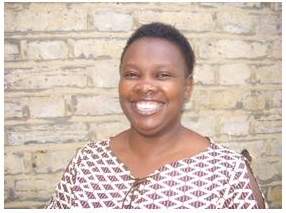 When Goretti Kyomuhendo was a young girl growing up in Hoima, 'a dusty, sleepy town' in western Uganda, she came across an old copy of Chinua Achebe's Things Fall Apart. It was to change her life.
Goretti Kyomuhendo was born in 1965 and grew up in Hoima, western Uganda. Today, she holds an MA in creative writing from the University of KwaZulu-Natal in Durban, South Africa and is a founding member of the Ugandan Women Writers’ Association and Publishing House - FEMRITE, where she worked as the first Programme Coordinator for ten years.
Goretti was the first Ugandan woman to receive an International Writing Program Fellowship at the University of Iowa in 1997 and, today, she is resident in London.
But, as a young child, says Goretti, "the world of fictional books was alien to me."
"The small Mission school I was attending did not have a library. The only semblance of a library was in Hoima town, and it only stocked foreign books, like Enid Blyton's The Famous Five series, which talked of snow and apples and cottages and ham rolls, things that I had never seen or eaten, in my entire life."
"A bit later I discovered the English mystery writer, James Hadley Chase, and I became hopelessly hooked on his crime fiction. As I graduated into a teenager, I found myself lost in the romantic world that Barbara Cartland created in her exciting novels, and later, I was to develop a love affair with the Mills & Boon books, which allowed me to dream about true love.
"I read Things Fall Apart when I was about fifteen, and it opened up a whole different imaginary world for me, which I did not know existed beyond the crime fiction and romances that I had become addicted to.
"The story in Things Fall Apart liberated the way I perceived Africa. It made Africa look familiar, and created in me a sublime feeling of what it meant to be an African. Later, when I started writing, I knew it was alright to write stories based in my village; stories that had been passed on to me by my grandmother, because, Achebe had given me that licence. Hence, my journey as a writer started the day I read Things Fall Apart, though I did not know it then."
ReConnect Africa (RCA): Goretti, what inspires you to write?
GK: I'm inspired by the abundance of stories that surround me. At times, I wish I could grow a third hand so I can write them all!
RCA: Tell us about the novels that you have written?
GK: My first novel, The First Daughter, was published in Uganda in 1996. It's a story about an adolescent girl grappling with the challenges of growing up in Uganda. It deals with teenage pregnancy, love and betrayal, and Ugandan culture.
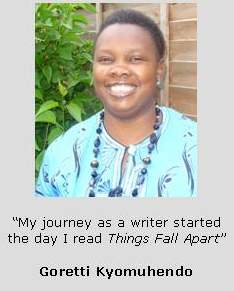 My second novel was published in Uganda in 1999 and it is entitled Secrets no More. It follows the life of a young woman, Marina, a sole survivor in her family during the grisly 1994 Rwanda genocide.
The next is a novella, Whispers from Vera, also published in Uganda in 2002. It is written in the epistolary form, from Vera, an enlightened, emancipated career woman, married and a mother, writing to an unnamed friend, about her challenges of straddling two lives: modern and traditional.
My fourth is entitled Waiting and it was published in the United States by The Feminist Press in 2007. It is set in Uganda in 1979, during the last year of dictator Idi Amin's despotic rule. The story also captures the effects of this internecine war on women, and also reflects the resilience of the Ugandan people, through the many years of conflict that they've endured.
I have also published several short stories and five children's books.
RCA: What would you say are the challenges that you have overcome as a writer?
GK: Getting published in Africa is very difficult. The publishing industries are underdeveloped, the book markets are small, and there's a general apathy towards books and reading, as a whole. I had to get a grant from a Dutch funding organisation to publish my first novel.
RCA: Goretti, what advice do you have for aspiring writers?
GK: To be a writer is to be courageous. When you write, you share a bit of yourself with the world. Writing is about revealing your feelings, your fears and anxieties, your aspirations – to your readers. You need to shed your inhibitions and write that story in your heart, and not the one in your mind.
As a writer, you should keep a journal. This is where you jot down the ideas that you plan to include in your story.
A writer writes: To be referred to as a writer is not by mere wish, nor is it a title you can simply acquire by earning an academic qualification, or attending a certain course. You can only earn this designation by actually writing.
A writer reads; your love for writing must be equalled if not surpassed by that of reading. And, as our elders in Uganda say, 'if you want to learn how to dance, then you watch those on the dancing floor.'
 Inspired by the cultural richness encountered in their upbringing in West Africa and India, Hazel and Kweku Aggrey-Orleans have created a unique range of scarves that combine the richness of Ghanaian Kente with the delicacy of Indian silk.
ReConnect Africa spoke to Hazel and Kweku about the inspiration behind Orleans Designs.
We had always been interested in fashion. However, the turning point came after Hazel had the design confidence to create her own wedding dress in August 2006. The overwhelming response was the first clod of earth to be added to the growth and creation of Orleans Designs as a brand.
The next steps were perhaps the easiest. We had for years bemoaned the underuse of bright colours in the fashion palette of the Western World: White, Blue, Black and Grey seemed to dominate all collections with the odd exceptional colourful summer offering. 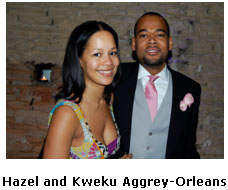 In winter, it was near impossible, e.g. women's coats in vibrant colours, and those found were often either at the high or low end of the fashion market. As West Africans, the absence of vibrant colours in mainstream fashion was a peculiarly unjustifiable twist.
From the market research we undertook in the first stages, we discovered that many people wanted to add more vibrant colour to their wardrobes. The idea of undertaking a wholesale revolution in terms of replacing a standard wardrobe based on blue, black, white and grey with a vibrantly coloured one was, we felt, a challenge few would wish to undertake.
We strongly acknowledged that elegance was largely made up of the wearer's confidence and ease with a garment. It was at that stage that we decided, through Orleans Designs, to accessorize with colour.
Creating any collection from the ideas of two individuals is not without its challenges. The fact that the other individual is your husband or wife certainly does not make the task any easier. Frequent clashes of ideas and emphasis are not uncommon in our design relationship, however, our underlying respect for each other's ideas often serves as a catalyst in the development of our designs in that we are each obliged to justify and analyse the reasons behind the rejection or acceptance of any design. From conflict we are then able to generate a strong consensus and understanding of each design.
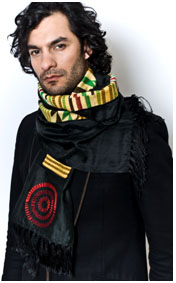 As keen adventure travellers, we would set out annually from London. It was during our travels, particularly through West Africa and India that the idea was born not only to create vibrant scarves but to marry in those scarves fine cloths from Ghana and India – two countries at different stages of the same development, but both with a strong appreciation of fabrics.
In Ghana and in India, like in many countries in Africa and Asia, fabrics hold an elevated status within the societies and, for example, they are presented as part of the dowry for a bride's hand.
Their intricate weaves will sometimes reflect the status or position of its bearer, lending a sense of authority to our choice of fabrics. On many levels, we found the collaboration between Kente and Indian silk complementary. The sourcing of our fabrics was the next step.
 In Ghana, there was little difficulty in relying on the skill and artistry of Dento Mills to weave the Kente strips used for our scarves.
The same mill, under the current owner's father's stewardship had, in 1960, woven the Kente quilt presented to the United Nations in New York by Kwame Nkrumah (Ghana's first president after Independence) on the occasion of Ghana's membership.
The traditional looms of Dento Mills continue the time consuming art of weaving Kente strips: One strip can, given its detail, take its weaver a day to finish.
In India we turned to the well-known artisan weavers of the Hindu Holy City of Varanasi to source rich, textured, hand-woven silks. The intricacy of their work was evident.
Some scarves have additional detailing of embroided Adinkra symbols, each of which in turn symbolizes a proverb or virtue. The finishing idea behind the collection was to be able to present each scarf as an inspiration for its wearer: Each carries a name of its own derived from its detail and each is packaged in 100% recycled paper.
We believe that our genuine conviction in our designs and product has strengthened our brand. Over the years we would want to see Orleans Designs become synonymous with elegance and quality.
We are currently in negotiations with various hotels and boutiques in West Africa to stock our products from autumn of 2009. We are also looking to branch into the Western market with a product that is not only aimed at Africans or those with an African link, but at everyone.
We are also very excited about our additional project to launch African print fabrics by Christmas 2009. In line with our scarves, vibrant colours will be the theme throughout our fabrics.
Orleans Designs scarves can be bought online at www.orleansdesigns.com
 After a successful event in 2008 the Ghana Black Stars Network (GBSN) will be hosting the 2nd Annual Ghana Business & Investment Exhibition at the Bernie Grants Art Centre in London on Saturday 19th September 2009.
Within the past eight years Ghana has experienced unprecedented economic growth and has made an impression on the international scene as the place to invest and/or establish a business.
With a smooth presidential transition reflecting a stable democratic country; a strong performing stock exchange – the best performing stock exchange in the World for 2008 showing returns of up to 58%; a good performing national currency; rated one of the top countries to do business by the World Bank; becoming an oil producing country by 2010, becoming a gas producing country by 2011 AND Obama visiting in July 2009 – Ghana does not have too much to complain about.
As with every country in the developed world, Ghana is being affected by the global recession. However, Ghana still holds its place as a desirable location for investors to turn to or establish their African office.
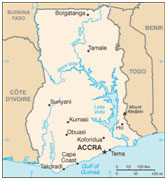 Regarded as the 'Gateway to Africa', Ghana is playing with the ‘big boys’ such as Kenya, Nigeria and South Africa. Despite its comparatively modest population of 22 million people, Ghana has seen large multinational organisations such as Standard Chartered Bank; Nokia, KPMG, PriceWaterhouseCoopers establishing their services in the thriving capital city of Accra.
Despite its attraction to foreign businesses, it is imperative for Ghana to establish and secure its economy on home grown businesses and investments.
As an emerging market, Ghana has industries that need to be created, developed and championed. Competition is getting fierce but there are still many industries which lack the knowledge and insight needed to thrive and create wealth.
The Ghana Business & Investment Exhibition (GBIE) works by reaching out to those in the Diaspora as well as entrepreneurs who are seeking business opportunities, a return on their money and/or want a different life from the constant rat race in the UK.
The Ghana Black Stars Network (GBSN) is a collective of young professional British Ghanaians who have created a portal for Ghanaians from all over the world to reconnect with Ghana. Their mission is to promote Ghanaian life and culture; whilst empowering, developing and supporting the needs of Ghanaians in the UK.
Key among the organisation's aims and objectives is creating the space to challenge, educate and expand the perceptions of Ghana and its people through events, workshops, forums and excursions.
The Business & Investment Exhibition will include a series of seminars that discuss the key areas one needs to consider when looking at business in or relocating to Ghana. The 2008 event included seminars on property and land acquisition; business opportunities; the entertainment industry; opening a bank account; investing in the GSE and finding a job in Ghana.
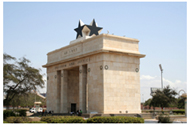 Each seminar was presented by industry professionals, followed by a question and answer session, enabling delegates to ask questions to the panel. The event also included an exhibition of businesses with products and/or services of interest to those based within the UK.
The 2009 event will feature a number of seminars, including: Ghana in the next 5 years – Politics, Agriculture 'The future for Ghana', Business & Investment Opportunities in Ghana, Black Gold – Oil in Ghana, cause for celebration? Exporting & Importing products, 'Land and Property in Ghana'. Each seminar will look at the current climate, how things are developing and what opportunities are available.
The 2009 event will also feature a networking session for people to discuss ideas and work on potential partnerships. This, the organisers stress, is important as it allows people to share their experiences and, if possible, their contacts with those in the Diaspora to reduce the chances of people being duped, robbed or misled.
The GBSN is looking at reaching beyond Ghanaians to attend this event as the wealth of opportunities that currently exist in Ghana is not duplicated elsewhere on the African continent.
The 2nd Annual Ghana Business & Investment Exhibition is supported by the High Commission of Ghana in the UK and the Ghana Investment Promotion Centre. Media partners for this year's event are Reconnect Africa, African Business magazine, New African magazine, The Trumpet newspaper, The African Voice newspaper, Find a job in Africa and BEN TV.
For businesses who are interested in participating with this event, a limited number of advertising and exhibiting spaces are available for this event. If you are interested in presenting your business to the event’s delegates, please email Nadia Mensah on nadia@thegbsn.com.
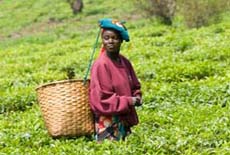 A new project aims to support connections among Africa's Diaspora to improve agriculture in Africa.
The National Peace Corps Association (NPCA) is building a new online social action community to generate ideas, suggestions and data that will be used to inform development programme efforts that directly reach the poorest populations in Africa.
The Africa Rural Connect (ARC) project is being implemented by the NPCA to support connections among the African Diaspora and to improve the livelihoods of farmers in Sub-Saharan Africa.
Africa Rural Connect (ARC) is an experiment in global collaboration, says the organisation, and a chance to put collective thoughts together to assemble the best business plans for agricultural development in Sub-Saharan Africa.
"We suggest that the people who have lived or worked in Sub-Saharan Africa offer their perspectives or expertise to help women farmers and improve the livelihoods of the poorest populations there," says the NPCA. "Their contributions fill this online community with creative and practical plans that will gain exposure and financial support for implementation."
NPCA is building the online community for ARC using a new work collaboration web technology platform and, once the website is established, the ideas, suggestions, and data derived from the network will be used to influence development programmes targeting rural populations in Africa. It will focus on agriculture-related issues including food production, storage, transportation, agribusiness, markets and market information, and research.
The network will blend the inside knowledge of Africans, Peace Corps Volunteers and Africa scholars to innovate ways to bring about positive economic development in Africa. The project will benefit greatly from the involvement of first generation Africans who want to share their stories about their home countries, and recommendations on these topics, with others in North America and around the world.
 Africa Rural Connect is a work collaboration space where each idea matters and can build upon previous suggestions, says the organisation; a place "where we are not just talking in circles, but actually getting things done."
The concept is simple, says Molly Mattessich, Manager of Africa Rural Connect and a returned Peace Corps Volunteer who served in Mali from 2002-2004.
"There's no silver bullet for solving rural Africa's greatest challenges. It's going to take all of us to combine our experience, expertise, and commitment to Africa to find the best solutions and turn them into plans that our partners and sponsors can ultimately help implement.
In the ARC community, we blend the insights of Africans, Peace Corps Volunteers, Africa scholars, and development workers to enhance project plans. Everyone's role is to offer ideas and help others build or improve upon their own plans based on their own experiences."
The network will blend the inside knowledge of Africans, Peace Corps Volunteers and Africa scholars to innovate ways to bring about positive economic development in Africa.
The National Peace Corps Association is a non-profit organization connecting, informing and engaging returned Peace Corps volunteers, former Peace Corps staff and friends of Peace Corps committed to fostering peace through service, education and advocacy.
Nothing like the Africa Rural Connect project has been attempted before, says the organisations, and the African Diaspora is a vital component to building this network. In essence, they say, the National Peace Corps Association is giving Africans a voice to help themselves.
"We're creating a place where your best ideas for Africa can be developed into plans that help women farmers and improve the livelihoods of the poorest populations in Sub-Saharan Africa," says Mattessich.
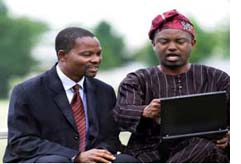 "African professionals in the Diaspora are a vital component to building and contributing to this network, and are in an unparalleled position to do so."
"We are excited by the possibilities of helping Diaspora members connect and create this self-sustaining virtual community in which the ideas from those who understand Africa best can be heard and even one day implemented. We are also interested in profiling people of the Diaspora who stay connected to their countries or work on agricultural projects on our website, to provide inspiration to others."
Creating a profile for Africa Rural Connect provides an online space to connect with other skilled professionals of African origin, and a great networking tool for Africans working or interested in agriculture, gender issues, and a variety of other development concerns.
You can create a profile on the Africa Rural Connect online social action network at http://www.peacecorpsconnect.org/arc and offer your ideas on agricultural development in Africa.
In the summer of 2009, the National Peace Corps Association will coordinate a contest with up to $50,000 in prizes for the best business plans to improve agricultural practices in Sub-Saharan Africa. Site Moderators will be encouraging people to post their ideas, big or small. Each contribution is considered valuable in its own right and any seed of thought can grow into a full-fledged project plan.
In the summer of 2009, the National Peace Corps Association will coordinate a contest with up to $50,000 in prizes for the best business plans to improve agricultural practices in Sub-Saharan Africa.
By editing, offering suggestions, criticisms, and support of ideas and plans, the ARC community avoids reinventing the wheel of African developmental initiatives. Members of this community can share their technical knowledge and authentic experiences to add valuable contributions to every element of a plan.
"Final contest entries will be due by October 31, 2009," says Mattessich. "However, we encourage people to submit their entries as soon as possible in order to get higher ratings in the community and also gain insight and improve their plan with the help from fellow ARC community members."
On offer as the Grand Prize is an award of $25,000 to the winning project to implement the plan. NPCA will also arrange a meeting with donor organizations, including reasonable travel expenses. The 2nd Prize will consist of $10,000 to the project to implement the plan, and the 3rd Prize: $5,000 to the project to implement the plan.
"This is the space for people to offer their voice, their story, their thoughts, and their vision for Africa's economic and agricultural future."
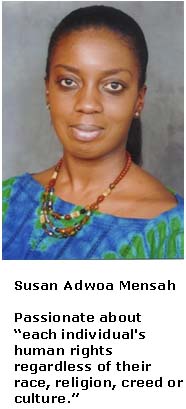 How artist Susan Mensah turned her talent towards the goal of social justice.
When Susan Adwoa Mensah decided to take her talent for art seriously, she had little idea that her work would also help her to fulfil her passion for justice and human rights.
Born in the UK to Ghanaian parents, Susan's early years were split between Ghana, Zambia and the UK. Although her aptitude for painting and drawing was evident from an early age, it was only much later in her life, when recovering from an illness, that Susan began painting seriously.
A self-taught artist, Susan’s passion for art led to her joining the Worple Group, a group of artists based in Wimbledon, London.
Susan's vivid and bold work demonstrates her nostalgia for Africa, with its symbols and cultural images; and it was this love of culture that led her to complete a degree in Human Rights and Social Anthropology.
"This course gave me a much greater insight into the value of cultural traditions, as well as importance of each individual's human rights regardless of their race, religion, creed or culture," says Mensah.
With subject matter ranging from abstracts to portraits, Susan's distinctive style can be seen with her use of strong colours and celebratory images, whether using acrylic or pastels. She recently completed portraits of one of the presidential candidates for Ghana and is about to embark on a series of portraits of other well known public figures.
Susan has a keen interest in charitable causes, and recently auctioned one of her paintings to raise money for the North of Ghana flood disaster.
A passionate advocate of social justice, Susan is now actively involved in using her art 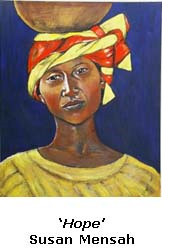 to highlight the plight of women and children caught up in war and violence through an event taking place in London on 31 July 2009.
"I am holding an art exhibition this summer along with several artists who are part of a newly formed art group called 'Artist for Human Rights and Social Justice' (AHRSJ)," says Susan.
AHRSJ are part of the group Artists for Human Rights in the US, which was founded by the actress Anne Archer (who played Michael Douglas' wife in the movie 'Fatal Attraction').
"We have based this exhibition on the theme of 'Women in Conflict' and will be exhibiting paintings depicting women and children, displaced people and refugees in war-torn countries such as the Congo, Sudan and Chad," says Susan. "We will be collaborating with UNIFEM, UK in the hope of raising people's awareness of human rights issues and particularly violence against women and children in conflict zones."
Susan's vivid and bold work demonstrates nostalgia for Africa, its symbols and cultural images.
The event will feature panelists including Human Rights Lawyer Karon Monaghan of Matrix Chambers, Barbara Cleary, Chair of UNIFEM’s London Committee, and Esther Eghobamien, Head of the Gender Section, Social Transformation Division of the Commonwealth Secretariat and takes place at The Garden Hall, St Mary's Church in Wimbledon.
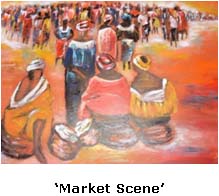 Susan's latest work, which can be seen on her website, features African cultural scenes as well as women in various guises some resplendent in traditional attire and headdress.
She draws her inspiration from artists such as Gustav Klimt, Gauguin, Picasso, Matisse and more contemporary African artists such as Gerard Sekoto and Ablade Glover.
Susan also regularly exhibits with the Worple Group in Wimbledon and has held exhibitions at the Ghana High Commission, as part of the country's 50th 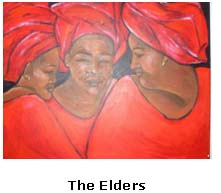 anniversary independence celebrations, the GLA, where she helped to promote Ghanaian products, and at Cannizaro House, for International Women's Day.
Susan Mensah's work is currently being exhibited at the Victoria Jones Gallery - a gallery with a diverse portfolio of work by international artists.
The gallery puts great emphasis on 'educating and integrating cultures through art' which is at the heart of their philosophy and aim to sustain traditional art and craft methods so that they do not become extinct - keeping alive communities so that they can be passed on to future generations.
www.susanmensah.co.uk, www.artistsforhumanrights.org.
 16,240 South Africans living abroad applied for and were granted permission for a special vote and, on April 15th, almost half of these voted in London.
As South Africa begins a new era in its political history, two South Africans living in London reflect on the significance of their vote that day.
 Twenty-five years ago, the crowds that gathered in Trafalgar Square to protest and demonstrate against apartheid South Africa played a major role in galvanising international opinion against apartheid and hastening its downfall.
Yesterday, South Africans gathered in their thousands in orderly queues to have their say in the future of the democratic South Africa in the same place that the demonstrators once stood.
With 7,427 South African voters marking their crosses in 12 hours, the South African High Commission was not only the largest voting station abroad but was also nearly twice the size of the largest one in South Africa – Joubert Park in Johannesburg, with between 3,000 to 4,000 voters, according to the Independent Electoral Commission (IEC).
I have never seen such a large group of South Africans behaving in such a subdued manner.
Perhaps it had something to do with being in the historic Trafalgar Square on an overcast – and sometimes wet – London Spring day.
Perhaps it had something to do with the tiny figure of Lord Nelson on his towering column peering out over Parliament Square where an animated statue of our own Nelson Mandela is flanked by the likes of Winston Churchill, Margaret Thatcher and General Jan Smuts, the only other South African in the Square.
Perhaps, it had to do with the fact that it was very early in the morning.
But I suspect it had more to do with the reverence of voting – the universal way for ordinary citizens to have a say in their country and the future.
They queued ten-deep across Trafalgar Square and the length of the facade of the iconic South Africa House.
It was a day on which South Africans filed onto South African soil in unprecedented numbers, thanks to a decision by the Constitutional Court – the cornerstone of South Africa's democracy – which required government to extend voting facilities to all South Africans abroad who are on the voters roll.
They waited quietly, patiently, reading the latest copy of The South African, chatting quietly about why they were in the UK, why they were voting, exchanging their memories, hopes and fears for their beloved country.
It also took me back to 1994 when I had felt so privileged to be part of the first election in which all South Africans were able to vote – most for the first time. The long queues snaked sometimes for kilometres and many South Africans got to know each other for the first time as they waited for hours to make their crosses.
Back then it was both a deeply moving, humbling and empowering experience.
And so it was again yesterday.
This time, the voters were mainly young, mainly white and all were united by the decision to have a say in their country and in choosing the next government.
It also took me back to the mid-1980's when I served as a correspondent for the South African morning group of newspapers – including the Rand Daily Mail and the Cape Times – when I covered almost constant demonstrations and protests by South African exiles and large numbers of committed members of the British public who played such a crucial role in ending apartheid.
Seldom in the history of freedom struggles has there been such a display of international solidarity by a nation as was the case with the British public's involvement in the Anti-Apartheid Movement.
Today photographic records of those protests are displayed on the walls of South Africa House and many famous faces are still recognisable – Thabo Mbeki, the late Harold Wilson, the late Archbishop Trevor Huddleston, Abdul Minty, Peter Hain, the alte Mike Terry and many more.
As I stood waiting and chatting to fellow South Africans, I was humbled that we would not be standing there voting in a democratic election in South Africa had it not been for the suffering and sacrifice of thousands of South Africans in resisting apartheid for all those years. Many gave their lives, many sacrificed family members and friends.
I was overcome by a deep humility tinged with pride.
 They say the early bird catches the fattest worm.
But my 3am start to the day has quite simply left me emotionally exhausted.
So I've decided to escape the friendly South Africans chatting away at Trafalgar Square about how long they have been here, where they work and how the economic climate has affected their lives and I've come to a spruce little coffee shop on the corner of William IV Street and St. Martin's Lane to gather my emotions.
Today when I rolled out of bed to prepare for an early morning live interview for the BBC World Service's Network Africa, I braved the chilly London breeze to which I have not yet acclimatised and joined thousands of South Africans in the winding queue that would eventually grant me my chance to vote in the 2009 national elections.
I thought that once I had made my mark, I would feel elated but instead I feel surprisingly emotional and nostalgic. It seems that between all the paper work, court applications and general fuss that led me to getting an opportunity to vote abroad, I truly underestimated the feeling that has now overcome me.
And as I sit a few inches from this big glass window and watch Londoners and tourists go about their way, I can't help but think of my home, South Africa; my sister who sent me a text message this morning to remind me to take both my identity documents as well as my passport to the High Commission, my grandmother's house in Monakgotla Drive, Dube, Soweto, a few kilometres from the historical Vilakazi Street where Nelson Mandela and Desmond Tutu once resided, the house filled with all of my childhood memories of South Africa in the eighties.
I think about my country's history and the sacrifices that have generously allowed me to be where I am right now... sipping coffee from a paper cup, a million miles away.
This morning when the radio presenter presumptuously asked me how I felt as an outsider voting in the South African election today, I wanted to tell him that I was the furthest thing from an outsider. I wanted to exclaim to the radio producers in their big foam earphones and to all the Africans around the world listening to the broadcast. I wanted to tell them how every single time I see a South African flag in the streets of London or on a Springbok jersey in the train, my heart jumps for joy.
I wanted to tell them how I prowl through the South African online newspapers to get an account of the daily news and how even though it just comes naturally when I meet up with some of my South African friends and our conversations are in Sesotho or Zulu, I feel closer than ever to my home. And that even though he considers me an outsider, I was filled with overwhelming pride when I saw South Africans from every corner of the United Kingdom come together to exercise their democratic right this morning.
I felt an immense amount of pride after holding my ballot paper in my hand and taking my time to go through every party name, taking a good look at the representative's picture alongside it, and finally making my mark on this historic day.
I think about the difference my vote will make to my country and there is that little tinkle in my heart that reminds me that there is much time to celebrate and truly be happy about today's occurrences. But for now, I only think about how I love my country with all of my heart.
Palesa Madumo is a consultant at the International Marketing Council of South Africa.
 An inspired South African program is to be run in Britain. The architect of this unique and effective rehabilitation program is Khulisa founder and award-winning entrepreneur, Lesley-Ann van Selm.
The Khulisa Crime Prevention Initiative was founded in South Africa in 1997 in response to rapidly growing crime rates, and has become one of the leading crime prevention initiatives in that country, with 12 years of remarkable programme delivery during a period of extraordinary transformation.
Khulisa (a Zulu word meaning 'let the young child grow') employs therapeutic programmes it has developed to address crime prevention among offenders and at-risk youth, in schools and low-income communities to effect radical behaviour change. Its more than two-dozen programmes seek to reach into the heart and mind of individuals caught up in the cycle of violence and offer the basis for new approaches and mindsets that apply non-violence to personal and social problems.
Khulisa has introduced a number of tried and tested programmes in South Africa aimed at reducing crime, particularly amongst youth, thus bringing a fresh perspective to crime prevention in the country. Among the most important indicators of the success of Khulisa’s work is the reduced recidivism rate among those who have participated in a KSA programme. In 2007, recidivism among prisoners as a whole in South Africa was 80%, but for Khulisa 'graduates' the rate was just 20%. Through their participation, the individuals achieved sustainable rehabilitation and no longer pose a threat to society.
"Khulisa (a Zulu word meaning 'let the young child grow') employs therapeutic programmes to address crime prevention among offenders and at-risk youth."
Khulisa is seeking to introduce some of its programmes into the UK and, over the past 2½ years, the organisation has engaged on numerous fronts with parties in the UK, including Ashoka, A4e, the National Offender Management Service and the Youth Justice Board, some of whom have paid visits to South Africa to gain an understanding of the potential of Khulisa's programmes.
Like South Africa, the UK is experiencing a serious increase in violent crime, particularly amongst youth and in multi-racial/multi-cultural communities.
Extensive contacts and visits with relevant parties in the UK by Khulisa, and in South Africa with interested parties from the UK, over the past two-and-a half years suggest that programmes such as Khulisa's could fill an important gap in the UK crime prevention/rehabilitation system by providing the crucial element of personal development and transformation.
As a result, Khulisa has established a legal and physical presence in the UK to facilitate the introduction of Silence the Violence in the country. Khulisa Crime Prevention Initiative (Khulisa) is a charitable trust which was registered in England and Wales in 2007 and is associated with Khulisa South Africa (KSA).
For Khulisa's founder, Lesley Ann van Selm, this is the first step in expanding the impact of the programme.
"Our ultimate goal is to become a significant player in the fields of youth and crime prevention in the UK. We firmly believe that once STV has been tried and evaluated there, it can be scaled up for implementation in a wide variety of UK settings, establishing the basis for the introduction of other Khulisa programmes in coming years and possible expansion to European countries."
STV, Khulisa's Silence the Violence programme, has been identified as being the most relevant product for piloting and replication in the UK. The pilot programme has been revised for the UK and is now well underway in Britain with master training having taken place in April 2009. The programme will now be rolled out into a number of correctional facilities and community settings in the country including HMP Cookham Wood, Kent, a facility for people on remand and sentenced children under 18, and in Hackney, London where Khulisa will work in partnership with A4e, a market leader in global public service reform.
 "Silence the Violence" is a 14-part programme that leads participants on a journey of self-discovery in which they become aware of the extent of their own violence or the violence present in their lives, its origin and effective non-violent choices.
The programme illustrates how violence (physical, emotional, and verbal) can become ingrained in cultures and belief systems and how it emerges in daily interactions. Participants learn practical ways to reduce violent behaviour.
On completion of the programme, participants join support groups, with Khulisa's support, that enable individuals to extend the programme's practices and philosophy into other areas of their lives, such as families and their immediate community. This ensures the sustainability of the behaviour change process.
Khulisa has established a base in Richmond, Surrey, and engaged an Administrator. In addition, master trainers and facilitators who will take on the responsibility for rolling the programme out and maintaining quality assurance, have been identified from a wide selection of candidates ranging from psychologists, professional medical doctors and professional trainers to business people, ex-offenders, drama therapists and university graduates.
The impact of Khulisa's work has been widely recognised, both within South Africa and beyond, and in 2009, Khulisa and its Managing Director Lesley Ann van Selm won the prestigious Southern Africa Social Entrepreneurship 'Pinnacle Award' for work that has 'proven to have a transformative social impact.'
Van Selm's early career was characterised by a series of jobs at which she turned her entrepreneurial spirit to creating new opportunities and developing her own skills. A self-proclaimed "graduate of the school of hard knocks", she worked in sales, marketing and travel, often at companies that she started up herself.
"While we might not all speak the same languages or come from the same backgrounds.... we are all driven by common desires and goals."
Then, armed only with her marketing expertise, experience in building companies for a new South Africa and a genuine belief in the importance of inter-cultural dialogue, she established the Khulisa Crime Prevention Initiative in 1997.
"Khulisa evolved from very humble beginnings," says van Selm. "Twelve years ago, I was fortunate to have had the opportunity to travel with Credo Mutwa, the great African spiritual leader, all around the world researching a common thread in cultural storytelling traditions.
When I returned to South Africa, I developed a programme to help prison offenders to use this common storytelling language to assess their own place in the world, and to ultimately lead to their rehabilitation. I piloted the programme at a prison and was humbled and gratified by the immediate positive response among the offenders."
While we might not all speak the same languages or come from the same backgrounds, says van Selm, we are all driven by common desires and goals.
 "When something in our personal histories, our backgrounds or our communities is driving us to act in an immoral way, the resulting feelings of worthlessness and shame are identical. By harnessing these common responses and providing an alternative that allows for hope, growth and development, we can literally turn lives around."
Offenders often come from backgrounds of violence and poverty, says van Selm. "One of the things we have learnt is that a tendency towards crime is developed in early years. There is very little we can do to change the context, but it's the response of the individual to their backgrounds – a willingness to overcome – that distinguishes the recovered offender from the criminal."
If, as Lesley-Ann van Selm says, a social entrepreneur "is someone who recognises a social problem and uses entrepreneurial principals to organise, create, and manage a venture that addresses this problem,", she is a deserved recipient of the Pinnacle Award.
Van Selm is a social entrepreneur in the truest sense of the term, and the turning of her innovative talents to the creation and development of Khulisa show how her drive, compassion and insight have come together to create an organisation that is making radical changes on the South African criminal justice landscape.
"We all have the power to make positive change. The question we should all be asking ourselves, is not 'how can I help?' but 'how can I not?'"
In 2007 Khulisa's Justice and Restoration Project won the "Extra Mile" award from the KwaZulu Natal Department of Justice, and was declared a Best Practice Model. The UN Office on Drugs and Crime cited Khulisa's 'Make It Better' programme as a Best Practice model in 2006.
Making a difference, says van Selm, is within everyone's realm of possibility.
"I am just a woman who saw the need for a solution, who had the fortunate opportunity to turn my own skills to the development of a project that is starting to have far-reaching implications.
There is a social entrepreneur in all of us. We all have the power to make positive change. The question we should all be asking ourselves, is not 'how can I help?' but 'how can I not?'"
 April 15th was voting day for South Africans living abroad, with a total of 16,240 voters on hand to cast their votes at the 124 South African missions abroad.
South Africa House, home to the South African mission in London, was the largest polling station in the elections, according to the Independent Electoral Commission (IEC), followed by Canberra, Australia, with 1235 registered voters, then Dubai in the United Arab Emirates with 900 registered and Wellington, New Zealand, with 410.
The role of South Africans overseas has not been overlooked by those at home and we publish below the statement issued by Themba Maseko, Government Spokesman and Head of South African Government Communications.
Government acknowledges the important role that South Africans abroad played in the special voting last week thereby strengthening their bond with their compatriots at home as well as giving substance to the ruling by the Constitutional Court that South Africans abroad should have the right to vote.
It was significant that 16 240 South Africans living abroad applied for and were granted permission for a special vote and that almost half of these (7,427) voted in London where the South African High Commissioner mobilised the entire mission to ensure the voting went smoothly.
"Government acknowledges the important role that South Africans abroad played in the special voting last week."
The enthusiasm evident in those who queued outside South Africa House throughout the day bodes well for creating the atmosphere for more South Africans to return and make a contribution through deploying their skills in the nation-building effort or creating more jobs.
It also bodes well for building a brain-bank of South Africans living abroad to assist in the process of image-building, investment and ongoing knowledge exchange and the acquisition of skills.
The Homecoming Revolution has done excellent work over the past five years or so in creating such a climate and proactively connecting South Africans abroad with companies at home seeking skills and disseminating accurate information about opportunities and conditions in the country.
 The recently-formed Global South African Network, active in the United States and the United Kingdom, has as its objective the building of a global network of skilled and influential South Africans who can help the country attract foreign direct investment and achieve its economic objectives in a globalised world.
Government acknowledges the important role of skilled and entrepreneurial South Africans returning to the country and contributing from their positions of influence abroad.
 Now is the best time to create businesses and jobs in South Africa and South Africans with international experience are returning home with great ideas, says the Homecoming Revolution, ahead of the forthcoming conference, "Entrepreneurship – The Way Forward in South Africa".
In every crisis lies an opportunity and, as Sir Richard Branson says, "Fortunes are made out of recessions. A lot of entrepreneurs get going in the economic depths because the barriers to entry are lower."
But how do you get to spot opportunities in one country while living in another? For South Africans in Europe, the answer lies in the one-day Entrepreneurs Workshop to be held on 9th May in London by the Homecoming Revolution and the Gordon Institute of Business Science (GIBS), "Entrepreneurship – The Way Forward in South Africa".
In every crisis lies an opportunity .... "Fortunes are made out of recessions"
Entrepreneurs are in the business of seeing opportunities where others don't and then working with passion and energy to bring an idea to life in the form of a new business enterprise. They produce opportunities for others and create substantial wealth for themselves. Being an entrepreneur is about using one's creativity, drive and leadership to shift the status quo. Entrepreneurs redefine the way business is done.
According to Nick Binedell, the Director of GIBS, the South African economy is one that offers enormous opportunities to the entrepreneur.
"The South African economy has benefited from the drive and energy of an extraordinary set of entrepreneurs," he says. "For an economy of its size, it has produced a disproportionate number of individuals and businesses that have gone on to become global champions in their industry. This success has mainly to do with the type of business environment in which South African entrepreneurs find themselves."
Describing the South African as one that is "restless and turbulent", Binedell sees the current economy as one "full of opportunity for those with the energy and drive to take full advantage."
In downturns, says Binedell, there are opportunities for people to start out and lay out a new value proposition for business idea, while large companies are often caught between memory and vision and are slower to react to rapidly changing circumstances.
"This is where the new players come in, riding off new technologies, riding off a different business model, and they may come in at a lower cost structure or a better product proposition," he says.
"The lovely thing about South Africa is it has a highly entrepreneurial spirit. There are people who'll be reading these markets and finding the gap and starting new companies."
For many South Africans facing restricted job markets in the UK and Europe as well as soaring costs of living, returning home is an increasingly attractive prospect, says Binedell, who sees the mood for business in South Africa as more upbeat than in the West.
"The lovely thing about South Africa is it has a highly entrepreneurial spirit. There are people who'll be reading these markets and finding the gap and starting new companies."
"In recent times we have seen a surge of interest in South Africans wanting to come back to not only make their place in the sun, but find a way to contribute to a fast changing society."
The specially designed one day event, which takes place at Altitude in Westminster, central London, will give people the opportunity to engage with successful entrepreneurs 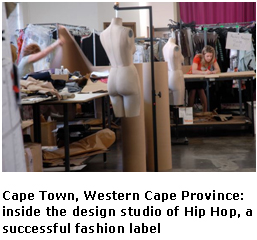 in South Africa who have spotted unique opportunities and grown successful businesses.
Martine Schaffer, Managing Director of Homecoming Revolution, an independent, non-profit organisation that encourages and facilitates the return to South Africa of skilled South Africans around the world, sees this Workshop as a vital source of information for those interested in enterprise.
"We know that in order to continue to build the economy, jobs need to be created and South Africans with international experience and exposure return with great ideas that they bring home. With this event we are hoping to inspire them, as well as give them practical starting points."
Coming back home, she says, is becoming an increasingly popular option for South Africa's expat population.
"Our enquiries have increased 35% year on year and many are seeing it as an opportunity to return and create the future they want."
Speakers for the event include Professor Nick Binedell, Director of GIBS, Paul Harris, CEO of FirstRand Group and Kevin Vermaak, Founder of the Cape Epic Mountain Bike Race. The MC for the day will be Ithumeleng Kgaboesele, CEO of Sphere Holdings and President of Entrepreneurs Organisation.
"Entrepreneurship – The Way Forward in South Africa" takes place on 9 May from 11 am until 5 pm. Places are limited and tickets will not be for sale on the day, so reservations are required. Bookings can be made online at www.satickets.co.uk
For an updated programme and further information on the event, visit www.homecomingrevolution.co.za
Photos: (top) Bloemfontein, Free State, province: The Lochlogan Shopping Centre and waterfront in the city centre. Graeme Williams www.MediaClubSouthAfrica.com
Hip Hop Photo: Rodger Bosch, www.MediaClubSouthAfrica.com
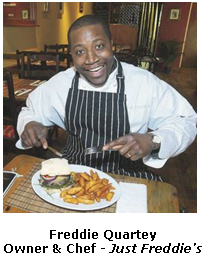 As he launches his new London restaurant, Fred Quartey looks back on his leap from IT Programmer to Chef and restaurateur.
For anyone looking for a taste of Africa in the heart of London, the recently opened Just Freddie's might be just the place to go.
Offering classic dishes with an African twist, Just Freddie's combines Quartey's Ghanaian roots and European training.
It also offers typical Ghanaian warmth and hospitality and has been described by one food reviewer as "the 'local' - the one around the corner with the owner who knows your name, where you get a coffee on the house and you take your best mates before you go out on the town."
Even without today's challenging economic climate, a restaurant is more likely than any other business to fail rather than succeed and almost 60% of restaurants in the UK close down within three years. But if risk can be mitigated by sheer hard work, few would care to bet against the owner of Just Freddie's.
Setting up a business in what must surely rank as one of the highest risk sectors has not come easy to Fred Quartey who, in common with many other professionals, had very different ambitions when he left Ghana for the UK.
"I came to this country as a computer programmer from NCR in Accra," says Quartey. Instead of an abundance of opportunities, however, he was unable to break into the British IT sector. "I found it very difficult to find a job and took up a part-time job as a kitchen porter."
It was while working in the kitchens that Quartey started to develop a real interest in cooking which, as he admits, is "something that women from my part of the world do - or so my wife keeps telling me!" Over time, his frustration at not finding the right job turned into something else.
"During this transition I actually started enjoying and keeping a keen and open minded view on cooking", he says.
Just Freddy's combines Quartey's Ghanaian roots and European training. It also offers typical Ghanaian warmth and hospitality.
Luckily for Fred, his growing interest was encouraged by the kitchen's Head Chef who recognised his potential. A recommendation from the Head Chef led to an offer to Quartey to train as a junior Chef and assist in the kitchen. "The rest," he says, "is history."
Quartey's catering career went from strength to strength and he moved on to work for the SAS Radissons Hotel, Novotel in West London. This was followed by stints with LWT and the BBC.
Continued hard work brought its successes and Quartey eventually progressed into catering management, working with successful eateries such as Nando's, Horse, Leon and Giraffe.
With a growing family to support, Quartey began to take on more assignments in addition to his regular work. "During these times," he says, "I was also moonlighting with Philip Small and Tony Page who were, then, the biggest Jewish banqueting companies."
Quartey’s strong Christian faith has sustained him during the tough periods in his life and directs the course he chooses to follow. Combining his talent for cooking with a strong desire to help others, Quartey's next steps turned him towards the hostel sector, where he still works today.
"As my faith took a greater hold of me", he says, "my passion has directed me to managing hostels. I am managing 15 hostels under a catering company called Caterplus and we provide food for the homeless and for emotionally, physically and substance abused people."
Quartey's faith was also a key factor in deciding to take up the challenge of setting up his own business. By his own admission, the process has involved a level of commitment and hard work that he never envisaged. But, judging by the reactions of his growing clientele, Just Freddie's has been well worth the effort and energy put into it.
Located in Blackstock Road, in the heart of North London's bustling multicultural streets, Just Freddie's is a cosy eating place where you are made to feel at home.
The restaurant specialises in homemade American-style beef and lamb burgers, grilled tilapia, bream and croker.
The restaurant specializes in hearty, homemade, American-style 100% homemade beef and lamb burgers, from as little as £8.00 per dish, as well as grilled tilapia, bream and croker fish. There is also a tasty selection of chicken dishes including Peri Peri and Jerk chicken.
Keeping to the homely feel of the restaurant, Quartey deftly handles all the cooking at Just Freddie's himself, serving up an eclectic and exciting range of international dishes.
Quartey's Ghanaian roots are evident in the flavouring of the extensive range of grills and pastas, while his grilled fish, couscous and curried goat have become staple weekend favourites with the local African community.
Just Freddie's Restaurant, 131 Blackstock Road, London N4 2JW, 020 7226 2484
 Harbouring hopes of entering the American advertising industry? Well, the facts about your chances of success may surprise you.
In what is describes as 'a wake-up call' to Madison Avenue, a new study shows the extent of racial discrimination behind the glossy facade of the US advertising industry.
An exhaustive study of America's advertising industry has found dramatic levels of racial discrimination throughout the industry. The study revealed evident bias against African-American professionals in areas ranging from hiring to pay, assignments and promotion.
The study was initiated by a coalition of legal, civil rights, and industry leaders who, in 2008, created the Madison Avenue Project to address advertising's deep-rooted racial bias.
Prominent US civil rights lawyer Cyrus Mehri, the leader of the Project, called the findings "absolutely astonishing in this day and age", while Angela Ciccolo of the NAACP, another Project partner, commented that "the time has come to stand up to change this industry."
The findings from the study reveal that, overall, racial discrimination is 38% worse in the advertising industry than across the broad American labour market. Worse still, the "discrimination divide" between advertising and other U.S. industries is more than twice as bad now as it was 30 years ago.
So what exactly did these findings reveal? Some specific results include:
While employment discrimination across the United States has steadily decreased over the last forty years, what the report terms "systemic barriers to equality" within the advertising industry have remain virtually unchanged.  Practices which were deemed back in 1978 by the New York City Human Rights Commission to be "not simply the result of neutral forces, but emanating directly from discrimination" continue unchecked today.
Many of the changes needed to eliminate these practices would have to be initiated by advertising agencies themselves who, despite occasional public pressure to address these disparities, have responded with little more than token efforts such as training and minority internships.
Measures which, at today's rate of progress, the study's authors conclude, will mean that the number of Black advertising managers and professionals will not reach their expected level for another 71 years.
The study found the primary source of discrimination to be agencies' implicit assumption that the cause of Black under-representation is a shortage of 'qualified' Black job seekers. Ironically, those initiatives that have been taken to increase 'pipeline' Black talent have simply served to increase the already substantial number of qualified Black candidates.
In reality, the study says, the problem is not a shortage but a "persistent unwillingness by mainstream advertising agencies to hire, assign, advance, and retain already-available Black talent."
A total transformation of the workplace culture of advertising agencies is needed if change is to be substantial and permanent, says the study. Specifically, agencies will need to reform human resources practices in which "personal relationships and social comfort often outweigh job performance". Also key to change in the industry is what the report terms "obsolete assumptions that racial minorities lack skills applicable to non-ethnic markets".
The Madison Avenue Project is led by the NAACP and attorney Cyrus Mehri, the founding partner of law firm Mehri & Skalet, who has won several multi-million dollar discrimination settlements against such corporations as The Coca-Cola Company, Morgan Stanley and Texaco Inc.; with the cooperation of Sanford Moore, a former advertising executive, current New York City talk radio co-host, and longtime advocate for racial parity in advertising.
"We are sending a message to the advertising industry: this conduct is unacceptable and must change," Mehri says. For Sanford Moore, the study illustrates what he terms "the mendacity and machinations that have kept African-Americans invisible on and to Madison Avenue for over four decades." The advertising industry, he notes, has "created and perpetuated a 'separate and unequal' marketing paradigm" and "even though our dollars provide the profits, the industry is still afraid of the dark."
Angela Ciccolo, on behalf of the US civil rights group, the NAACP, describes the report as an opportunity for Fortune 100 companies "to stop aiding and abetting widespread discrimination by this industry."
"The Madison Avenue Project is designed to send a special wake up call to the advertising industry. It's time for Madison Avenue to wake up to civil rights and to the meaningful inclusion of African Americans in this highly segregated industry."
 If 75% of corporate executives believe that having minorities in senior level positions helps promote new ideas and innovation, why do Black women make up only 1% of US corporate officers?
The findings of a new poll highlight how negative perceptions, the lack of strategic networking and the demands of work/life balance are holding Black American women back from the executive suite.
What's holding Black women in America back from making the top ranks in corporations? A poll commissioned by The Executive Leadership Council and conducted by Harris Interactive heard from 150 executives from a broad range of industries. What they had to say suggests that senior corporate executives really believe that it is important to their company’s success to have minorities in senior executive roles.
The findings from the survey – taken between November and December 2008 – showed that 75% of these executives believe that senior executives from minority groups are important in providing new ideas and innovation and better reflect the diversity of customers.
The poll, conducted immediately following the election of Barack Obama, occurred at a time when there was increased discussion of how the election of the first African-American President of the United States would impact opportunities for minorities seeking to move into the executive suite and on to corporate boards.
The findings showed that African-American women in particular face serious challenges in their climb up the corporate ladder.
The sample surveyed included respondents from companies with revenue of $1 billion and above annually. Respondents included CEOs, Chairmen/Executive Vice Presidents and Vice Presidents/Directors.
The findings showed that African-American women in particular face serious challenges in their climb up the corporate ladder. 31% of the surveyed executives attribute these challenges to weaker or less strategic networks available to African-American women.
The issue of capability – or the perception of it – featured strongly, with 24% citing inaccurate perceptions of African-American women's capabilities as slowing or preventing their rise up the ranks. 23% of respondents saw work/life balance demands as the third top barrier to executive success.
These findings came as little surprise to the survey commissioners.
"Frankly, the findings confirm what we found in our in-depth research completed earlier in 2008," said Carl Brooks, President and CEO of The Executive Leadership Council, the leading organization for the most senior level African-American executives in corporate America. Its Council members – more than 400 executives, one-third of them women –represent more than 280 Fortune 500 corporations.
The issue of capability – or the perception of it – featured strongly, with 24% citing inaccurate perceptions of African-American women's capabilities as slowing or preventing their rise up the ranks.
Founded in 1986, The Executive Leadership Council is an independent, non-profit corporation that provides African-American executives of major U.S. companies with a professional network and forum to offer perspective and direction on national and international business and public policy issues. It is the preeminent organization that recognizes the strengths, success, contributions, and impact of African-American corporate business leaders.
The organisation's earlier research, the Black Women Executives Research Initiative completed in 2008, was a year-long study of success factors and impediments for black women executives aspiring to the most senior positions in America's top companies.
That study examined success factors and impediments for black women executives as they aspire to the most senior positions in corporate America and included interviews with 76 black women executives, 18 CEOs, and 38 peers.
A number of The Executive Leadership Council (ELC) poll findings coincided with the earlier in-depth research, including:
 The issue of how Black women connect with their corporate superiors was also evident from the study.
"CEOs and black women executives seem to have a significant disconnect about how they view some of the behaviors and experiences of senior black corporate women," said Ancella Livers, Executive Director of the ELC's Institute for Leadership Development & Research.
One CEO was quoted as saying: "There is an issue whether black women have emphasized whether they have taken on the most challenging assignments, but are not getting credit for it and not getting the value for it. You want to anticipate what you want, and what you think is owed to you, and ask for it in advance."
This includes demanding constructive feedback to help women improve, something some respondents felt was lacking. As one of the black women executives interviewed said, "I didn't get feedback about why I wasn't considered for the General Manager role. I was given the feedback that 'this position is not for you' rather than hearing, 'this is what you need to do to become the GM.'"
When asked what major corporations can do to change the status quo and to increase the number of African-American female executives in their senior management teams, respondents offered a number of concrete suggestions.
Some of these changes included:
The detailed findings cover topics such as relationships, aspiration, feedback and coachability, experience leading to the executive suite, alignment of values, work/life balance, bias and other negative factors. The conclusion also provides a leadership framework for understanding what it takes to advance and discusses the implications for organizations and CEOs.
"Corporations need cultural change to attract African-American females and females in general."
Combined with its research, the Institute intends to use the survey results to finalize programs for senior and mid-level black women executives to help them strengthen strategic relationships with senior level men, build networks and increase visibility.
"Not only should senior executives cultivate more trusted and strategic relationships with high-potential black women executives, it is important for black women executives to have and execute detailed plans for advancement and demonstrate a passion for the values and culture of their companies," says Brooks.
"In spite of the barriers, many black women are skilled and ready to assume the responsibilities of the C-Suite. This work allows us to create a roadmap to help prepare mid-career black women who aspire to the highest levels of leadership in today’s corporations," said Dr. Livers.
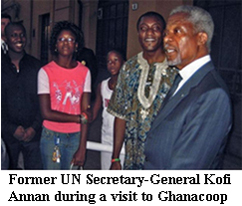 Reggie Tagoe reports on how a Ghanaian Association in Italy has been transformed into a successful business and social entity.
What started as a normal Ghanaians' Association abroad has now become a big business enterprise and with that, Ghana Co-operative (Ghanacoop) is walking with success.
The story of Ghanacoop in the city of Modena, north of Italy, began as one of the Ghanaians Associations in the country. But in 2005 the Association created a business plan. At that time they didn't know they were breaking new ground; all they knew was that they had identified a business opportunity and decided to pursue it with the commitment to succeed.
While there were those among them who gave up when they believed that there were no decent returns to be had, some of them dug their heels in, making sacrifices in order to achieve their purpose. These Ghanaians continued to invest their time and money and, recognising their limited knowledge of business creation and management, underwent in-depth training in these areas. Many made big sacrifices, while some even stopped their jobs to fully implement their plan.
Now all these efforts are bearing fruit, in fact bearing very sweet and fresh fruit, as fresh as the ones they import from Ghana and sell in Italy.
Ghanacoop is now engaged in big business trading, importing exotic fruits, agricultural food and handicraft products from Ghana to Italy whilst exporting Italian wine, pasta and ham to Ghana.
 Among its imported fruits from Ghana are pineapples, pawpaw, mangoes, coconuts as well as palm oil, plantain and yam among its agricultural products.
Ghanacoop has established links with Italian megastores and supermarkets such as Nordi Conad, Coop Estense and GS Carrefour, and each week tons of its products are imported into the country.
In 2007, Ghanacoop succeeded in making a profit of €1million (one million euros) and according to its President, Thomas McCarthy, Ghanacoop - which employs both Italians and Ghanaians - will hit the €5 miilion (five miilon euros) mark in gross profit in 2008.
"Ghanacoop is proof that immigrants are an important resource for the social and economic development of both their host and countries of origin", says McCarthy.
 According to McCarthy, noting that the Ghanaian community is truly united and without tribal or ethnic discrimination, "Three factors have contributed to our success and these are unity, dedication and partnership."
The success of Ghanacoop has also been helped largely by its partnership with the Province of Modena and the International Organisation for Migration (IOM) through which it has carried out projects in Ghana helping some villages and towns with electricity and water supply and contributing to the purchase of equipment to hospitals, among them Gomoa Simbrofo – a poor village situated some 90 km from Ghana's capital, Accra.
Under its project on a 100-acre plot in Gomoa Simbrofo, Ghanacoop aims at promoting the development of social and enviromental sustainable processes for the production of corn, fruits and vegetables with biological certification.
Ghanacoop also hopes to expand its activities by importing produce from its own farm in Ghana and the organisation plans to promote economic and social development actions that facilitate the construction of schools and the provision of water purification facilities. It also intends to provide the communities with alternative energy from solar panel systems and to discourage the migratory flow out of the region by offering the villagers concrete job opportunities and continuous development through qualifications.
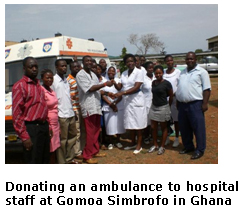 A fixed amount of the price paid for Ghanacoop's exotic products goes to support implementation of health projects and favouring workers communities in Ghana.
The organisation has created scholarships for their children and supports vaccination campaigns in several villages and, in one of its latest projects, it is financing the photo voltaic implant to provide electricity to different villages.
On a more ambitious note, the organisation plans to enter the European market of Fair-Trade certified products. McCarthy is more than grateful to all co-operative bodies that has been of immense support from the begining.
"Our special thanks go to Arcadia and Oltrelab Group for having projected the start-up of Ghanacoop together with the Council of Ghana Nationals Association in Italy (COGNAI)," he says. "Today these groups are the key partners behind every activity and success of Ghanacoop."
This co-operative of Ghanaians has now become a model that all immigrant communities would like to emulate and, having succeeded in creating such a successful enterprise, its members want to help other immigrants in Italy to come up with similar projects.
"We want to promote brain return and prove that Africa can develop through its own people returning from western countries," says McCarthy. "We would like to help all those who seek our help. Ghanacoop is ready to provide training and orientation to all Associations of immigrants interested in forming co-operatives."
Photos by Reggie Tagoe
 How Julia Doe is making the transition to singing and fulfilling her passion to transform lives.
While TV reality shows might give the impression that a career in music can happen overnight, for most people it involves hard work, dedication and time.
Talented singer, Julia Doe, is an example of how many approach their desire to sing. The third of six children, Julia was born in Kent, England but grew up in Ghana, West Africa. Her musical ability was evident early and from the age of 6 she was sent to the renowned John Teye Memorial Maths and Music School, where she was mentored by the Founder, Rev. John Teye, a gifted musician.
Whilst in secondary school, Julia continued to engage in music and the arts through school plays, dancing and talent competitions and showed her early promise with her ability to mimic singers like Whitney Houston and Anita Baker.
1983 marked a major turning point for Julia who, whilst attending a Christian event, made a decision to become a born-again Christian. It was at this time that she met a young Music Director, Tom Bright-Davies, who encouraged her to take her musical gift seriously. After joining a musical group, Julia struggled with the realities of daily Christian living, returning to the UK in 1988 where, as she puts it, she "forgot all about God and music."
However, it appeared that God had not forgotten about her and, in 1993, having decided to return to Ghana, she again met Tom and started attending church, eventually making a decision to surrender her life to Jesus. Julia began singing in her local church, marrying her husband Douglas in 1997.
 Julia and Douglas returned to the UK in 2000 and have been members of Kingsway International Christian Centre (KICC) for the past 7 years. Julia is a member of the KICC choir.
Using her talent to make music is, for Julia, the first step in fulfilling what she believes God has called her to do. With a passion to see peoples lives dramatically transformed as hers was over 14 years ago, Julia believes that anointed music is a powerful medium through which God gets through to people and transforms their lives.
ReConnect Africa met Julia and asked how she has managed to combine her passion for music with the daily realities of building a mainstream career.
JD: I am a Service Manager for the Newham Improving Access to Psychological Therapies (IAPT) service. This is an NHS service which offers talking therapy to people who are suffering from depression and anxiety. I handle the operational side of the service to ensure that we deliver a service which patients are happy with.
Julia believes that anointed music is a powerful medium through which God gets through to people and transforms their lives.
JD: I started singing at the age of 6, when my Dad sent me to the John Teye Memorial School, a boarding school in Accra, Ghana. The headmaster recognised my musical potential and also taught me to play the piano. At that time, the incumbent Head of State, Kutu Acheampong had two of his children attending the school and I would be asked to sing for him any time he visited the school. The headmaster, also a prolific musician, took me with him when he travelled around the country. He would play and I would sing.
JD: People had been telling me for years that I had a really good voice and I had always sang at Church and in choirs, but never considered a professional career in singing. A few years ago, my husband reiterated the fact that I should seriously consider taking the singing to a more professional level by recording an album, but I was hesitant, because I had heard so many great singers and felt inferior.
However, in one year, five total strangers, at various functions confronted me about what I was doing with this "angelic" voice and told me how they had been impacted whilst I was singing in the congregation. This led me to start to believe that perhaps I had something to offer.
Since I joined our Church choir just over a year ago, I have had so many people come up to me after leading a song to tell me how much my singing had meant to them. Recently, one woman told me how she had lost her daughter and felt comforted when I sang. I realised then that I had been given a gift and if I didn't use it, I would have to answer for it!
JD: Because of my work and church commitments, I don't have a lot of time to rehearse formally. I use the time whilst driving to work (3 hours each day) and have set aside 2 evenings a week when I do some voice training. It has, however, been rather difficult to strike a balance because I am usually exhausted by the time I get home from work or church rehearsal.
I would be asked to sing for.... the incumbent Head of State, Kutu Acheampong any time he visited the school.
JD: Take things slowly and don't quit your job yet! A lot of ideas and projects start off very small and then increase over time and it can be frustrating to wait. In my case, I am still working full-time whilst trying to promote the singing. I envisage the time will come when I will be financially secure enough to enable me give up my full time job, but until that time, I have to do both.
My husband has been extremely supportive and I am in the process of looking for something that will give me the flexibility to work 3 days a week, so I can devote the other days to the music. This support is extremely crucial if you are married.
To purchase a copy of 'Light My Way': www.juliadoe.com
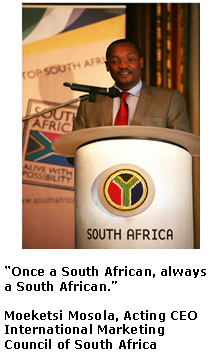 A global network of South Africa's citizens is set to bring knowledge and skills to the country.
As the economic beacon of Africa, South Africa has proved that it is alive with possibility. Over recent years, the country has seen unprecedented growth and the development of a vibrant and progressive business environment which even the recent global economic slowdown cannot diminish.
Yet, like many other countries in the developing world, South Africa has seen many of its best and brightest emigrate to the West. Global South Africans, a new initiative being spearheaded by the South African International Marketing Council (IMC), while recognising this reality, is set on ensuring that South Africa's "flown talent does not have to be lost talent".
South Africa's Diaspora may be just as valuable for being abroad as it would have been had it stayed at home, says the IMC, a public-private partnership dedicated to increasing global support for South Africa's young democracy and for the continent of which South Africa is a part. The key, however, is realising this value.
The recent launch in London of the Global South Africans initiative demonstrates the commitment of the IMC to tapping into the power of its citizens around the world.
"Once a South African, always a South African," Moeketsi Mosola, Acting CEO of the International Marketing Council, told guests at a dinner to launch the GSA initiative in London organised by IMC's UK country manager John Battersby and hosted by the South African High Commission.
South Africa's "flown talent does not have to be lost talent".
Global South Africans (GSA) is today a growing network of talented and successful South Africans who live abroad but still feel deeply attached to the country and want to contribute to the country's growth and success.
While skilled professionals may be compelled to emigrate for a number of reasons, many retain strong emotional bonds to their countries of origin and, given the opportunity, are keen to contribute to the development of their countries.
The knowledge, connections and goodwill that are abundant in South Africa's Diaspora is what the GSA network is seeking to harness by building a worldwide network of accomplished and well-connected offshore South Africans and their peers who share a strong affinity with South Africa.
The members of the network, says the organisation, are united by a faith in South Africa's future and a desire to share their knowledge, wisdom and networks in support of South Africa's transformation into a prosperous and successful non-racial democracy.
The Global South Africa Network starts from the premise that its members are extremely valuable where they are. Members serve as vital links between South Africa and the global economy where they represent successful men and women of all races and backgrounds who are respected leaders in their fields.
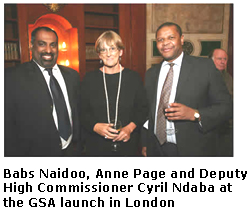 This initiative, says its sponsors, is not about simply building a database of members but about actively engaging members through carefully targeted requests for knowledge ideas from stakeholders in South Africa.
"GSA isn't about passing the tin cup," says the organisation. "It's about knowledge transfer."
The idea is to empower network members to contribute in ways that suit their talents and desired level of engagement.
The network then markets GSA as a resource to South Africans who could benefit from the extraordinary range, knowledge and connections the network represents. GSA is for people whose reward comes from seeing South Africa fulfil its extraordinary promise and enriching their own networks.
The Global South Africans network is not about creating a club of expatriates looking to maximise personal business opportunities, but a group of friends of South Africa who are keen to see the country and, by extension, the continent succeed.
The network is for people whose reward comes from seeing South Africa fulfil its extraordinary promise.
The International Marketing Council of South Africa (IMC) is also marketing the GSA network to government departments, the private sector, academic institutions and NGO's. It is the channel through which requests are routed to members and it helps members make the right connections in South Africa to pursue their own projects and ideas.
The ultimate aim, says the GSA, is to mobilise the greater South Africa in the service of the greatest possible South Africa.
If you are interested in learning more about the Global South Africans project, please visit www.globalsouthafricans.org
 How the NICRO UK Trust is contributing to the extraordinary success of the South African programme that turns young people away from crime.
The story of South Africa’s transformation over the past decade has been remarkable in many ways. Its substantial economic investment across sub-Saharan Africa has made the country the economic powerhouse of the continent and an example to the rest of Africa and to other emerging economies.
However, in common with its neighbours, South Africa also faces the challenge of combating crime and its negative impact on the country’s ability to bring about sustainable social development. Particularly troubling for the young democracy is the increasing criminal activity involving young people. In South Africa, as in many other countries, most offenders are young people between the ages of 12 and 25.
An inevitable consequence of imprisoning very young people is the negative influence of their proximity to older inmates in overcrowded prisons.
NICRO - the National Institute for Crime Prevention and the Reintegration of Offenders – is a non-governmental organisation that has been working in the field of justice in South Africa since 1910. In the early 1990’s, the organisation pioneered the Diversion Youth Development programme to help turn the lives of young offenders around.
The programme works by steering young offenders away from the formal criminal justice system by making use of alternative sentencing options that are far more effective.
The programme works by steering young offenders away from the formal criminal justice system by making use of alternative sentencing options that are far more effective in preventing re-offending. NICRO’s Diversion programme moves away from punitive and retributive criminal justice measures by placing a focus on educational and development options that promote rehabilitation, reconciliation and healing.
The programme has shown remarkable success. During the 16 month period from January 2005 to April 2006 alone, 16,590 young people were involved in NICRO’s Diversion programmes. With a 93% success rate of offenders not re-offending within two years, NICRO has proved that its method works and can effectively reduce the number of children in South African jails.
 This success, says Al Papps, Chairman of the NICRO UK Trust, "is because the deprived young people involved come from very impoverished and deprived backgrounds in the townships in South Africa and respond very positively to the personal interest and attention they are given for the first time in their young lives when participating in these programmes."
NICRO’s programmes work towards giving marginalized and socially excluded youth who are in conflict with the law a chance to acknowledge, understand and take responsibility for the consequences of their actions.
With a 93% success rate of offenders not re-offending within two years, NICRO has proved that its method works and can effectively reduce the number of children in South African jails.
By giving these vulnerable young people the opportunity of learning new skills and competencies and gaining significant insights, the Diversion programme gives them the vision and the tools to turn their lives around to become productive, responsible citizens.
The cost of sending one young person on a Diversion programme is around £350 and one of the challenges NICRO faces is attracting the funding vital to its continued success.
In 2002, a small group in the UK, with the interests of the new South Africa very much at heart, set up the NICRO UK Trust for a safer South Africa. The sole purpose of the Trust is to raise money in the UK to help fund the Diversion Programmes.
With overhead and administrative costs met by the personal generosity of one of the Trust’s founding Trustees, Charles Luyckx, and other Trustees claiming no expenses, all the funds raised by the NICRO Trust go straight to NICRO in South Africa.
South Africans in the UK can help to touch the lives of many young people in South Africa by donating to the Diversion programmes, says Lorna Johnston, NICRO UK Trust’s Fundraising Manager.
 "So often, South Africans think that crime in South Africa is not a surmountable problem. NICRO offers people an opportunity to get involved and make a difference.
Our Youth Development and Diversion Programmes are diverting young South Africans away from the criminal justice system and ultimately away from a life of crime."
By touching the lives of 20,000 young South Africans annually, says Johnston, NICRO is proving that something is being done about crime, and that it works.
Getting involved can be through fundraising as well as through participating in the Trust’s events, says Johnston.
"In the UK we are always hosting exciting events to help us raise much needed funds for our Diversion Programmes in South Africa. We are busy putting together a NICRO UK Team for the Pick n’ Pay Argos Tour in South Africa. We hope that cycle enthusiasts will join our fun team heading over to South Africa in March 2009 to help us raise funds for the Diversion Programme."
As Al Papps points out, the organisation’s Youth Development programmes have a proven record in giving South Africa’s young people "the good fortune to avoid wasting their lives in prison."
"One of the most well known songs sung by Joan Baez, the American folk singer said "There but for fortune" and one of the most memorable verses in that song goes as follows ....
"Show me the prison, show me the jail,
Show me the prisoner whose life has gone stale,
And I’ll show you a young man with so many reasons why,
There but for fortune, go you and I."
 A Groundbreaking United States Survey Shows an Extraordinary commitment among Black Women to helping others.
According to the results of a US nationwide survey released by the ING Foundation, while most Black women are confident of their ability to achieve their financial goals, their sense of obligation to others combined with a tendency to spend are complicating their saving and investing efforts.
Nearly half (47%) of the 1,000 Black women surveyed said it is difficult to have their desired lifestyle because of financial obligations to their immediate family, and 68% say that they buy what they want - in a good or bad economy.
Among the Black women surveyed who said they were not saving as much as they like, spending too much or having too much debt and financial obligations to their families were the leading reasons why they were not saving more.
According to Rhonda Mims, president of the ING Foundation, this "inclination to spend combined with an extraordinary desire to help others financially has left many Black women behind the curve in terms of savings." On the positive side, however, "the good news is that Black women care deeply about their financial future, have a strong desire to learn more, and manifest many of the qualities critical to investment success."
"The research points to a 'Preparedness Paradox,'" Mims said. "Black women have high confidence in their ability to achieve their financial goals, and consider themselves knowledgeable about investing, yet they are behind where they thought they'd be financially."
The survey was sponsored by the ING Foundation and developed in conjunction with the editors of Essence magazine, the largest circulation magazine for women of colour in the US. The national telephone survey covered 1,000 pre-retired Black women and 454 non-Black women.
The survey evidenced an extraordinary commitment among Black women to helping others. More than half of the Black women surveyed have loaned $500 or more to friends or family in the last year and one-third have loaned in excess of $1,000.
Nearly half (47%) of the Black women surveyed said that financial obligations to their immediate family have made it difficult to have the lifestyle they desire. Moreover, more than eight in 10 say that leaving money to their children is an important financial goal, indicating that striking a balance between their personal needs and those of others may be a lifelong challenge for many Black women.
This "inclination to spend combined with an extraordinary desire to help others financially has left many Black women behind the curve in terms of savings."
The sense of obligation was not restricted to family and friends, with more than 70% saying that giving money to their place of worship is very important; a stark comparison with 42% of all other women.
This enormous capacity to help others, while commendable, comes at a price, says Mims. "For many Black women, it appears their financial well-being suffers. Black women need to make their own financial security a higher priority."
The women surveyed combined the need to help others with a strong disposition to consumption, which could sometimes be conspicuous.
Almost seven in 10 Black women say that they buy what they really want, with nearly 40% confessing that they shop to cheer themselves up. Black women consider themselves trendsetters although two in five Black women feel guilty about how much they spend on expensive brands.
Black women with credit cards are more likely than other women to carry a balance on their cards, although credit card usage was less prevalent among the Black women surveyed than it was among other women, and 93% of Black women who consider paying off their debts to be an important goal said they were confident in their ability to do so.
The survey found that financial support of others in combination with spending patterns and lower income levels result in depressed savings for many Black women. One quarter of those Black women surveyed say they are not saving any of their household income on a monthly basis and 43% report total savings of less than $10,000. Over half of Black women say that they live "paycheck to paycheck."
While Black women may lack savings, they possess basic confidence in their ability to invest and a strong desire to learn more. 71% of the Black women surveyed said they are at least fairly knowledgeable about investing, and 76% said they were confident in their ability to choose the right investments for retirement. Nearly nine in 10 say they are more interested in saving their money now than they were five years ago; 73% say the same of investing.
Money matters appear to be a source of contention in the relationships of many Black women and 43% of the married or cohabiting Black women surveyed said they argued about money with their spouse/partners at least occasionally - that compares with 29% of all other women who are married or cohabiting. 37% of the Black women surveyed said that they had "a secret stash of money" and 39% said they occasionally or regularly under-reported the cost of an actual purchase to their spouse.
Of the married or cohabiting Black women surveyed, 35% said they would rather do a month's worth of laundry than discuss their finances with their partner and 15% would rather have a root canal.
Of the married or cohabiting Black women surveyed, 35% said they would rather do a month's worth of laundry than discuss their finances with their partner and 15% would rather have a root canal.
When asked what qualities they are looking for in an ideal partner, 79% of single Black women said a prospective spouse's ability to manage money was very important - 47% of all other women responded that way. Forty-five percent of single Black women said a potential partner's credit score was very important; 19% of all other women said so.
However, 60% of Black women said religious background was a very important factor in an ideal partner; only 16% of other women felt that way.
Financial security is at the top of the mind for many Black women. In fact, Black women worry more about their finances than their health, appearance, job or personal relationships. Yet the Black women surveyed were less likely than other women to have a financial plan (56% vs. 66%), but Black women are more likely to have a will (43% vs. 32%).
When asked why they don't have a financial plan, 73% of the Black women without a plan said they just hadn't got around to it. Other reasons cited by at least half the respondents included they didn't think they had enough money to warrant it (55%), didn't know how to go about it (53%) and were reluctant to disclose all their financial information (51%). Only 23% didn't think it was important to have a financial plan.
The survey data should encourage the financial sector to focus on the financial planning needs of this section of society, say the survey sponsors. "Black women are goal-oriented, smart, motivated, and influential, and they have made extraordinary contributions to their families and to their communities," says the organisation. They estimate that within five years, Black households will control in excess of $1 trillion in annual spending.
ING is a global financial institution of Dutch origin offering banking, investments, life insurance and retirement services to over 85 million private, corporate and institutional clients in more than 50 countries.
 How Ghanaian professionals in Ireland are contributing to change and service at home
The Association of Ghanaian Professionals in Ireland (AGPI) is an independent association of Ghanaian professionals resident in Ireland.
The organisation, the brain child of Dr. Vincent Agyapong, was set up in July 2007 and has grown from 5 members to include over 100 Ghanaians. Set up to promote, develop and realize the full potential of Ghanaians resident in Ireland, the Association’s members come from a variety of sectors including medicine, entrepreneurship, business management, law, journalism, finance and transport.
ReConnect Africa spoke to Julius Buameh, the Association’s Public Relations Officer, to learn more about the organization and what it hopes to achieve for its members and for Ghana.
JB: The Association of Ghanaian Professionals (AGPI) is a dream that was borne out of a desire to contribute to Ghana’s political, social, educational, moral and macroeconomic transformation. It is also a product of the desire to help instil in Ghanaians in the Diaspora a sense of professionalism and patriotism.
JB: Some of the challenges Ghanaian professionals face in Ireland include barriers to integration such as access to affordable further education and funding restrictions, difficulty in progressing in one’s chosen career for some selected professionals and, of course, robust immigration laws.
In May, we hosted a delegation from Ghana’s Parliament that visited Ireland including the Speaker and other leaders of the parliament.
Visa restrictions make it difficult for Ghanaians professionals to access employment. 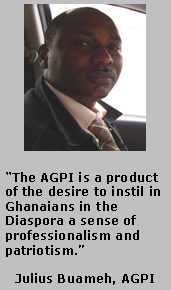 For example, spouses of immigrants on work permits are not allowed to work, which can place a huge financial burden on the only breadwinner. Again, because Africans in general have a different way of life, it becomes very difficult for Ghanaian professionals to adapt to the Irish way of life.
Most Ghanaian professionals, even though they have lived in Ireland for a number of years, still find it difficult to have access to funding for educational purposes.
JB: AGPI has organised periodic dinner and information sessions for members of the Ghanaian community in Ireland.
We have also held crucial talks with some Irish government officials and key opposition politicians, all with the simple aim of advancing AGPI’s cause.
In May of this year we hosted a delegation from Ghana’s parliament that visited Ireland including the Speaker and other leaders of the parliament. Prior to this we had paid a historic familiarisation visit, the first by an immigrant group in Ireland, to the Irish parliament at the invitation of the Deputy Leader of the Irish Labour Party.
Currently we are planning seminars and workshops on employment, education, enterprise and healthy living for members of the Ghanaian community in Ireland.
We have also identified key sectors in Ghana that we feel we can help make a difference in. For example we are sourcing funding to help improve mental health services in Ghana. We are also in discussion with relevant stake holders about setting up enterprise centres across the length and breadth of Ghana.
We are sourcing funding to help improve mental health services in Ghana... and... in discussion with relevant stake holders about setting up enterprise centres across Ghana.
JB: A significant benefit of membership of AGPI is the sheer satisfaction of being a part of a group of dignified and patriotic Ghanaians with a cherished desire to help with the transformation of our motherland. Other benefits of membership include the opportunity to mentor others and to learn from each other, as well as network with other progressive and like-minded Ghanaians.
JB: The Association is helping Ghanaians in Ireland to realise their full potential through entrepreneurship, education, employment and healthy living.
We wish to equip the Ghanaian community in Ireland with the requisite skills and expertise to be fully integrated into Irish society through full participation in all facets of Irish life.
AGPI is also mobilising human, material and financial resources towards the advancement of Ghana including innovative promotion and facilitation of foreign direct investments to Ghana and joint ventureship. This is partly our attempt to transform the seemingly brain drain into brain gain. The organisation has so far made incredible gains on many fronts, especially in the area of awareness creation, that has gained us recognition within both the Irish and Ghanaian government circles.
 RCA: What advice can you offer to Ghanaians and other Africans who may be interested in a move to Ireland?
JB: Any Ghanaian or African in general looking to move to Ireland should do so because the Irish are very hospitable.
However, they must be aware of some of the challenges faced by immigrants as I have already outlined. Having said that, Ireland is just like home for most Africans - except that the weather can be unpredictable, which in itself adds to the beauty of the country.
For further information about the Association of Ghanaian Professionals in Ireland: http://www.agpireland.org/
 While shopping may seem the ultimate pleasure for some of us, when shopping is your profession, it's not always as easy as it seems. Staying in the know about the best of London's high street stores, designer boutiques and vintage shops and styling high-profile clients is no small feat.
ReConnect Africa spoke to Zoe Huskisson, 'the ultimate personal shopper' about the challenges and joys of life as a professional stylist.
RCA: Zoe, can you explain what exactly a stylist does?
ZH: A fashion stylist can work in various capacities; for magazines (which involves styling the fashion pages), organising fashion shoots, and personal styling, which is working with clients - often celebrities - to create a style which flatters.
RCA: What inspired you to follow this career path?
ZH: I have always had a keen interest in fashion and I genuinely believe that fashion is not totally superficial, because if you look good then you feel good.
 I graduated from the London College of Fashion obtaining a BA Hons. Fashion Promotion degree. The course covered journalism, public relations and broadcast. I specialised in journalism and had to create an 84-page lifestyle magazine for my final year project. I really enjoyed the creativity of styling the fashion pages - everything from casting the models, researching the location and deciding on the concept.
After graduating, I worked in various areas of the media including television production and editorial journalism. I was a regular contributor to Pride magazine and also styled TV presenter Josie D'Arby for the cover.
I have also had my work featured in the international publication ‘Hello!’ magazine, where I styled the first Muslim Miss England. In the magazine, I had her wearing designs by Elizabeth Emmanuel who designed Princess Diana's iconic wedding dress.
RCA: What are some of the challenges in running a business of this kind?
 ZH: Being your own boss means you have no-one to blame but yourself if things go wrong. Networking is really important and this might not be as creative as working with a client, but it's vital for business.
Initially it can be tricky gaining customers as many people associate personal stylists with celebrities. However, with the popularity of fashion-related programmes such as those presented by Trinny and Susannah and Gok Wan, it is making the industry more accessible.
Whether you're a celebrity or not, everyone deserves to look their best. I love a challenge so I do not see this as a negative thing and the positive feedback from my clients far outweighs any big hurdles!
Whether you're a celebrity or not, everyone deserves to look their best.
RCA: What have you found to be the benefits of what you do?
ZH: I love working with people and this is the perfect job for me. To help a client with their style, I also have to learn about their lifestyle, career etc.
It is truly rewarding to see how a new outfit can really boost someone's confidence. I recently styled a lady who was attending the Mama Mia! film premiere- she lived in casual clothes and was totally transformed into a glamorous goddess for the red carpet event. I feel very fortunate to be doing a job that I enjoy.
RCA: What lessons can you share with people who would like to do what you are doing?
ZH: It's not enough to have an interest in fashion, it's equally important to be a sociable person. Many clients requiring style assistance trust you to be honest, yet helpful.
Keep yourself updated on fashion trends and how a designer look translates to the High Street. This is paramount as clients' budgets can vary from £50 to £5000!
Learn more about Style Elite: www.style-elite.com info@style-elite.com Tel: 07956 462 118
 The Precious Awards in November will celebrate the outstanding contributions that women of colour have made to UK plc in 2008.
The Precious Awards return for another year to celebrate Black and Asian female entrepreneurs and those women making their entrepreneurial mark within the workplace.
The awards, organised by Precious Online Magazine and Network and sponsored by Pearson plc, will be made at a ceremony in London on 20 November and serve to promote those inspiring individuals that generate ideas and turn them into action and change.
"We wanted an awards ceremony that truly focused on the achievements of those women who have taken the plunge and, in many cases, followed their dreams and launched their own enterprises," explains the founder of the Awards, Foluke Akinlose.
A journalist and herself a multi-award winner for her Precious Online Magazine and Network for women, Akinlose’s aim has been to profile and celebrate the professional and entrepreneurial achievements of women of colour in the UK. "Positive people doing their own thing inspire us. There is so much talent out there, we want to play our part in exposing it and we hope that people see Precious as a vehicle to global success."
 Akinlose knows the power in awards and recognition. "Since winning a Precious award last year, these innovative women have gone from strength to strength," she says.
"Jessica Huie, The Precious Entrepreneur of the Year, has launched her colour blind cards business in the U.S and has a string of high profile TV appearances under her belt including one as an expert on the BBC’s The Apprentice: You’re Fired."
The winner of the Precious Best Start-Up Award last year, luxury jewellery brand La Diosa, now stock their products in Harrods. Natasha Faith, co-founder of La Diosa, is justly proud of the Award and what it represents.
"What an honour it was to win the Precious Online Best Start-up Award! It was La Diosa's first award and we could never be prouder of the fact that it came from our own community," she says. "Awards like this are what keeps businesses like us motivated. The whole night was a true success and we couldn't be prouder of ourselves or the other star winners of the night."
For Angel Jones, the winner of the Best Online Business in 2007, the award was recognition that her gamble in starting her business, Shoe Lagoon, had been the right move.
"‘Speechless!' that's how I felt when Shoe Lagoon won the Precious Award for Best Online Business," she says. "After all those months of working hard, sometimes until late at night, and having my social life take a complete nosedive, the thought that someone out there recognised all the hard work I had put in was probably the biggest boost I had since I started my business."
Achieving a win at the Precious Awards, she says, has given her even more determination to continue. "It meant so much to me and the award will sit on my shelf and in my heart for years to come. This year I hope to keep growing my business and, with a little determination and the award under my belt, I have a funny feeling that anything is possible!"
 In 2008, Social Enterprise, Creative and Online Entrepreneurs are amongst those set to be honoured.
The categories include:
Business of the Year - for those businesses that develop innovations or processes that substantially improve the commercial performance or prospects of the company.
Creative Business of the Year - for those whose business is based in PR, design, TV, music, advertising, marketing, film or architecture.
Service Business of the Year - for owners of event management companies, hairdressers, high street or local shop owners, and consultancies.
Online Business of the Year - for those businesses where 55% of their turnover is gained from online transactions.
Start Up Business of the Year - for the business woman who has just started out.
Social Enterprise Business of the Year - for the businesses where the main goal is to benefit a social or environmental cause.
Young Entrepreneur of the Year - for a star of the future, running a business and aged under 30.
The Precious Entrepreneur of the Year Award: The Judge’s Prize – for the most passionate and dedicated woman business owner who the judges feel has overcome significant challenges to achieve outstanding business success.
Leadership within the Workplace Award - for a women working within a small, medium or large enterprise, who has taken on an entrepreneurial role within the company.
Book your place at the forthcoming awards and find out more at www.preciousawards.com.
 Ghanaians in Italy hold a National Conference
Reggie Tagoe reports from Torino on a recent conference on investing in Ghana for the Ghanaian community in Italy and Italian investors.
The two-day event was focused on Investments in Ghana for the Ghanaian community in Italy and Italian entrepreneurs who want to invest in the country.
A delegation from Ghana to the meeting was led by Hon. Kwaku Agyeman-Manu, Ghana’s Deputy Minister for Trade and Industry. Other members of his team included Robert Ahomka Lindsay, Chief Executive Officer of Ghana Investment Promotion Centre (GIPC); Oppong H. Boateng, District Chief Executive of Sekyere West and Augustine Otoo and Kofi Addo from the GIPC and the Ministry of Trade and Industry respectively.
Also present were two Diplomatic Officers from the Ghana Embassy in Rome, Jonathan Bartels-Kodwo, Minister and Head of the Consular Section, and James K. Nyasembi, a Minister-Counsellor.
The Conference was chaired by Bartels-Kodwo who began by expressing his gratitude to the Ghana delegation for coming to Italy and also thanked the Council of Ghana Nationals Association in Italy (COGNAI) for coming up with the idea of the event, in collaboration with its sponsors.
The Chief Executive Officer of the GIPC, Robert Lindsay, gave an extensive presentation on setting up business investments in Ghana and how Ghanaians abroad and all other investors can invest in Ghana’s economy through the GIPC.
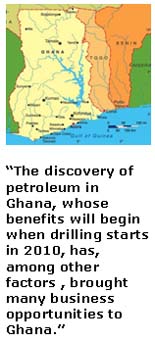 Speaking to over 300 participants, he cautioned them about investing in Ghana through family members or people who claim to have the ‘right connections’ to help them establish business in Ghana.
"We at GIPC are capable of handling every aspect of your plans in setting up business when you arrive in Ghana," he advised, as he comprehensively and convincingly made clear in his presentation by covering many areas about investing in Ghana.
"There are 5 key areas where we try to help people establish their business in Ghana," he said. "One, we initiate and support measures that will make the investment climate better for businesses, both domestic and international. We look at taxation, immigration or any other thing that has to do with investment and ensure that the investment climate is good for the investor.
"Two, we promote investment inside and outside Ghana and we do that by going out and sharing the opportunities with business people around the world and inside Ghana. Three, we are taxed to collate, analyse and bring together all trends and analysis to show the performance of our investment community in Ghana with the point to helping them register with GIPC, to ensure that the climate and whatever we are doing meet the needs of our economy.
"Four, we also spend a lot of time on the centres which are managed by us and not by the Ministry. We encourage you when you come to Ghana to visit the Ministers but investment processing is not done by the Ministries. Ministries do the strategy and policy, we at GIPC execute the policy and strategy.
"There is hope for Ghana and other people outside our country have recognised the massive potential we have. Opportunities are now glaring and people are coming to Ghana to invest."
"Five, we are there to hold your hand as you think about investing in Ghana, when you invest in Ghana and after you’ve invested. Our mandate covers everything from giving you a permit to operate in Ghana and, if there are tax incentives, we are the agency that gives you those incentives because we work closely with Customs and Excise", he told them.
The GIPC Chief also explained to the participants, which included some Italian entrepreneurs, a wide range of investment opportunities such as crop production, poultry production - under Agriculture, livestock feeds and fishmeal, packaging; under Agro Processing, Agri-Business, agricultural estates, irrigation and storage facilities. Hotels coach services, car rentals, beach, lake resort developments served as examples under Tourism. Also mentioned in his presentation were Information & Communication Technolgy (ICT), about which he highlighted the production of electrical and electronic products, manufacture and assembly of computer equipment and added services including tranportation, financial, health and education.
Robert Lindsay also gave the participants reasons why they should locate their business in Ghana. “Ghana is among the top 10 performing countries in the world and the first in Africa (Doing Business in 2008 – World Report),” he pointed out, adding the country has increased its revenues, reduced inflation and reduced interest rates and enjoyed political stability and a multiparty democracy since 1993.
Concluding his presentation, he noted that the registration of a business in Ghana through the GIPC can be done in a day and that a Registration Certificate can be issued after 5 days. Within 82 days of arriving in the country, an investor can start business. The Chief Executive Officer of GIPC also indicated his organisation does not engage in any acts of corruption and that any evidence of such malpractices are dealt with severely.
The Deputy Minister for Trade and Industry, in turn, updated the participants on the current economic situation in Ghana, urging his compatriots to take advantage of the current boom for doing business in the country and to come and invest.
"The discovery of petroleum in Ghana, whose benefits will begin when drilling starts in 2010, has, among other factors, brought many business opportunities to Ghana and you must not wait till 2 years from now, because you will be left behind," he advised, adding that, despite the oil find, Ghana has learned a lot from the Nigerian example and will not allow its other industries to collapse. He pointed out that the government is actively looking for investment in its agriculture sector, among others, and offering good tax concessions.
"There is hope for Ghana and other people outside our country have recognised the massive potential we have. Opportunities are now glaring and people are coming to Ghana to invest," he said, adding: "my Ministry is trying to ensure that we have an enviroment within which business can be done easily and smoothly and without too many challenges."
"Those of you living abroad seem much more exposed than those of us in Ghana in terms of technology....to how businesses are run, your attitude and ability to comply with laws.."
He pointed out that Ghana has managed to prepare its economy to receive foreign investors, as well as Ghanaians in the diaspora who want to go back home with good investment plans.
“We are also looking for partnerships. Those of you living abroad seem much more exposed than those of us in Ghana in terms of technology; from the machines you can use for poultry and food processing among others, to how businesses are run, your attitude and ability to comply with laws. We have moved from things we could not easily dream about seven years ago and we are getting closer to where we want to be,” said the Hon. Minister.
He reiterated an earlier point that there is no better place to invest in Africa now than Ghana and says Ghana is different because there is peace in the country, it has laws that protects investments, and has incentives that enable it to attract outside investments into the country. Furthermore, after paying taxes, whatever money the investor makes in Ghana can be transfered outside the country without difficulty.
A presentation was also made by Oppong H. Boateng, the District Chief Executive of Sekyere West. He informed the participants that there is an ongoing land reform project in Ghana, called ‘Land Association Projects’, where the Government is trying to acquire large areas of land all over the country to designate as ‘land banks’ for investors. "The government is also encouraging traditional chiefs to use land as equity shares in whatever investment they go into," said the Sekyere West District Chief Executive.
A representative of International Organisation for Migration (IOM), Tana Anglana, presented a report on ‘Financing and Support to Immigrant Workers’. She also mentioned the formation of a Women’s Organisation in West Africa to help in the socio-economic development of the region.
For many participants who asked questions, their major concern was about security, the implications of a change of government, consistent electrical power supply, bureaucratic tendencies and the granting of loans and land acquisition in the setting up of business in Ghana. These questions were expertly handled by the Chief Executive of GIPC, Robert Lindsay, and the Hon. Minister, Agyeman-Manu.
A day earlier, the delegation and diplomats from the Ghana Embassy had met Italian and Ghanaian entrepreneurs in Rome for a similar forum. There, 16 Italian companies representatives were present and participants were taken through why they should invest in Ghana and and the various steps involved. Present at that meeting were Dr. Michelle Dell’Utri, Councillor on Promotion, Co-operation and International Relations of the city, Torino, Guido Balotta, Secretary General of the Chamber of Commerce, Torino and Giovanni Maria Ferraris, Council member of the City Council in Torino.
For more information on investing in Ghana: www.gipcghana.com
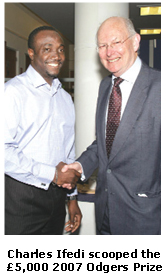 The recipient of the 2007 Odgers Prize, MBA graduate Charles Ifedi, was judged as the student with the highest potential for a management career. The £5,000 prize, sponsored by Cranfield School of Management alumnus Ian Odgers (right) of top executive search company Odgers, Ray and Berndtson, was established in 1987.
After the presentation of the Odgers Prize, Professor Michael Osbaldeston, one of the judging panel members, said, “Charles has had a very successful career to date in Nigeria, both as a consultant and in a start-up company. The panel was impressed ….and confidently expects that he will achieve a major leadership role across the African continent.”
ReConnect Africa spoke to Ifedi, who has now joined American Express, about his career success and how his MBA has made a difference.
RCA: Congratulations on your prize, Charles. Can you tell us a bit about your background?
CI: I am Nigerian. I graduated from University of Ilorin in Nigeria in January 1999 where I studied Computer Science. I graduated with a First Class and won a number of prizes there also, including: Best Graduating Student in Faculty of Science, Best Graduating Student in Computer Science, Best Final Year Student in Computer Science and Best Graduating Student in Department of Mathematics (97/98 session).
I started my career as a software developer while I was still in University and continued after I graduated. I joined PricewaterhouseCoopers in 2000, moved to Accenture in 2001 and went back to PwC after a year. I am also a Certified Information Security Auditor
RCA: You were involved in a start-up company in Nigeria. What was the company set up to do and how well did you succeed?
CI: Nine months after I went back to PwC, I left again and joined the pioneer staff and management team of InterSwitch Limited, a payment processing company in January 2003. InterSwitch is Nigeria’s leading Transaction Switching and Payment Processing Company, with the largest number of banks, cards, channels, products and customer-base.
I left InterSwitch in Sept 2006 to come and do my MBA in Cranfield. At that time, InterSwitch was driving more than 90% of the banks in Nigeria, over 4.5m cards, 1000 ATMs, 2000 POS terminals and monthly transactions in excess of US$25m. This has significantly increased (e.g. they have 100% of the banks now) and they are the de facto payment processing company in Nigeria. It is currently a highly successful company - started with equity equivalent of US$1.5m but is now worth more than US$15m. At the time of leaving, my designation was Group Head, Business Solutions and I was ranked No. 3 in the company. The key responsibilities of my department included the design, development and management of card and electronic payment solutions, project management and quality assurance, business development and market expansion (Local and International) as well as corporate marketing, sales and technical sales support.
RCA: What motivated you to come to the UK to study for an MBA?
CI: I chose to come to the UK to do an MBA for a few reasons. Firstly, and most importantly, was to get more international exposure, since I had been studying and working in Nigeria all my life. Although I had travelled abroad quite a bit, I felt coming to the UK would increase my exposure and my network. I chose Cranfield School of Management because I could only afford to give up one year for the MBA, and wanted a school that had a high average "number of years’ experience".
“I believe that with God's guidance and the right balance of hard work and timing (being at the right place at the right time) you can achieve anything...”
Then another focus I had was personal development. This was both individual development as well as skills that I had learnt on the job and never been taught formally - finance, accounting, sales, marketing, strategy etc which I needed for my management role. Then finally, there was also the opportunity to travel and see the world after seven years of working.
RCA: What are the key benefits you have gained from the MBA and from living in the UK?
CI: At the time I was coming to the UK, I didn't plan to work. I just wanted to study for a year and go back to Nigeria and probably back to InterSwitch. Initially, I applied to American Express for an internship and I was offered an internship in one department or a full-time job in my current department. I went through both interview processes and decided to take the full-time job. They got me a work permit and also a sign-on bonus which would enable me pay off my MBA loan quicker.
All the objectives for coming to the UK for an MBA were achieved. In addition, I don't think I would have gotten the offer if I didn't have an MBA in the UK, so that was a plus.
RCA: What was the most challenging aspect of your entry into the Odgers competition?
CI: The Odgers prize is not really a competition. Ian Odgers (the founder and chairman of Odgers, Ray & Berndtson) is an alumnus of Cranfield. The company is a selection and executive recruitment company. The Odgers prize is given annually to the MBA student that show the most potential to succeed in business and management.
The process is as follows: all the MBA students are required to vote for one person (excluding themselves) in the class that should be given the prize. The five MBA students with the highest votes are then interviewed by a panel comprising of Ian Odgers, representatives of the management of Odgers Ray & Berndtson, the MBA director, the Head of the Cranfield School of Management and one or two MBA faculty. Then one student is selected based on the interviews.
I guess it depends on the number of initial votes you get from the class of 113 people. I guess this would depend on the leadership qualities, charisma and leadership exhibited within your various teams and in the MBA class in general. I also actually think it was the students that were perceived to be the most intelligent in the class that were voted for...but sincerely I believe it was just God that gave me the opportunity to be there.
RCA: Any advice for aspiring professionals out there?
CI: I’m not sure if I am competent enough to give general advice to aspiring professionals since I am one of them. But I believe that, with God's guidance and the right balance of hard work and timing (being at the right place at the right time), you can achieve anything..."only the person that is prepared, can seize opportunities when they present themselves."
Migrant workers are expected to send home US$225 billion this year, according to a World Bank study which showed remittances playing a key role in slashing poverty rates in developing economies and representing the biggest source of foreign exchange in many countries.
While remittances highlighted migration's positive impact on development, the study also examined the negative effects of the brain drain of educated migrants from developing countries. Five out of 10 college graduates from Sierra Leone and Ghana, for example, live outside their country while many countries in Central America and Sub-Saharan Africa show rates of migration among professionals of over 50 percent.
Enterprise was the focus for the 2005 event; how Africans can use the skills, experience and knowledge acquired outside the continent to boost employment-creating economic growth in Africa. Featuring a range of master classes and workshops on subjects including enterprise development, employment and careers in Africa, the purpose of this year’s ADDD was to explore the mindsets, structures and mechanisms needed in order for Africans outside Africa to support SME growth in Africa.
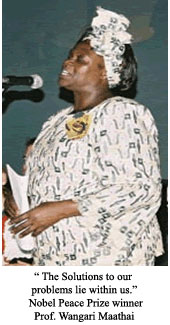 Arriving to a standing ovation, the keynote speaker for the event, Professor Wangari Maathai, Assistant Minister for Environment and Natural Resources in Kenya and 2004 Nobel Peace Prize winner, expressed her delight at the commitment of Africans in the Diaspora to the economic and social development of Africa. While acknowledging the efforts of the musicians campaigning in London’s Hyde Park, she urged the Africans present to remain focused on what they are already doing.
Professor Maathai paid tribute to the Nobel Prize awarders for recognising that the environment, democracy and peace are inextricably linked. Using the analogy of a 3 legged African stool, she noted that the extent to which any country is willing to invest in all 3 legs – managing resources in a sustainable way, sharing resources more equitably and creating a democratic space that respects the rule of law and human rights – will determine the extent of its ability to develop.
In a keynote speech punctuated by extended applause, the Kenyan Minister spoke of Africa as a continent rich in natural and human resources but impoverished by the exclusion of the majority to the natural resources of the land. Another major cause of poverty, she said, was the inability of African countries to add value to their natural resources and cited the need for skills, information, knowledge and tools as critical to the development of value added processes and services.
Touching on the subject of the billions of dollars sent to Africa by the Diaspora each year in the form of remittances, the Nobel Laureate warned that without skills, remittances will not enable people to make productive use of the money sent. Turning to the theme of the day, she noted that 90% of businesses in Africa are small enterprises and urged the conference to identify ways in which skills could be identified to aid such businesses as, with limited opportunities for employment; an enterprise culture is needed as a means of creating wealth in Africa.
Referring to the environment, Professor Maathai urged a change of attitude to the ecosystem. “The Congo Basin forest ecosystem”, she said, “is the second largest in the world and is of critical importance to African and global climate patterns.” She challenged the audience to make sure that each person plants ten trees to replace the carbon dioxide they will use in their lifetime.
“Plant trees”, she said. “Ask people to plant trees for you in your village, in your country. Do you know where your ten trees are?”
Fielding questions from the audience after her speech, Professor Maathai insisted that Africans are now in a position to push their leaders, especially since African leaders are now more willing than ever to be pushed. “Democracy will happen when people demand better governance of their leaders and for that they need education and information,” she said. Thanking the organisers of AD3, she closed by urging action and the need to work together, adding; “We met here today and because of this, we have made a difference.”
According to the World Bank, remittances from Africans living in the diaspora represent the largest flows of money into Africa today, far exceeding official donor aid and foreign direct investment.
 Financial resources are not the only options on offer and a number of Africans in the diaspora would also like to offer human resources to support African development. For many who want to share their skills within Africa, a combination of ineffective structures and systems as well as negative attitudes on the ground, often prove a major obstacle.
The African Foundation for Development (AFFORD), a non-governmental organisation founded in 1994 to expand and enhance the contribution that Africans in the diaspora make to Africa's development, has taken on the challenge of harnessing the skills of Africans in the diaspora for the benefit of grassroots entrepreneurs in Africa.
March 2006 saw 15 resource persons leave the UK for Sierra Leone, the first country to benefit from this programme. Recognising that for many Africans, particularly the young, entrepreneurial activities are often used as a route to migrate to the West rather than to stay at home to invest their money in a business, AFFORD’s initiative connects experienced diaspora resources with African entrepreneurs to deliver tangible results.
The programme has two aspects; training people in Sierra Leone to become trainers in basic business skills and, secondly, providing business planning sessions in Freetown and across the regions through local partners that include the Swazy Jewellers Organisation, SLIBA (Sierra Leone Indigenous Business Association), the Ministry of Youth and Sport, the Young Leaders Group and ENCISS.
The project involved extensive planning by AFFORD and was preceded by a three-week feasibility study in Ghana and Sierra Leone, including in-depth discussions with over 100 individuals from grassroots entrepreneurs to established businesspeople, business support agencies, development experts, academics and senior government officials. The selection of the resource people identified for Sierra Leone followed a rigorous assessment day that tested both the technical and soft skills of applicants.
Project Aims
A key aim of the project, which was funded by Voluntary Services Overseas and its Diaspora Volunteering Initiative, is to develop a resource pool of skilled Africans from the diaspora and in-country to support grassroots entrepreneurs through face-to-face and long-distance interaction. This approach will enhance the skills and confidence of entrepreneurs, helping to develop their business ventures and provide hope along with the creation of much-needed jobs. At the same time, it offers a chance for an often-disconnected diaspora to re-engage with “home” and find a means to contribute to society by improving in-country institutional capacity of small-scale grassroots entrepreneurs and enterprises.
One particular outcome of the programme is the intention to heighten awareness of business ventures most likely to have a direct poverty-reducing impact, encouraging Africans outside the continent to channel their remittances in a manner that supports enterprise and helps with job and wealth creation. The project also aims to support gender equity and diversity by providing equality of opportunity to young women entrepreneurs, young entrepreneurs with disabilities or living with HIV/AIDS.
AFFORD has an impressive record of building capacity, having worked with over 100 African organizations in the UK working for Africa’s development through direct hands-on advice, training, and networking. It has successfully pioneered many initiatives that help Africans in the diaspora support initiatives by Africans within Africa.
Project Benefits
The programme will deliver a number of key benefits by enabling more young people to draw on business support services to establish their own businesses rather than migrate.
Through gender-sensitive training, AFFORD hopes to inspire more young women to set up their own businesses, thus breaking a cycle of poverty. A longer-term benefit is the ability of the programme to foster the flow of remittances into productive investment ventures, creating a wider impact from these flows and a faster reduction of poverty. Christine Matambo, AFFORD’s Programme Officer emphasises that the organisation’s mission over the next three years is centred on enterprise and tapping into the UK diaspora as resources to provide skills, financial and social contacts.
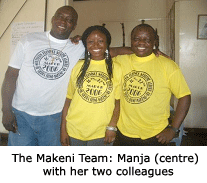 "We are starting with the skills mission and this mission is allowing the diaspora to take time to share their skills, either in their country of origin or from a pan African perspective, to empower local grass roots entrepreneurs," she explains.
"The long term goal is to help these businesses to improve and create jobs thereby reducing unemployment. We’re not talking about large-scale jobs; even if one or two are created by each business, this will contribute to reducing especially youth unemployment, which is an Africa-wide problem"
"A Fantastic Experience"
The programme has proved an unqualified success and provided a memorable experience for participants. For Manja Kargbo, a resource person who travelled to Makeni with her team, the programme was evidence that business people in the informal sector do know what they need but often simply lack support.
“The mission was a fantastic experience that allowed me to look at the informal business sector with fresh eyes and share my ideas with the local participants on how to grow their businesses”, she says. “In the developed world, most who want to start businesses can go to business development agencies for advice and support, or can easily access the internet for information- in Sierra Leone, that is not readily available.'
Matambo and AFFORD hope that the financial benefits will flow as relationships are built. “Through these missions,” she adds, “the diaspora and home entrepreneurs will be able to develop a level of trust so that, in the near future, we hope that people from the diaspora will be able to invest financially in these small businesses.”
The next enterprise development mission is to Ghana in May/June 2006 and AFFORD are looking for Ghanaians to join the initiative. For further details, contact: Christine Matambo, Programme Officer, AFFORD on 020 7587 3900 or Christine@afford-uk.org
Photo: Lisa Anderson
AFFORD launches programme to supporting Susu Collectors in Ghana
As a component of its MAHDREIA (Mobilising African Home and Diaspora Resources for Enterprise in Africa) programme, the African Foundation for Development (AFFORD) is organizing its second Enterprise Mission to Ghana in July 2006.
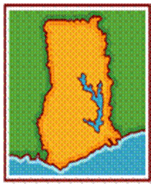 The programme involves tapping into diaspora skills, knowledge and experience to support the development or expansion of grassroot enterprises in Africa. The UK Enterprise Africa Resource Pool will work on the ground for two to three weeks with identified grassroots entrepreneurs – The Susu Traders - who have already made important strides in their business.
Mentoring for Business Growth
The UK Resource Pool will be listening to the ideas and experiences of the Susu Traders and will draw on their own skills and experience to help with developing robust business plans and providing business advice.
84% of economically active Ghanaians operate in the informal sector.Most of them use informal financial systems such as Susu Collectors to handle their cash.
“That’s why working with Ghana’s Susu Collectors to help them grow their businesses is also a vital part of helping millions of Ghana’s entrepreneurs to grow Ghana’s economy, improve their lives and create more jobs,” says AFFORD.
The project is intended to improve and expand business for the Susu Traders, ultimately leading to creation of jobs and wealth for young people in the country. As part of their strategy, AFFORD hopes to contribute, in the long term, to supporting Africans to harness Africa’s enormous potential and riches for the benefit of Africans in Africa.
“The enterprise missions to Africa represent a unique way of tackling the high unemployment levels faced by the majority of African countries,” explains Christine Matambo, AFFORD’s Project Officer. “Leveraging diaspora resources to help grassroot entrepreneurs develop their businesses to a point where they are able to provide even two jobs, would make a significant contribution to employment-based poverty reduction and foster economic growth and development.”
The Susu Traders
On the July 2006 mission, members of the AFFORD Enterprise Resource pool will work with the Susu Traders to help them improve their business services. Currently, their operations focus on collecting weekly from market women and at the end of each month, the Susu Traders give the market women back their total monthly revenue, thereby helping the market women to save better. In return for these informal banking services, the Susu Traders earn a commission from the market women
The Susu Traders are currently undergoing enterprise training under the Barclays Microbanking Programme, which is working closely with the Ghana Cooperative Susu Collectors Association to help local Susu Collectors support local enterprises. The AFFORD mission will also provide post-training mentoring around developing business plans to help the Susu Traders take their business to the next level, improve their creditworthiness and expand their businesses.
For further information about the AFFORD mission: contact Christine Matambo at Christine@afford-uk.org
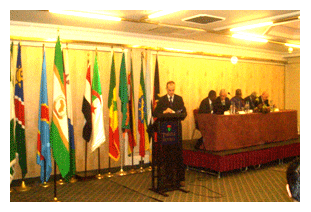 Nepad Chief Executive Joins African Heads of Mission to celebrate Africa Day in London
At a special Africa Heads of Mission in London meeting to mark Africa Union Day on 25 May, Professor Firmino Mucavele, the Chief Executive of the New Partnership for Africa’s Development (NEPAD), paid tribute to the visions of Africa’s founding fathers, while highlighting the challenges faced by Africa today. Established in 1999, the Africa Union is the successor of the Organisation of African Unity which was formed in 1963 to promote the unity and solidarity of African states, eradicate colonialism, defend territorial integrity and promote international co-operation.
Welcoming the diplomatic delegates and other invited guests, H.E. Samuel Mbei, Dean of the African Union Heads of Mission, introduced the panel of speakers and challenged those present to engage in a frank exchange of views on the way forward for Africa.
David Batt, Director of the African Partnership Forum, presented a speech on behalf of the UK Secretary of State for International Development, Hilary Benn. In it he highlighted the steps that had been taken since the report presented by the UK’s Africa Commission and noted that “the role of the AU is essential in finding and implementing Africa solutions to African problems.”
Professor Mucavele reflected on the ideals behind the formation of the OAU and how, 36 years later, the leaders of Africa decided to set up the African Union (AU) to succeed the OAU in order to better face the new challenges of integration on the continent.
Professor Mucavele spoke of his own organisation and the philosophy, strategy and progress of NEPAD. “NEPAD is about partnership, ownership and mutual accountability.” He stressed that NEPAD is not an institution in conflict with the AU, but a programme of the AU, developed by African leaders to promote sustainable development and that the organisation is about making smart partnerships for human, social, institutional and economic development.
“NEPAD is also a philosophical framework,” he explained. “A programme, a development framework and a philosophical framework.” As a programme of the AU, it aims to promote good governance, rule of law, peace and security; to build institutional capacity and mobilise human, material and financial resources for Africa’s development.
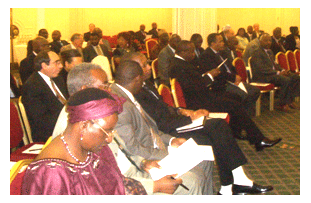 The need for unity in Africa is paramount, Professor Mucavele said. “We should stand together. NEPAD is about building Africa and strengthening the Africa Union.”
The Professor spoke of his organisation’s mission to help restore self-confidence to Africa and of how unity and partnership among African countries would lead to more appropriate and effective negotiations with the West for development in Africa. In seeking financial resources, he spoke of how Africa could leverage its existing resources to better effect. “The problem of Africa is not about money but sharing what we know. It’s about self-confidence,” he said. “We must use these principles to negotiate with our development partners and to dignify Africa.”
The Professor argued that the continent needs to mobilise its human resources in order to have knowledge and value systems and to better leverage its natural resources. “We have them,” he said, “but still suffer from famine – 300 million people living on less than $1 dollar a day.” The continent, he added, also needs institutional resources to harmonise and synchronise procedures and laws so that it can trade.
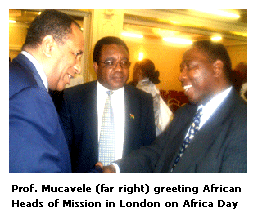 Unity and partnership was the recurrent theme of the Professor’s address. “Partnerships are key for Africans, but only when we know what we want and we know what we want to do. Then we can negotiate knowing our comparative advantage. We should create new products and markets and harness and generate financial and human resources for development.”
The Professor acknowledged the challenges of corruption within the Continent but also pointed out that corruption is a universal challenge and one that involves complicity from other parts of the world. “We can fight to change the image of Africa but we have to move to new ways,” he said.
What is needed to help make the difference for the African continent, he said, was working together to effect increased productivity, efficiency and lower transaction costs on the continent. The role of NEPAD in this process was critical. “NEPAD operationalises the principles of the AU and oversees their implementation. Our emphasis is now on partnership between African countries and regional and continental integration.”
Pictures by Bright Malopa.
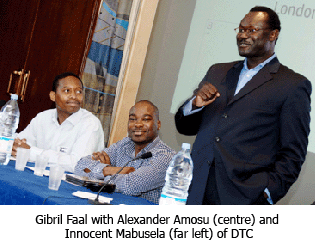 “Let us be ambitious in what we want for our countries and our continent”said Gibril Faal, Chair of the African Foundation for Development (AFFORD) as he welcomed participants to the organisation’s annual flagship event, the African Diaspora Development Day (AD3).
Describing the event as one that celebrates the contribution of Africans in the Diaspora, Faal urged those present to use the event to learn how to improve the impact of these contributions to Africa. “We come to AD3 aware of the constraints and barriers,” he said. “However the event is one for being solution merchants rather than problem peddlers. That is the spirit with which we come to AD3.”
AD3 is an action-oriented, interactive, participatory, and fun-filled day that attracts hundreds of Africans and friends of Africans in lively debate, sharing of ideas, and resolution to action. The topics on the 2006 agenda included the subject of remittances and how these and other investments can support the creation of jobs, identifying the skills, knowledge and experience needed to support entrepreneurs in Africa and how to leverage networks, contacts and influence to lobby against barriers to job creation through enterprise in Africa.
Master classes and workshops held across a range of topics including employment skills, fundraising and public speaking, as well as a vibrant African Development Marketplace, added to the variety of the day.
The theme of the event reflected AFFORD’s aim to create 8 million jobs in Africa. By 2008 AFFORD aims to have mobilized 45 African Diaspora communities and groups in the UK to invest their financial, intellectual, political and social capital to create or support 15 small, micro and medium sized enterprises (SMMEs) that focus on providing employment opportunities for young people in the DRC, Ghana, Nigeria, Sierra Leone, Uganda. Over the next three years AFFORD will concentrate on supporting the African Diaspora in the UK to contribute to wealth and job creation in Africa.
“AFFORD is convinced that jobs, not handouts, will create wealth, opportunity, dignity and hope in Africa,” said Chukwu-Emeka Chikezie, Executive Director of AFFORD. “Following our deliberations here today, we shall commit to concrete, practical actions and initiatives in the next year to involve the African Diaspora and others in creating some of those much-needed jobs in Africa.”
“The creation of decent jobs that can be performed by poor people is the single most effective way to reduce poverty in Africa.” Economic Commission for Africa
In his welcoming address, Gibril Faal highlighted AFFORD’s work on remittances, which he described was now being as an important, and arguably better, part of Africa’s development finance. Conservative estimates by the IMF show that Africans abroad sent home approximately $32 billion in 2005. AFFORD has recently launched a policy initiative called RemitAid, which recommends that remittances sent to developing countries qualify for tax relief in the same way that donations to charitable organisations attract tax relief, known as Gift Aid.
AFFORD’s RemitAid campaign has started to gain momentum and is attracting support from key stakeholders including some developing country governments, UK money transfer operators, remitters and several hometown associations. This lobbying, said Faal, has also contributed to the recent resolution passed by Finance Ministers of Africa urging Western countries to consider tax relief for remittances.
AFFORD is also focusing on African businesses based in the UK which import goods from the continent, pointing out that if these businesses can be strengthened then they can import more goods which in turn will create more jobs.
AFFORD’s partners for the event, the Diamond Trading Company (DTC), part of the De Beers diamond company, was represented by Innocent Mabusela. He spoke of the event’s objectives as being a platform to create workable ideas for development in Africa. Mabusela highlighted his company’s strong commitment to corporate social responsibility as an integral part of the business, citing the 2000 Kimberley Process as an example of cross-sectoral partnership to address illegally traded diamonds.
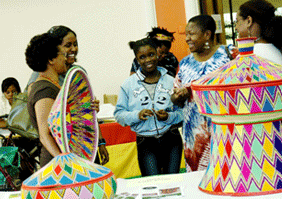 “The need for effective partnership is critical to the promotion of enterprise and investment in Africa,” he said, noting that De Beers is working successfully with Sierra Leone, providing expertise in diamond trading. DTC sees its relationship with AFFORD as part of its policy of identifying key partners “Success can only be achieved with partnerships that deliver concrete results, such as AD3. One of the things we can start doing is being an ambassador for our continent and change the perception of international business about Africa,” he said.
The Keynote speaker of AD3 epitomised the concept of enterprise. Alexander Amosu is a successful UK-based entrepreneur who made a fortune pioneering the ring tone industry. The North London entrepreneur made his first million at the age of 24 by selling ringtones of the latest R&B and hip hop tracks. From what started as a favour to his brother – creating a ringtone for a mobile phone – Amosu, who originates from Nigeria, went on to set up a ringtone scheme that generated instant revenues.
Ringtones today are big business and were worth an estimated $3.5bn globally in 2003. Amosu left university to expand his fledgling company, R&B Ringtones, and within four months had made enough money to recruit 21 staff and hire an office in London.
 Amosu went on to sell the company and his latest project is Mobsvideo.com, an online community portal that encourages video-enabled mobile users from 21 countries to request and share film clips.
Amosu’s focus is now on providing support, guidance and seed funding to young entrepreneurs with the establishment of the Alexander Amosu Charitable Trust, through which he hopes to produce a new generation of entrepreneurs from Africa and its UK Diaspora. Having pledged £250,000 of his own money, he is now set on raising £750,000 for the fund.
Amosu spoke of the challenge of using his success to impact on Africa. “It’s great being successful in the UK but if you’re not successful at home, then you haven’t really achieved anything,” he said. Describing himself as “a pioneer and not a follower”, Amosu’s Trust aims to provide role models for young Africans and helping young black entrepreneurs by offering direction and advice. His Trust will provide premises, business support and advice from accountants, lawyers and marketing experts for selected entrepreneurs for up to one year.
Following the keynote speech, a lively debate by a panel of entrepreneurs was chaired by Kwame Kwei Armah, the noted UK playwright and creator of award winning play, ‘Elmina’s Kitchen’.
Events like AD3 highlight the desire of many Africans to move away from the emphasis placed on development aid. As Onyekachi Wambu, AFFORD’s Information Officer pointed out, “At the moment, just giving people aid ensures that nothing sustainable is really being built.”
Creating jobs in Africa is about creating hope at home, he said.
“Ultimately, the most sustainable thing one can have is a business and if it’s making money, people will keep it going. If Gordon Brown wants to make an impact on poverty reduction he puts people in jobs and they create a dynamic business sector. So if it works here, why should Africa be any different?”
 A new survey reveals a third of ethnic minority families in London send money home to Africa and Asia to fight poverty.
More than a third of ethnic minority households, who responded to a UK-wide survey, sent an average £870 back home to their families living in some of the poorest parts of Africa and Asia last year, according to a new report published today by the UK Department for International Development. The research is the most comprehensive look at the private money transfer habits of Britain's Asian, African, Caribbean and Chinese communities. Nearly half (45%) of the UK's ethnic minority population live in London.
According to reported research by the World Bank remittances have helped cut the share of poor people in Uganda by 11% and by 5% in Ghana. This survey was carried out by ICM Research on behalf of the Department of International Development between February and March 2006 in all 12 regions of the UK. Interviews took place across central and greater London. A total of 28,000 households were approached of which 7,051 responded to the survey.
According to Gareth Thomas, UK Minister for International Development, "Sending money home to families in developing countries plays a vital role in helping to tackle poverty, but until now there was little detailed information on what contribution ethnic minorities in the UK made. "This new survey fills this gap, and improving understanding will help banks, community groups and financial service providers offer more options to people wishing to send money home to relatives."
Official IMF statistics reveal that $230 billion worth of remittances were sent to developing countries worldwide. The survey highlights the fact that about 38 per cent of ethnic minority households who responded to the survey sent an average of £870 back home in 2005. Of the 50 plus developing countries receiving money from the UK, the five largest recipients were Nigeria, India, Pakistan, Jamaica and Ghana.
Other key findings for the survey revealed that:
The average income of the senders was £22,000 and 70 per cent were between 25-44 years old
In almost 50 per cent of cases people were sending money to their parents, another 25 per cent to other close relatives like cousins and 15 per cent were sending money to spouses and children;
31 per cent of senders said the money would be used to buy food, 21 per cent said it would help with medical bills and 17 per cent reported the funds would help pay for schooling; and
80 per cent said the money would make a real difference to the lives
Many poor countries receive more in money sent back by relatives than they do from overseas companies investing in the local economy. For instance, Ghana receives around 10-15 % of its national income from remittances sent from around the world, compared with around 3% from foreign investment. The survey also indicates that 15 % of people exclusively used informal methods, such as sending money with friends or relatives travelling back home.
The Department for International Development helped set up the UK Remittances Task Force which includes members from the British Bankers' Association, Barclay's bank, the Post Office, MoneyGram International, VISA Europe and ICICI Bank. The task force is looking at reducing barriers and costs to remittance flows, improving data and reducing barriers for firms to enter the remittances market. It will present its findings in a report to the government early next year.
DFID has provided up to date information on the services offered by different money transfer providers in the UK customers through a website: http://www.sendmoneyhome.org
The survey is available at http://www.dfid.gov.uk
London Business School students organised a trip to Ghana and Nigeria during spring break 2006. Gbenga Olatunji of the 2007 MBA class reports on the first trip by the School to the region, an exhilarating and refreshing learning experience.
“Over an 11-day period, we visited some of the exciting sites in both countries, met business leaders, participated in volunteer service and found time to have fun as well!” says Gbenga.
First Stop, Ghana
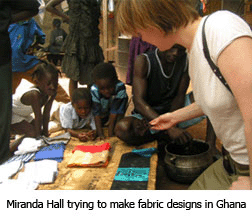 The first stop was in Ghana where the group spent a day sightseeing in the capital, Accra. Ghana and Ghanaians are very proud of their history so there were a number of places to see including the Kwame Nkrumah Mausoleum, the art and craft market and the Independence Square. This was followed by a drive from Accra through the central region to Obuasi, home of the famous Ashanti gold mines. Along the way, the students discovered a local palm wine distillery and learnt about brewing local gin, while sampling some fresh palm wine!
In Obuasi, the group was received by AngloGold Ashanti and given a tour of the over 100 year old mine by "Captain" who had been working there for 23 years. He was thoroughly entertaining, and made the long walk quite enjoyable. The group got lessons on blasting and drilling, witnessed some of the training exercises for the miners and walked a distance of 800 feet below surface (although most felt it was a lot further than that!) There was also a visit to the ore processing facility and lessons about the process for extracting gold from the ores and AngloGold Ashanti's environment friendly enzyme based extraction process. Unfortunately, the group didn't get to take any gold with them, but had a lot of fun!
Kumasi and the Ashanti
Then, it was off to Kumasi to learn more about the Ashanti history and culture. Kumasi is the home of the Ashanti Tribe of Ghana. Ashanti are famous for their wars, military tactics, Kings and queen mothers, Gold and Kente cloth: a living culture that symbols the much of what people know of Ghana. There, the group visited the Manhyia Palace Museum and the Palace of the Ashantihene (king), the National Cultural Centre, market, art and crafts shops and had some real Ghanaian hot, spicy and delicious food. There was also a visit to the home of kente and adrinka cloth making. A few students tried their hands at cloth making and found it fun! The nightlife in Kumasi was very lively as well and everyone had fun dancing most of the night in the hip clubs. With good music, a young and vibrant crowd, and fun seeking London Business School students, it was a night out to remember.
“I could have gone to Japan, the Caribbean or Peru. I chose Africa and I would do it again!"
After Kumasi, the group drove back through the Cape to see two brilliant sights in Ghana. The Kakum National Park is comprised of mostly undisturbed virgin rainforest. Excellent walking tours (and a canopy walkway) through the forest provide the opportunity to see much of Ghana’s indigenous plant life, as well as rare butterflies, birds and game (that could include the extraordinary bongo and forest elephant). The brave participants took a walk on the 350-metre long and 35 metre high canopy walk, the only such walk in West Africa. Afterwards, the group visited Elmina Castle, the site of some of mankind's most unfortunate events and the exit point for many hundreds of thousands of Africans shipped off to slavery. The castle, recognised as a World Heritage Monument by UNESCO is a must see for anyone interested in finding out more about the events of the slave era.
Back in Accra, the group organised a volunteer event for young entrepreneurs. Working in partnership with Pan African Students Summit, the group held an event to learn about doing business in Ghana, deliver presentations on business planning and raising finance as well as reviewing business plans for entrepreneurs venturing into poultry, tourism and fishing businesses. We also met with officials of Guinness Ghana and GSK to learn more about doing business in Ghana and the challenges faced in their industries.
Next Stop, Nigeria
After a fairly nail biting race to catch the flight to Lagos, the group was welcomed to Nigeria with a dinner hosted by First Securities Discount House on behalf of Lagos based Alumni and RAB members. Hosted at the chic Saipan restaurant, it was fun to meet this group of successful business leaders and the event continued until almost midnight. Attendees included Alero Otobo, Rilwan Belo-Osagie, Osaze Osifo, Tayo Emdem, Ayo Gbeleyi, Femi Lijadu, Mark Riksen and Orlando Ojo.
The first full day in Nigeria consisted of a series of visits to leading businesses in Lagos. The first stop was a visit to Oando Plc where a group that included London Business School alumni received us. The company's presentation highlighted the successful entrance and growth of the company to the Nigerian market and its expansion to West Africa as well as listings in Nigeria and South Africa. It was also a good general discussion on the energy industry in Nigeria. Everyone found a few minutes in-between the presentation to catch the solar eclipse from the 10th floor window.
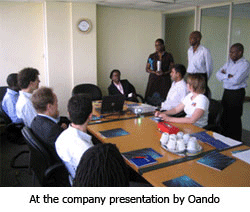 Then, it was off to Guaranty Trust Bank, where the management team led by a board member gave a presentation on the Nigerian banking industry, challenges and prospects. The bank, which is one of the country's leading banks is considered a Nigerian success stories and is the subject of case studies by Harvard Business School. With little time to spare (and fortunately little traffic), it was off to Shell for a presentation on the exploration and production industry in Nigeria. Finally, a last stop at Coca Cola's Nigeria office where there were discussions with Carl Willis, the Franchise Director for Nigeria.
Next day, it was off to Abuja, the Nigerian capital. Built as a new capital to move away from the congestion of Lagos, it was a very interesting contrast to Lagos. As guests of the Minister for the Federal Capital, we were given a tour of the city and visited the Nike art gallery. The high quality art included works by some of Nigeria's most famous artists. Lunch was an opportunity to have discussions with some of the young people working with the minister to manage Abuja and retain its status as a leading city in Nigeria.
Meeting Young Entrepreneurs
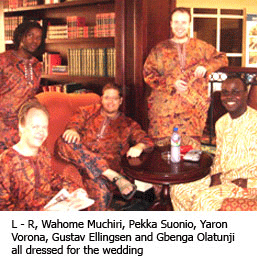 Back in Lagos, the team held a second volunteer event in partnership with LEAP Africa. It was another interesting session attended by young entrepreneurs in software, shoe making, textiles, telecoms and several other industries. It was an interesting learning experience for all participants with London Business School students challenging the participants to expand the scope of their business ideas, presenting tips on business planning and providing insights into financiers' expectations. It was also an opportunity to meet Ndidi Nwuneli, who is a widely acclaimed youth leader in Africa.
Then, it was off to a Nigerian wedding! It was a very colourful event with lots of music, beautiful attire, friendly people and interesting activities.
Diversity in Action
The participants were an excellent reflection of the diversity of the School community. We had British, Finn, Dutch, Chinese, Senegalese, Kenyan, Norwegian, Canadian, Nigerian and South African participants. The diverse nationalities and professional backgrounds impressed most of the companies and professionals we encountered. It was a really good opportunity to showcase some of the selling points of the School.
Organising this trip was another opportunity to discover and explore opportunities provided by the alumni and advisory board resource pool. We received support from alumni based in Nigeria and the UK, while the Africa Regional Advisory Board members assisted from London, Lagos and Johannesburg.
As Norwegian MBA student Gustav Ellingsen said after the event, "It was extremely interesting to see first hand what Sub-Saharan Africa is all about. It has certainly given me a new perspective. I could have gone to Japan, the Caribbean or Peru. I chose Africa and I would do it
 “A conference organized by Africans, for Africans, in order to truly and pragmatically address problems on the African continent.” Professor Hyacinth Nwana, Professor Joseph Tah, Dr Rosemary Burnley, Dr Jey Ngole and Dr Asa’ah Nkohkwo of TMG Foundation report on TMG 2006.
The TMG-2006 African Diaspora Conference on Sustainable Development, which took place in Westminster, London, on 22nd July 2006, was organized by a group of African Diaspora under the auspices of TMG Foundation – a registered charity.
Sustainable Development is defined in the now-classic Brundtland Commission Report as “development that meets the needs of the present without compromising the ability of future generations to meet their own needs” (Brundtland, 1987). If there is one continent in need of it, it must be Africa. However in Africa, what passes for sustainable development is largely still dominated by the Western-driven, donor-led model. So was born the TMG conference.
“Africa’s Diaspora is Key to Addressing Africa’s Problems”
TMG 2006 was unique in three key ways. Firstly, it was the first of – we hope – a set of conferences organized by Africans, for Africans, in order to truly and pragmatically address problems on the African continent. It was an action-oriented conference – and not one that majored on exposes of Africa ills.
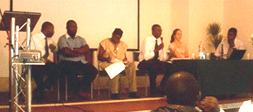 Secondly, it was a conference series organized by African Diasporans – a clear hypothesis we hold firmly is that Diasporans will be key to addressing African problems. This is not only because there are enough Africans in Europe alone to fill a mid-sized African country, but also because for most black African countries, there are more Diaspora professionals per key sector than those back in Africa.
So for example, two-thirds of doctors trained in Ghana are working abroad; similarly, there are 5000 Cameroonian Diaspora doctors and only 3000 in Cameroon. Similar statistics apply to other key professions. Thirdly, the philosophical view we – the organizers - take to sustainable development is different to the classic donor-led model. We advocate “grassroots-based”, “micro projects-driven”, “stakeholder community-involving” and “Diaspora-supporting” initiatives, and we argue they bode much better for African sustainability than “Western-driven” and “donor-led” models.
“Two-thirds of doctors trained in Ghana are working abroad; similarly, there are 5000 Cameroonian Diaspora doctors and only 3000 in Cameroon.”
However, we do not pooh-pooh the donor-led model – indeed, we believe they are complementary – one is top-down, big budget in nature and fewer projects – the other bottom-up, small budgets in nature and many projects. Furthermore, we urge the Western donor organizations to facilitate and support the take up of such more sustainable models.
The conference agenda programme and abstracts of papers can be seen at www.tmgcmr.org. The conference attracted over 150 participants from about ten nationalities: UK, Nigeria, Gambia, Malawi, Jamaica, Zimbabwe, Zambia, Ivory Coast, South Africa and Cameroon. The programme allowed for five presentations in the morning including two keynotes. Post a sumptuous lunch were very interactive workshops and a plenary panel session.
Of particular interest were presentations that covered real examples of Diaspora-supporting, grassroots community-based, sustainable development work back in Africa, and the keynote on real-world sustainable financing, which generated dozens of questions. The reader is urged, to obtain for a small fee, a copy of the comprehensive proceedings from www.tmgcmr.org.
The feedback from the 50 questionnaires received astonished us: the conference scored 4.2 over a maximum 5 across a range of 8 questions per questionnaire. Comments urged the Department of International Development (DFID) to consider such grassroots-based models, as well as urged the organisers to make this conference “sustainable” itself – and also take it back to Africa!
There have been three key outcomes. Firstly, the acclaimed 200 page proceedings, Nwana & Tah (2006). Secondly, a conference report has been produced (see www.tmgcmr.com) which covers the issues raised from the presentations and three workshops: Developing Sustainable Communities; Financing Sustainable Development and Sustainable Infrastructure. Thirdly, TMG – as a Diaspora group – recognises the challenge presented to us by the delegates, and we look forward to working in partnership with other Diaspora groups to share experiences on grassroots-based sustainable development.
Either way, we urged the participants of this conference to come back to the next conference to report progress on more sustainable projects which they have set up and got going, inspired by the learning, networking, case studies, knowledge sharing, etc. from TMG-2006 conference. If need be, TMG Foundation will advise on projects.
We will measure progress of this TMG conference – not by a publication like Nwana & Tah (2006) – but via reported sustainable projects which we can unambiguously attribute to this initiative.
TMG Foundation can be contacted through its chair, Dr. Rosemary Burnley via conference@tmgcmr.org
Brundtland, G-H. (1987), “Our Common Future: Report of the World Commission on Environment and Development”, Oxford: Oxford University Press.
Nwana, H. S. & Tah, J. H. M. [Editors] (2006), Proceedings of the African Diaspora Conference on Sustainable Development – TMG 2006”, London: TMG Foundation. Request from www.tmgcmr.com
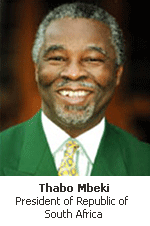 As South Africa looks forward to hosting the 2010 World Cup, we bring you the text of South African President Thabo Mbeki's speech at the ceremony unveiling the emblem for South Africa's 2010 Fifa World Cup, in Berlin on 7 July 2006:
"It is fitting that, on 9 July, Germany hands over to South Africa the hosting of the Fifa Soccer World Cup 2010 in this city of Berlin. I am saying it is fitting because the Brandenburg Gate, in all its glorious splendour, stands testament to the changing fortunes of Germany from a divided to a reunited nation in a spirit of reconciliation, togetherness and growing prosperity on both sides of the gate.
"Indeed, the Brandenburg Gate is now a symbol of German resilience, pride, dignity and joy. As Germans will recall, it was football that played such a pivotal role after the Second World War in redefining and healing the trauma of a devastated nation.
"Who can forget Helmut Rahn's magnificent winning goal that brought victory to the underdogs, Germany, against the favourites, Hungary, in that memorable 1954 Fifa World Cup in Berne? Indeed, the 'Miracle of Berne', as it then became known, was widely considered to be one of the major catalysts in Germany's economic recovery as it ensured a growing and prospering soccer industry.
"For Franz Beckenbauer, that historic World Cup day when German hearts beat in unison was not simply a sporting victory. As he says: 'The Boss [as Helmut Rahn was called] contributed to the most important success in German sporting history. Germany became someone again. We gave ourselves the feeling of self-respect again.'"
The Miracle of South Africa "We are confident that the 2010 Soccer World Cup will do the same to consolidate our self-respect and dignity gained when we attained our freedom and democracy in 1994 and in a unique way help our own nation and the continent of Africa also to bask in the miracle of South Africa.
"This will clearly be a special tribute to many South Africans and Africans who have triumphed over the pernicious system of apartheid which even denied a black child the right to play football with a white child. The 2010 Soccer World Cup belongs to the many Africans who in many parts of the world engage in a continuous struggle against racism and xenophobia.
"As many of us in this room are aware, every day we take important steps to reunite what was a divided nation. We continue to work together to ensure that every South African enjoys dignity, freedom and justice and that our children grow up in an environment that nurtures their talents, infusing the spirit of resilience and determination even in the face of difficult challenges.
"This is the same spirit that helped us overcome such formidable trials and tribulations as presented by the system of apartheid. In many ways this spirit has for years been best manifested within the game of football as players, administrators and fans defied and outmanoeuvred the apartheid system to keep the game alive."
An Inspiration for a Better Future
"Mr President, it was football that helped keep the high spirits of those jailed on Robben Island and in other prisons in our country. It was football that helped to boost the morale of those in exile; indeed, football was a source of comfort and solace and an inspiration for a better future for those living in the poorest of circumstances.
 "It was 50 years ago, in 1956, when the then Minister of Interior in apartheid South Africa, TE Donges, drew up the first official apartheid sport policy and legally segregated sport in our country.
"However, this could not destroy the determination of our soccer players. In that same year, 50 years ago, black South African players such as Stephen Mokone, David Julius and, in 1958, Darius Dhlomo surmounted all these racist obstacles and signed contracts with Cardiff City, Sporting Lisbon and the Heracles Clubs respectively.
"By 1965, Leeds United winger Albert Johanneson became the first black South African to play in an English FA Cup Final.
"All Africans, the most ardent of football fans and players, rejoiced in Fifa's decision to impose sanctions against South Africa in 1976 because they understood very well that that action was part of the struggle for freedom. At the same time, while the rest of the world enjoyed the fruits of football fortunes, South Africans, even though enduring forced segregation in sport, also packed football stadiums and with meagre resources kept the game alive.
"We are indeed very happy that the resilience, patience and love for the beautiful game by these masses of our people was vindicated, on the 15th May 2004, when President Blatter announced that football's golden trophy would finally be going home to Africa. In that glorious moment, Fifa helped with the process of the restoration of our self-respect and dignity and rewarded all the African football lovers by bringing the beautiful game to the mother continent.
"Indeed, the ancient kudu horn resonates across the Tempodrom heralding ardent and passionate supporters of Fifa's beacon of hope, football, to grace the shores of the final missing ring - Africa, the cradle of humanity - in the Olympic ideal of the original Olympic Football Tournament, the forerunner of the Fifa Soccer World Cup."
"The inaugural Fifa Soccer World Cup in Uruguay may well have been the turning point for the enormous success and passion that is so evident in Pele's beautiful game, jogo bonito, across South America. And soon the magnificent Fifa golden trophy heads to the southern hemisphere once again to inspire and uplift a continent, from the gold mines of South Africa to the undulating golden sands of Tunisia.
The African Century
"We have declared this century the African century. In this regard, few would argue that Fifa, President Blatter and the rest of the executive committee have made an enormous contribution towards the realisation of this goal by taking the biggest sporting event to Africa.
"In this way, you have proved that you are the supreme ambassadors of football and through your decision you have communicated a positive message to the billions of young people across the world for whom the golden ball or the golden shoe is the ultimate prayer of hope out of poverty, underdevelopment and marginalisation.
"Indeed, we are inspired by President Blatter's words in Senegal in May 2006 when he said: 'Football is all about hope. Hope of a better world, hope for youngsters, hope that you will be able to give people's lives a purpose, and school them for life.'
"Your excellencies, I am sure that you would understand our joy as Fifa took a clear and correct stand against racism. We who have endured centuries of this cancer are indeed pleased that Fifa is leading the world in its public stance against racism, anti-corruption, anti-doping and drug abuse.
"We are prepared, Mr President, to be your foot soldiers in this struggle and we will do whatever possible to ensure the success of the vision adopted by the Fifa Congress in June, which states: 'Develop the game, touch the world, build a better future.'
"Undoubtedly, Fifa is proving, by its word and deed, that the world can succeed against the many and varied global challenges through fair and equitable partnerships based on human solidarity, cooperation, fair play and universality.
"Today, we have no doubt that Fifa is Africa's Partner of Hope. Accordingly, as Africans together with Fifa we can let our hearts, spirit, mind and bodies talk the same universal language. But our partnership will not end in Africa. Clearly, in time, our shared purpose and solidarity will touch many people and reach the entire world - from the eager child in Fifa's 100th Goal Project in Senegal and Vila Brasilandia in Sao Paulo to the children of the Solomon Islands and Kazakhstan.
Artists on the Field of Play
 "The Elephants of Cote d'Ivoire, the Hawks of Togo, the Black Stars of Ghana and the Olympic football champions, the Indomitable Lions of Cameroon, have caught the eyes of the football world with their talents. We are happy that these artists whose work is displayed in the field of play will join many of their brothers and sisters as South Africa, on behalf of Africa, welcomes the world to the cradle of humanity.
"This will be part of the African football journey that would undoubtedly reach, sooner rather than later, a glorious destination of excellence and dominance. The unveiling of this emblem is part of the continuation of this journey of consolidating the progress, the glorious passion and dazzling display of football in Africa and ensuring that we move forward faster.
"We thank especially Fifa, President Blatter and the entire leadership for helping us to move faster on this journey. We thank CAF, particularly that son of Africa, Issa Hayatou, together with his committee for their sterling leadership as we march forward. Today we unveil this emblem because in our march we are led by these giants of global and continental football.
"South Africa was given the opportunity to host the 2010 Fifa World Cup because, among others, Molefi Oliphant, Irvan Khoza and Danny Jordaan worked tirelessly on this important project. Indeed, we are meeting today because of the work of our own gifted 2010 African ambassadors: George Weah, Roger Milla, Abedi Pele, Kalusha Bwalya, Lucas Radebe, Philimon Masinga and many others across our continent.
"Today, in the Tempodrom, as we unveil the 2010 Emblem, we showcase in the Exhibition Hall a new forward-looking and dynamic South Africa with cutting-edge broadcast technology required by Fifa such as high-definition television via broadband and television on mobile and handheld telephones. This is part of the facilities that will be available when we meet in 2010.
 "There are many specialised South Africa groups that have visited Germany since the beginning of the World Cup. These are the people that will be in charge of various day-to-day duties during the 2010 Soccer World Cup. I am confident that the experience that they got from this country would ensure that the 2010 Soccer World Cup will not only be successful but memorable.
"Clearly, what they learned in this country will add to the experience that South Africans have, coming from having been privileged to host, among other international events, the African Cup of Nations, the Rugby World Cup, the Cricket World Cup and the Women's Golf World Cup.
A Tourist Paradise
"Dear friends, in the same spirit of Fifa's new African 2010 project, we too invite you to 'Win in Africa with Africa'.
"We invite football fans of the world to journey to a tourist paradise across our magnificent continent of Africa. For the 2010 Soccer World Cup will stand out as a unique event that celebrates Africa in all its magnificent splendour, richness, vibrancy, diversity and glory.
"Just as the sound is powerfully amplified in the spirals of the kudu horn, we see hope, connections and prosperity merging between the ancient roots and the infinite possibilities of tomorrow. May the party in Germany continue to spread the magic and joy and pass this to South Africa, where the vuvuzela, our homemade football trumpet, will welcome football fans from across the world.
"Again, dear friends, we come from a place where football is not simply a game but an enduring passion; we come from a place where our hearts beat in unison as we celebrate a shared destiny and love for the beautiful game with the human family.
"Africa is ready. Africa's time has come. Africa is calling: Come home to Africa in 2010 - Kommen Sie heim nach Afrika in 2010.
"Thank you."
 The recent launch of the Capital Campaign by the Achimota Commission 2010 (AC2010) has highlighted the contribution that committed alumni can make to Africa’s educational institutions. ReConnect Africa speaks to Franklyn Ayensu (Class of ’73, Gyamfi House) about the campaign and what they hope to achieve. Formerly the Senior Manager of Investor Relations and Editor of Corporate Publications at AngloGold Ashanti, Ayensu is now based in Washington.
RCA: Tell us a bit about Achimota School and why it holds such an important place in education in Ghana.
FA: Achimota, from the outset, was created to be one of Africa’s leading secondary schools, in its own way on par with Harrow, Rugby and Eton. Its graduates include three heads of state. Prince Charles paid a special visit to the school in 1977 on the occasion of its Golden Jubilee. That’s why its dramatic decline these past three decades is a particularly telling symptom of a larger problem—the marked deterioration of higher education standards all across sub-Saharan Africa as governments have turned their attention to universal access to primary education.
 A second reason why Achimota is important is that the school represents a model—a model that makes sense for Africa but now is in danger of dying out altogether. Simply stated, Africa needs more than hewers of wood and drawers of water. It needs to move beyond vocational workers who oversee primary commodity exports. But we can’t fully participate in a knowledge-driven global economy if we over-focus on universal primary education, as vital as that goal is. In the UK, for example, local polytechnics play an important role but you also have Oxford, Cambridge, and London. A country without centres of excellence is unwittingly training a nation of followers. Kwame Nkrumah saw that in the early ‘60’s, but many would argue that we’ve lost our focus on this basic truth, and it’s showing up in the area of secondary education.
RCA: Why do you say the Achimota model is in danger of dying out?
FA: If I could offer you a quick thumbnail sketch: roughly, from the 1920s to the 1970s, the experiment all over Africa was to invest heavily in higher education to produce a generation of reform-minded national leaders who would adapt foreign systems to local needs. The education part worked well, but national instability prevented Africa from taking full advantage of this massive investment. From the ‘60’s to the ‘80’s, post-Independence economic instability siphoned off much of that extremely well trained talent to the West. Starting in the ‘80’s, however, nations like Ghana finally began to achieve stability—precisely when their governments decided to shift resources away from centers of excellence such as Achimota and toward universal primary education.
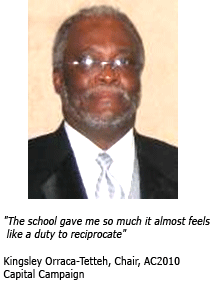 The result is, we’ve never simultaneously had both stability and top-quality higher education. One or the other, never both. That’s an enormous tragedy because this national experiment never had a real chance to pay off. So now, under pressure from foreign advisors, African governments are tempted to abandon the “rigorous education” model entirely and adopt what is rapidly turning out to be a short-sighted solution to the challenge of national development—concentrating on quantity and access at the expense of quality.
Without anyone coming out and admitting it, we’re at the very edge of abandoning all belief in excellence because that path hasn’t offered adequate returns in the past, for the reasons I just outlined. A campaign that successfully restores Achimota would therefore have significance far beyond the school itself. It would say, there is a place for excellence in African development.
RCA: What made you decide to launch this appeal?
FA: The school is in deep crisis. The physical plant is simply crumbling. The sewerage system has utterly collapsed. Most taps don’t run at all and some parents drive there everyday to take water to their children. Squatters have taken over the sports fields; their washing hangs over bushes right on the campus. The swimming pool? Forget that. It’s been bone-dry for decades. Classes are overcrowded. Reports indicate that some students even have to sit on the windowsill during class. Most important of all, academic standards have slipped badly partly because the staff is overwhelmed. Former students who’ve recently been back to look around say, ‘I hardly recognize the school I once went to.’
Many alumni year groups have made heroic but sporadic efforts in the past to shore up a building here and there, but it hasn’t been enough. Last February, a published interview with the headmistress, Adelaide Kwami, vividly brought home the extent of the crisis. That’s when Michel Bowman-Amuah (Class of ’80, Lugard House), founder of BroadSplash, a US-based network communications services provider, sounded a general call to arms to found a group that would launch a well-coordinated fundraising appeal.
And that’s how Achimota Commission 2010—AC2010 for short—got started. We’re essentially a virtual community of 15 alumni on four continents linked by Internet and teleconference calls. We also have a lively discussion forum (Achimota2010@googlegroups.com) that’s open to the public.
RCA: What are the objectives for the funds raised?
 FA: Our mission is dauntingly simple: Under our Capital Campaign Chair, Kingsley Orraca-Tetteh (Class of ’68, Lugard House), a neuroradiologist and professor of radiology at Ohio University College of Medicine, our aim is to set Achimota on the path toward fully restoring the vision of its founders—to create a West African regional center of excellence that will function as a leadership training ground. Our initial objective is to work with Achimota’s year groups, the Old Achimotan Association, private foundations, and friends of the school to raise US$5 million by 2010 in order to refurbish the infrastructure. That’s where the name AC2010 comes from.
A second, medium-term goal is to restore the school’s famed academic standards. Along the way, we’re hoping that this appeal does its part to stimulate the creation of a viable donor culture, in which the private sector gives back by supporting public institutions like schools. Besides church tithing, we really don’t have enough of this in West Africa. So we’re hoping to kill several birds with one $5 million stone, and that’s why this effort is so important.
RCA: How will the funds be managed and who will decide on the priorities regarding disbursement?
FA: How will the funds be managed? Very, very tightly. Our continent is not known as an exemplar of fiscal management. AC2010 is dead-set against fulfilling that image. Our team of accountants, lawyers, number crunchers, and public-sector managers has developed a carefully controlled flow-of-funds system to ensure that every euro, dollar, and cedi is accounted for. All monies are being held in reputable trusts that have established a track record of accountability and transparency. We’re not just sending money overseas into a big pot. Only after each phase of a construction project has been completed and thoroughly inspected by an Architectural and Engineering Standards Board made up of volunteer alumni will a vendor or contractor’s invoice for reimbursement of costs be honored by the trusts. As AC2010, our own overhead is extremely low because we’re all unpaid volunteers who have been working up to 20, sometimes 30 hours a week on this initiative since February 2006, simply because we care about our school.
Disbursement priorities—those were drawn up by the National Executive of the Old Achimotan Association working with the School Administration and Board; but I suspect the priorities will be fine-tuned over time as needs assessments are reviewed and adjusted.
RCA: What has been the reaction of the school's faculty and administrators to your campaign?
FA: Enthusiastic! We are very grateful to be working with a seasoned, caring administrative staff who are results-oriented and who realise what’s at stake.
RCA: How are you promoting the campaign?
FA: As Malcolm X famously said, “By any means necessary”—including accosting the odd pedestrian on her way to work, grabbing her by the lapels, and screaming, “Have you given yet?” No, seriously—we’re relying on the three big guns of fundraising: a phone campaign; appeal letters mailed and emailed to a database of potential givers; and third, if I may say so myself, a truly informative website (http://www.AC2010.org). The section titled A Crisis in Pictures will need no explanation.
I would also like to mention that, in June 2006, Brenya Twumasi (Class of ’78, House 11), a lawyer and college instructor in Psychology, created an eye-opening, 2.5-hour DVD documentary titled A Special Report: Achimota – A Virtual Tour. It literally walks you through the campus and shows you the dilapidation. However, if the BBC will give us a spot on the air in conjunction with Ghana’s Golden Jubilee celebrations in 2007, we’re extremely unlikely to say no! After all, Achimota started out life as Prince of Wales College. Not to drop a hint or anything like that…
RCA: What do you want from your alumni and other friends of Achimota?
FA: We want them to know that every single donation counts no matter how small, even if all you can give is a few pounds a month for one year. The website (http://www.AC2010.org) specifies various ways in which people can donate, including Workplace Giving. Above all, remember that Achimota made us who we are today. So my encouragement to alumni and friends is, let’s all pull together and give something back. Achimota’s founders—Kwegyir Aggrey, Alexander Fraser, and Sir Gordon Guggisberg—made tremendous personal sacrifices to enable the school to become a reality. It would be a great shame if, through sheer apathy, we let their dream—the dream of a coeducational boarding school that prepares Ghana’s brightest students for leadership—die without bearing its full fruit.
In a way, there are some parallels between donating and starting an exercise and nutrition regimen. The first step is always the hardest! So here’s a little challenge to the reader, if I may: Before day’s end, consider visiting the Achimota Campaign website and giving just 3% of your weekly income. Assuming you work a 40-hour week, that’s barely one hour’s worth of income. Then reflect on the significance of what you just did and see if you don’t feel better for it. If you don’t, we might even consider refunding your money! My guess is that you will. Why? Because somewhere in Ghana, there’s a child who will be able to concentrate on his or her studies that much more fully because you took that extra step to care about them in a tangible, concrete way. You modeled compassion, and in the end, that’s what life is about.
RCA: How can people contact you?
FA: On the website www.AC2010.org, the Contact Us page lists several names and their contact information. Alternatively, email asabea@AC2010.org.
The recent launch of the Capital Campaign by the Achimota Commission 2010 (AC2010) has highlighted the contribution that committed alumni can make to Africa’s educational institutions. ReConnect Africa speaks to Franklyn Ayensu (Class of ’73, Gyamfi House) about the campaign and what they hope to achieve. Formerly the Senior Manager of Investor Relations and Editor of Corporate Publications at AngloGold Ashanti, Ayensu is now based in Washington.
RCA: Tell us a bit about Achimota School and why it holds such an important place in education in Ghana.
FA: Achimota, from the outset, was created to be one of Africa’s leading secondary schools, in its own way on par with Harrow, Rugby and Eton. Its graduates include three heads of state. Prince Charles paid a special visit to the school in 1977 on the occasion of its Golden Jubilee. That’s why its dramatic decline these past three decades is a particularly telling symptom of a larger problem—the marked deterioration of higher education standards all across sub-Saharan Africa as governments have turned their attention to universal access to primary education.
{mosimage} A second reason why Achimota is important is that the school represents a model—a model that makes sense for Africa but now is in danger of dying out altogether. Simply stated, Africa needs more than hewers of wood and drawers of water. It needs to move beyond vocational workers who oversee primary commodity exports. But we can’t fully participate in a knowledge-driven global economy if we over-focus on universal primary education, as vital as that goal is. In the UK, for example, local polytechnics play an important role but you also have Oxford, Cambridge, and London. A country without centres of excellence is unwittingly training a nation of followers. Kwame Nkrumah saw that in the early ‘60’s, but many would argue that we’ve lost our focus on this basic truth, and it’s showing up in the area of secondary education.
RCA: Why do you say the Achimota model is in danger of dying out?
FA: If I could offer you a quick thumbnail sketch: roughly, from the 1920s to the 1970s, the experiment all over Africa was to invest heavily in higher education to produce a generation of reform-minded national leaders who would adapt foreign systems to local needs. The education part worked well, but national instability prevented Africa from taking full advantage of this massive investment. From the ‘60’s to the ‘80’s, post-Independence economic instability siphoned off much of that extremely well trained talent to the West. Starting in the ‘80’s, however, nations like Ghana finally began to achieve stability—precisely when their governments decided to shift resources away from centers of excellence such as Achimota and toward universal primary education.
{mosimage} The result is, we’ve never simultaneously had both stability and top-quality higher education. One or the other, never both. That’s an enormous tragedy because this national experiment never had a real chance to pay off. So now, under pressure from foreign advisors, African governments are tempted to abandon the “rigorous education” model entirely and adopt what is rapidly turning out to be a short-sighted solution to the challenge of national development—concentrating on quantity and access at the expense of quality.
Without anyone coming out and admitting it, we’re at the very edge of abandoning all belief in excellence because that path hasn’t offered adequate returns in the past, for the reasons I just outlined. A campaign that successfully restores Achimota would therefore have significance far beyond the school itself. It would say, there is a place for excellence in African development.
RCA: What made you decide to launch this appeal?
FA: The school is in deep crisis. The physical plant is simply crumbling. The sewerage system has utterly collapsed. Most taps don’t run at all and some parents drive there everyday to take water to their children. Squatters have taken over the sports fields; their washing hangs over bushes right on the campus. The swimming pool? Forget that. It’s been bone-dry for decades. Classes are overcrowded. Reports indicate that some students even have to sit on the windowsill during class. Most important of all, academic standards have slipped badly partly because the staff is overwhelmed. Former students who’ve recently been back to look around say, ‘I hardly recognize the school I once went to.’
Many alumni year groups have made heroic but sporadic efforts in the past to shore up a building here and there, but it hasn’t been enough. Last February, a published interview with the headmistress, Adelaide Kwami, vividly brought home the extent of the crisis. That’s when Michel Bowman-Amuah (Class of ’80, Lugard House), founder of BroadSplash, a US-based network communications services provider, sounded a general call to arms to found a group that would launch a well-coordinated fundraising appeal.
And that’s how Achimota Commission 2010—AC2010 for short—got started. We’re essentially a virtual community of 15 alumni on four continents linked by Internet and teleconference calls. We also have a lively discussion forum (Achimota2010@googlegroups.com) that’s open to the public.
RCA: What are the objectives for the funds raised?
{mosimage}FA: Our mission is dauntingly simple: Under our Capital Campaign Chair, Kingsley Orraca-Tetteh (Class of ’68, Lugard House), a neuroradiologist and professor of radiology at Ohio University College of Medicine, our aim is to set Achimota on the path toward fully restoring the vision of its founders—to create a West African regional center of excellence that will function as a leadership training ground. Our initial objective is to work with Achimota’s year groups, the Old Achimotan Association, private foundations, and friends of the school to raise US$5 million by 2010 in order to refurbish the infrastructure. That’s where the name AC2010 comes from.
A second, medium-term goal is to restore the school’s famed academic standards. Along the way, we’re hoping that this appeal does its part to stimulate the creation of a viable donor culture, in which the private sector gives back by supporting public institutions like schools. Besides church tithing, we really don’t have enough of this in West Africa. So we’re hoping to kill several birds with one $5 million stone, and that’s why this effort is so important.
RCA: How will the funds be managed and who will decide on the priorities regarding disbursement?
FA: How will the funds be managed? Very, very tightly. Our continent is not known as an exemplar of fiscal management. AC2010 is dead-set against fulfilling that image. Our team of accountants, lawyers, number crunchers, and public-sector managers has developed a carefully controlled flow-of-funds system to ensure that every euro, dollar, and cedi is accounted for. All monies are being held in reputable trusts that have established a track record of accountability and transparency. We’re not just sending money overseas into a big pot. Only after each phase of a construction project has been completed and thoroughly inspected by an Architectural and Engineering Standards Board made up of volunteer alumni will a vendor or contractor’s invoice for reimbursement of costs be honored by the trusts. As AC2010, our own overhead is extremely low because we’re all unpaid volunteers who have been working up to 20, sometimes 30 hours a week on this initiative since February 2006, simply because we care about our school.
Disbursement priorities—those were drawn up by the National Executive of the Old Achimotan Association working with the School Administration and Board; but I suspect the priorities will be fine-tuned over time as needs assessments are reviewed and adjusted.
RCA: What has been the reaction of the school's faculty and administrators to your campaign?
{mosimage}FA: Enthusiastic! We are very grateful to be working with a seasoned, caring administrative staff who are results-oriented and who realise what’s at stake.
RCA: How are you promoting the campaign?
FA: As Malcolm X famously said, “By any means necessary”—including accosting the odd pedestrian on her way to work, grabbing her by the lapels, and screaming, “Have you given yet?” No, seriously—we’re relying on the three big guns of fundraising: a phone campaign; appeal letters mailed and emailed to a database of potential givers; and third, if I may say so myself, a truly informative website (http://www.AC2010.org). The section titled A Crisis in Pictures will need no explanation.
I would also like to mention that, in June 2006, Brenya Twumasi (Class of ’78, House 11), a lawyer and college instructor in Psychology, created an eye-opening, 2.5-hour DVD documentary titled A Special Report: Achimota – A Virtual Tour. It literally walks you through the campus and shows you the dilapidation. However, if the BBC will give us a spot on the air in conjunction with Ghana’s Golden Jubilee celebrations in 2007, we’re extremely unlikely to say no! After all, Achimota started out life as Prince of Wales College. Not to drop a hint or anything like that…
RCA: What do you want from your alumni and other friends of Achimota?
FA: We want them to know that every single donation counts no matter how small, even if all you can give is a few pounds a month for one year. The website (http://www.AC2010.org) specifies various ways in which people can donate, including Workplace Giving. Above all, remember that Achimota made us who we are today. So my encouragement to alumni and friends is, let’s all pull together and give something back. Achimota’s founders—Kwegyir Aggrey, Alexander Fraser, and Sir Gordon Guggisberg—made tremendous personal sacrifices to enable the school to become a reality. It would be a great shame if, through sheer apathy, we let their dream—the dream of a coeducational boarding school that prepares Ghana’s brightest students for leadership—die without bearing its full fruit.
In a way, there are some parallels between donating and starting an exercise and nutrition regimen. The first step is always the hardest! So here’s a little challenge to the reader, if I may: Before day’s end, consider visiting the Achimota Campaign website and giving just 3% of your weekly income. Assuming you work a 40-hour week, that’s barely one hour’s worth of income. Then reflect on the significance of what you just did and see if you don’t feel better for it. If you don’t, we might even consider refunding your money! My guess is that you will. Why? Because somewhere in Ghana, there’s a child who will be able to concentrate on his or her studies that much more fully because you took that extra step to care about them in a tangible, concrete way. You modeled compassion, and in the end, that’s what life is about.
RCA: How can people contact you?
FA: On the website www.AC2010.org, the Contact Us page lists several names and their contact information. Alternatively, email asabea@AC2010.org.
 A chance meeting with an AIDS orphan inspired singer and entertainer Patti Boulaye to use her celebrity to make a difference to her home continent by setting up the charity, Support for Africa. ReConnect Africa speaks exclusively to the Nigerian-born international star.
RCA: What inspired you to set up Support for Africa?
PB: I conceived the idea of Support for Africa at the end of 2000 and established it in 2001. I set it up for many reasons. Over the years, I had served on a celebrity committee for an HIV charity. On one particular visit to Nigeria in 2000, I was taken to an orphanage called the Victory Children’s Centre and met a little boy called Victor, after whom the centre was named. Victor’s mother had abandoned him when she discovered his status. He was 1 year old and dying of AIDS, with only 2 weeks to live. I decided then that instead of going to governments for solutions, I could do something myself for this little boy. Victor died but, with 60 others in that home alone, I decided that there were many others I could help to save.
Realizing the size of the problem, I wondered why we could not address this through dispensaries. Growing up in Nigeria, we had dispensaries run by missionaries and others that provided basic health care. When I tried to find some of these dispensaries, I soon realized that none existed. I decided then that I was going to replace them and started raising money to build the first clinic.
Harnessing Support
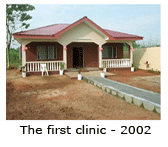 I asked (former British Prime Minster) John Major if he would be Patron of the idea and he agreed - which showed that he had confidence in me! Within 2 years, we had built the first clinic. I hired the Royal Albert Hall in London and put on a show that grossed £70,000. We found a piece of land in Asaba in Delta State, Nigeria, and built the first clinic with the funds raised.
From the beginning, we tried to get the community to take control of the clinic and to make it self-sufficient. This was tough, as they had become reliant on the charity, which was not a sustainable solution. I realized that if this were to work, I would have to build a second clinic and motivate them to compete for our scarce resources. We learned from this dependency risk, and for the second clinic, we changed our approach.
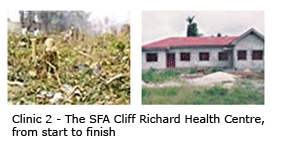 With corporate sponsorship, we were able to build a second clinic in Port Harcourt, River State which I am proud to say is completely self sufficient now. It is not only a health centre for HIV Aids, malaria and other infectious diseases, but also a community centre. Women are taught a trade such as craftwork and given support to promote their products. They then give a percentage of their profits to the upkeep of the centre. They have also raised enough money to build a flat for student doctors. When we visited it the clinic last year, it was so amazing to see all this that I cried.
We have now built a third clinic in Bayelsa State, which opened in June 2005. This is already showing signs of moving into self-sufficiency and following the model of the second.
RCA: What have been your major highlights since you started the charity?
PB: Since I started this venture, the major highlights have included John Major saying ‘yes’ to being its Patron and also being the only charity allowed to fly our charity flag at the Queen’s Golden Jubilee. And, of course, the opening of each clinic is always a highlight and spiritually rewarding.
RCA: What impact has Support for Africa’s projects made so far within the local communities and how sustainable do you think this impact will be?
PB: The impact the charity has made is that - thank God - others are now thinking of doing the same for their villages, which is what I want to happen. It is wonderful to have Nigerians focusing on access to rural health. The fact that the projects are becoming self sustainable is fantastic, as it is seeing the back of the begging bowl mentality. The biggest programme we are going to fund is de-worming for children and dealing with river blindness. Ours is not a mobile clinic, it is part of the community. The community can hire the clinic to use for social functions like weddings, which helps to create wages for the doctors and for the centre. It also means that they have somewhere they can go and talk in confidence about HIV, which is important. We can give counseling, advice and education although we don’t yet have the resources to treat that disease. The impact of having medical care is incredible – you couldn’t put a price on that.
RCA: What would you say have been your main challenges to date?
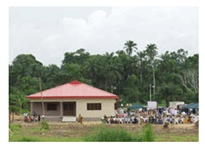 PB: Trying to change the dependency mindset! It has been difficult and there are still people who think that seeing a celebrity name means we have loads of money! I run the charity without any paid staff or facilities and with only a phone and a computer. Our Vice-President, who is based in Nigeria, is also unpaid and she travels around and supervises the building of the centres. However, she finds it very rewarding and sees it as a blessing to do this work. I do not think there is another charity like ours.
RCA: How do you feel that your celebrity has either helped or hindered your goals in establishing Support for Africa?
PB: It has helped in the sense that sometimes I feel that God gave me this success for a reason. My mother always told me that He would let me know when He was ready. She was right because if I had not been a regular supporter of the Royal Albert Hall, I would never have had the opportunity to access this amazing venue. I have been blessed with success and I am trying to give something back.
The hindrance comes when people hear my name and think I am making millions of pounds from this. For example, some people thought that I earned millions from the charity event when, in fact, I paid for everything!
RCA: How do you combine your career with the demands of running a charity?
PB: It’s one day at a time. My family tells me off for sitting up working until the middle of the night, but God does not give you anything you can’t handle. There are times when it gets on top of me but it’s no problem. I have grown-up children now who help when they can; if I have something I need to type, my daughter is often there to help. However, you always have to remember that you can always say ‘no’.
RCA: Patti, as a successful artist, parent and social entrepreneur, what lessons would you share with other African women who have to balance career and other commitments?
 PB: The word ‘no’ is a good start! You have to prioritise. Sometimes you should not do something and you just have to go by your gut instinct. Women – especially today - have to be logical in our thinking but we should never discard that gut instinct. Learning to take a break and doing everything with a smile and from your heart means that it is never a burden.
RCA: How can ReConnect Africa’s readers become involved with or lend some assistance to Support for Africa?
PB: People can help in different ways, depending on their talents and on what they do. We have been able to harness a lot of goodwill to keep our costs down in building the centres. People are constantly shocked at how we have managed to keep our costs contained! People can come and work with us or can sponsor or donate funds to help us with building a centre.
If someone can donate a piece of land in a village, we can work together to identify resources in kind and cash – some cement, labour, whatever it takes!
For further information about how to contribute to Support for Africa, visit www.supportforafrica.org or contact info@supportforafrica.org.
Established in 2000, Africa Foundation Stone is an African-led organization based in London that provides services aimed at different sections of the community in the UK, ranging from homework clubs and sports activities for children from ethnic minorities to training and support for unemployed parents
However, as an organisation that was founded by three refugees from the Democratic Republic of Congo, the group’s links with Africa have remained strong.
“Since my childhood, I had a dream for my continent. My dream was to see Africans supporting Africa,” says Valentin M. Yombo Djema, Chair of the AFS. “Retour aux Sources (the Diaspora Volunteering Initiative) is the accomplishment of this dream. With this programme, the initiative of tackling disadvantage is coming from Diaspora professionals living in UK and in Europe, in partnership with local NGOs, who are volunteering their skills to tackle discrimination and disadvantage in Africa.”
Diaspora Initiative Programme
In 2005, AFS joined a new Diaspora Initiative Programme funded by the charity Voluntary Services Overseas to identify and develop volunteers for French speaking African countries. After a visit to Cameroon in September that year, AFS established partnerships with NGO’s and development agencies in Douala and Yaoundé for a pilot programme of 14 volunteers for the two cities. Volunteers were placed on a six-week assignment in Douala and Yaoundé providing community development support in the areas of health, environment and education in line with AFS’s core objectives of fighting poverty and ill health in the UK and Africa.
“My role as a volunteer was to visit people living with HIV/AIDS at home and to bring them psychological support and consolation.”
In Cameroon, volunteers work with in partnership with AFS representatives and a local NGO. Since December 2005, 13 volunteers have been on the programme and worked in Cameroon with a range of NGOS in the two cities.
“We aim to transfer skills by asking volunteers from across Europe to give their time to share their skills with NGOs in Africa.” Valentin Yombo. AFS volunteers have come from countries including Sierra Leone, Nigeria, Congo, Ghana and, of course Cameroon. Volunteers have been mainly based in the UK, although a couple have been based in France.
Another aspect of the programme involves working with universities in London and Cameroon and AFS is recruiting lecturers and researchers from the Diaspora to work with universities in Cameroon.
Retour aux Sources
The organisation provides accommodation for volunteers as well as allowances, airfare, health insurance and visas. The impact to date, says Monica Masawe, the AFS Project Coordinator for Retour aux Sources, has been substantial.
“Initially volunteers simply intended to work for the NGOs,” she says. “But there has since been an increased demand for skills and management training and many of the volunteers have provided training for the NGO in management and in writing bids for funding.”
The 65 organisations on the ground were already doing a good job under difficult circumstances, says Masawe. “But since we’ve been sending volunteers, most of these organisations now have a clearer understanding of their own strategy and this is increasing their performance in the field.”
Training has also made a substantial impact on the issue of HIV/AIDS and those suffering from the disease, says Yombo. “The work of the volunteers has helped to change perception of those infected and their exclusion. Now the training is bringing people together to advocate for a better understanding of the disease and to fight it themselves.”
Working in Partnership
AFS has been at pains to ensure that the work they do supports local initiatives and responds to local demands and needs. The organisation has collaborated with the Mayors of both cities and involved the local authorities in their work, enabling them to build relationships and to negotiate more effectively.
“We now have a clear opportunity for advocacy on health, medicines and treatment for HIV/AIDS,” says Yombo. “Through the programme, we are giving the local authorities an opportunity to understand the priorities of their own people and how they can improve their lives. The project has brought a new connection between the local authorities and the people.”
Project in Douala
“Retour aux Sources” has already seen some impressive work by volunteers who have worked in Cameroon. Viviane Talkeu’s placement was for six weeks in St. Nicodeme, an association for street children based in Douala Cameroon. Her role involved counselling, IT classes and a photography and theatre project.
“My working hours were five days a week from 9am to 6pm,” she says.“In the morning I was carrying out observations, informal discussions and one to one counseling with the young people. During the counselling sessions, young people were encouraged to talk about issues in every their day life and to seek advice for their future plans. Some of the Common issues raised included school material (uniform, books), arguments between social workers and young people, homosexuality, sexuality and STDs.”
“Two out of three afternoons a week young people had IT classes, where they were taught basic IT skills and how to use the internet. Drama classes took place two to three times a week. During the last week the theatre group gave a performance, to which young people, work colleagues and management were invited to.”
The projects carried out will support the young people in getting used to working in groups, to take responsibility and to have a structure in their every day life. Both Talkeu and her work colleagues benefited from the intercultural and professional exchange.
Jacques Noubissie holds a Diploma in Techno-Mechanic Engineering and Computer Integrated Manufacturing. His placement with CERED (Centre d’Etudes de la Recherche Demographique) involved collecting and analysing data from Douala inhabitants, local NGOs and helping them set up local forums.
“I had to be flexible and adapt in order to meet the needs of grass root communities and organizations,” he says. I gained a lot of experience from the overseas partners and recognize their professionalism, which showed me that the Diaspora Volunteering Initiative was more a sharing skills scheme.” Back in the UK, Jacques plans to use his experience to help develop youth forums for young Africans in the UK.
Pierre Jules Zing-Tsala, a Management Consultant, has also taken part in the programme. “In Cameroon I met the Honourable Mayor of Douala. We talked about the Diaspora Volunteering Programme. He was very impressed and satisfied with the whole scheme. He said that most of the volunteering programmes are run by people from other continents. It is very encouraging to see Africans trying to do something for their people.”
“We hope to expand the programme and work with more volunteers and other French speaking countries,” says Valentin Djema.
AFS is recruiting volunteers to travel to Cameroon for to spend between three and six weeks sharing skills and experience with local NGOs throughout 2007. The programme aims to provide managerial and technical training to local partners and NGOs to effectively support disadvantaged people improve their livelihoods and to promote effective network and strategic links among stakeholders, while supporting mainstream HIV/AIDS and gender issues.
Interested applicants should send their CV and will then receive a welcome pack with further details about the project. AFS will match the skills of applicants with the needs of the Cameroonian NGOs, who also participate in the selection process. Short listed volunteers will be interviewed and, if selected, will undertake an induction prior to traveling. For further information, contact Africa Foundation Stone via www.africafoundationstone.org or africafoundationstone@yahoo.co.uk
Not to be noted in history simply as a time of rejoicing, but rather more importantly as a time of reflection for positive action, the theme spearheading this mammoth anniversary -‘Championing African Excellence’ - rests on the following three main objectives:
As Ghana, and her friends, both at home and around the globe gear up with events to celebrate and commemorate this landmark anniversary, let us revisit Nkrumah’s declaration as midnight struck on March 5th, 1957. Osagyefo Dr. Kwame Nkrumah, Ghana’s first president, in his address to the nation declared:
“We are going to see that we create our own African personality and identity. We again rededicate ourselves in the struggle to emancipate other countries in Africa; for our independence is meaningless unless it is linked up with the total liberation of the African continent.”
With renewed vision and vigor, as midnight strikes on March 5th, 2007, it may be appropriate to rephrase Nkrumah’s declaration by adding five critical words, each representing the five decades earned under her belt.
Not only is “the independence of Ghana is meaningless unless it is linked up with the total liberation of Africa” but it is also meaningless unless championed by a POSITIVELY CONSISTENT ATTITUDINAL PARADIGM SHIFT among Ghanaians.
Long live Ghana, long live Africa!
|
Ghana |
London |
|
|
Thursday March 1, 2007 Ghana’s Golden Homecoming Event Press Conference |
Tuesday March 6, 2007 Evensong |
|
|
Friday March 2, 2007 Miss Ghana@50 Ball |
Friday March 9, 2007 Cocoa Day Forum |
|
|
Saturday March 3, 2007 From Highlife to Hiplife Concert |
Saturday 17th March, 2007 Ghana Chaplaincy special |
|
|
Monday March 5, 2007 Play – Declaration of Independence Laser Show and Fireworks Homecoming Investment Summit |
||
|
Tuesday March 6, 2007 Golden Jubilee Anniversary Parades |
||
|
Washington DC |
Atlanta, Georgia |
|
|
Friday March 2, 2007 Main Launch |
Sunday March 4, 2007 Interdenominational Service |
|
|
Monday March 5, 2007 Seminar “50 years of Political Independence |
Tuesday March 6, 2007 Ghana Cultural Day |
|
|
Tuesday March 6, 2007 Reception for government officials, Evening Party for Ghanaians and friends of Ghana |
Wednesday March 7, 2007 Symposium “Ghana Past, Present |
|
|
Wednesday March 7, 2007 School Fair – Career counseling & cultural education |
Saturday March 10, 2007 Banquet For more information on events taking www.ghanaisfifty.org |
|
|
Thursday March 8, 2007 Trade and Investment Promotion |
||

 From a small group of 10, Star 100 has grown into a strong networking group of Ghanaian professionals in the UK and America passionate about supporting Ghana.
Star 100 is a network of predominantly Ghanaian professionals in the UK and US, who come together to develop business and social relationships for personal benefit as well as for the good and welfare of Ghana. By encouraging members to share knowledge and expertise through networking, the group has been able to facilitate business and personal opportunities for its supporters.
The group started in June 2004 with a membership of 10 professionals and with the aim of growing to 100. Today, there are over 400 members in the Star 100 UK branch alone, as well as around 200 in the USA – and the group is still growing. Members come from a wide range of professions ranging from Finance, Management Consultancy, Law, Media and Entertainment to Technology, Civil Engineering, the Public Sector and Property.
With so many Ghanaian professionals resident in the UK and the USA, the group’s founders realised that there was a lack of opportunity and a platform for Ghanaians to share ideas, knowledge and the benefits of their business experience. As the number of professionals in the group began to grow, so did the opportunity for them to encourage each other and other Ghanaians to put their thoughts together and to come up with ideas to help Ghana.
Monthly Network Meetings
 The group meets once a month in their respective countries; Star 100 UK holds its meetings in London while the US chapter meets in New York, to socialise and network. Members also organise conferences and invite host speakers to share views on matters concerning Ghana and the group has played host to speakers such as Dr. Ekwow Spio-Garbrah and Professor Frimpong–Boateng.
The benefits of membership are numerous. In addition to the social and business benefits comes the opportunity for individuals to contribute to the good and welfare of Ghana and to have a network of professional fellow members to call on for help in various fields.
Philanthropy and Support to Ghana
 Over the past three years, Star 100 has taken its mandate forward to include supporting deserving causes in Ghana. The group has undertaken fundraising and succeeded in raising donations of money and equipment to institutions in Ghana. A recent beneficiary was Korle Bu, Ghana’s leading teaching hospital. The group provided equipment including Flow meters and glucometers to Korle Bu’s Baby Unit and organised a health fair in Pokuase Village.
The group considers such charitable donations and activities to be one of the many ways their members can support needy projects in Ghana. Through collaboration with other networks, Star 100 is committed to taking on more projects that will advance the interests of Ghana.
Membership of Star 100 is open to all professionals resident in the United Kingdom and the United States who share the aims and objectives of Star 100.
For further information about Star 100 and applications for membership: www.star100.org

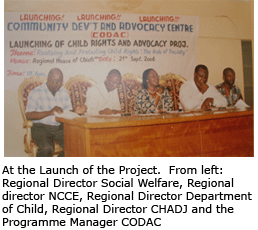 Despite more than 20 years of life in London, Zaya Yeebo is still passionate about Ghana.
The co-founder of the Centre for Community Development Initiatives, shares how he continues to make a difference in his homeland.
Growing up in northern Ghana, and later in the Western region, Sefwi Wiawso, to be precise, has left me with an imprint of what poverty does to people. The lost opportunities, the faces of despair, and yet the constant, quiet struggle to make life meaningful. When I left Ghana for London in the 1980s, this feeling was very much part of my baggage. Working for international organisations based in London left me thinking that the best service one can offer is to contribute to eradicating the excruciating poverty that blights our people and communities.
In Ghana today, the most visible examples of marginalisation and poverty are women and children. Newspapers are full of horrific stories of child abuse – sexual and physical. In the rural areas, the marginalisation of women is very much evident as they toil from dawn to dusk to sustain the family in the midst of abysmal economic conditions.
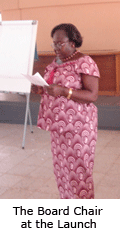 Even though some people are snide about those of us who start charitable organisations, that is the road I took. With other like-minded individuals in Ghana and the UK, we started the Centre for Community Development Initiatives. Our counterparts in Ghana also launched the Community Development and Advocacy Centre – CODAC.
The sole objective of both groups was to help eradicate poverty through sustained grassroots programmes and initiatives. For instance, even though the District Assembly structure, in spite of obvious weaknesses, offers a participatory system of democratic governance, the participation of women in this structure is very low, and in most cases absent. Promoting women’s participation in the District Assemblies has been one of our most successful programmes in Ghana.
Supported by the UK based charity, Comic Relief, we launched a ‘Women and Democracy’ programme to work with women to enhance their role in the District Assemblies. Based in the UER, this programme offers training, networking, awareness raising, and support to women candidates with technical advice. Generally, we are helping to raise women’s role in the DA system. As Rosemary Kambonga, the programme manager, and now chair of CODAC-Ghana pointed out, “in the 2006 DA elections, while women’s participation at the national level remain at a constant low, this increased by almost 30% in the Upper East Region. This was partly due to our intervention.”
Our second area of interest has been children’s rights. In response to the abysmal abuse of children, and in some cases, their total neglect, CCDI worked once again with CODAC-Ghana to implement the Children’s Rights Centres as one stop services for promoting children’s rights mainly through rights awareness, advocacy, and protection. The Centre also works to reduce the incidence of child trafficking. It must be recognised that most kayayee girls in Accra originate from the North. To deal with the root causes of this phenomenon and other forms of abuse means working at the grassroots with mothers, traditional leaders, and faith organisations.
CCDI is now working in partnership with the Ghana NGO Coalition on Children’s Rights and a local NGO, called Advocates & Trainers for Women’s Welfare and Advancement and Rights (ATWWAR) to launch a national Children’s Rights Campaign called the Mmofra Kyefa campaign to raise awareness of the rights of children. The campaign will target hotel owners, parents, and government institutions with responsibility for protecting children. In cases where parents do not have the means, CCDI will bear the cost of prosecuting offenders. However, the initiative is more about prevention and traditional forms of mediation that do not place abused children at further risk.
In these initiatives, the focus is on using local knowledge and skills through the training of staff, volunteers and community based support workers. This is to ensure that skills are community rooted, is even more urgent as these skills are in short supply. They also provide avenues for encouraging young people to start thinking of voluntary sector work as career opportunities, instead of packing their bags for unpredictable and dangerous journeys to Europe and the Mediterranean. We hope to attract children and young people of Ghanaian and African origin to spend time in rural Ghana to learn and contribute to community development.
As Ghana celebrates 50 years of freedom from colonialism and nationhood, we need to re-dedicate our efforts to eradicating poverty. It is the best contribution we can make to build a self-reliant country, a country in which women and children are protected. We need the solidarity of people all over the world because these initiatives are inter linked, and if we want to create a world community against poverty, these small steps are part of a global effort.
For more information, contact: zayayeebo@aol.com
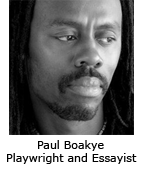 Can you always go back to your roots? Playwright Paul Boakye shares his impressions from his trip to Ghana.
So here I am in Ghana, in the middle of the night, with no one to meet me because the London Heathrow to Accra flight is twelve hours late. “Irie, Rasta man!” says the tallest of the taxi drivers trying to handle my luggage outside the gates of Kotoka International Airport. “We Ghanaians love Jamaicans second only to Reggae,” says another. “Not surprising,” says his smiling friend – squeezing my hand and snapping fingers. “Our ancestors were taken there many years ago. Assalamu ‘Alalikum. You are welcome!”
Three hours later, and still reeling from culture shock, I’ve given up searching in the darkness of night for the road to the house of my old friend Kwesi with whom I have come to stay. I can’t help thinking that if I had been riding in a taxi in the middle of the night in England, Jamaica or America, I would probably have been robbed of my luggage, camera equipment and travellers’ cheques by now. Instead, I’m counting the stars in the yard of the bar at the Ebony Hotel, Pig Farm, as recommended by my friendly taxi driver, Amadu.
The night is hot and the stars are many. One especially bright is hovering above the head of a man sitting on a stone in the corner of my vision. He is slim, tall, and blacker than the night with a face old and wise as the ground beneath his slipper-less feet. He wears a silver-blue gown of a material that makes him sparkle like the moon in the darkened sky. Resting on a prayer mat at his feet is a shirtless man of equal blackness, fanning himself from enveloping heat and the kiss of mosquitoes. I have a sudden urge to read the Bible, then on second thoughts; perhaps the Qur’an would make more sense here.
“Until a small boy came and said, ‘The King is naked! The King is naked!’ You know small boys have much to learn!”
Two men beside me are talking very loudly, but I don’t understand what they’re saying. Not even enough to know if they’re talking about me. Another man has joined. They are definitely not talking about me – at east not now. They seem not even to notice my presence. Am I a ghost, a mere shadow of my former self? Children enter with two barking dogs.
The atmosphere changes: “Good evening,” they say one by one. “Good evening,” I smile. Then as quickly as they entered, they leave. The dogs follow. Two of the three men are still talking actively. A fourth man joins them as a fifth man enters to sit alone. “You are welcome!” they all nod to him in unison. “Me dasi!” he replies, and orders a beer.
The stars are many and the night is black. Light from the hotel’s kitchen windows cast shadows twisted across the yard. Could I live in this place? Amongst these people? Learning their ways and languages? Two couples to my left are retelling the story of The Chief’s New Clothes. “Eh! ...Until a small boy came and said, ‘The King is naked! The King is naked!’ ...You know small boys have much to learn!”
After ten minutes, they have finished discussing ‘Women’s Liberation in Ghana’ – with the two men concluding, “Women do as much work as men,”...but from what I can see, women are the backbone of Africa. And with that thought uppermost in my mind, I return to my holiday-reading.
During the 1980s, it is said, Ghanaian politics went through remarkable transformations from revolution, through adoption of a draconian economic reform programme, and the eventual return to democratic government in 1992. In Big Men and Small Boys: Power, Ideology and the Burden of History in Rawlings’ Ghana, 1982–1994 [1995], Paul Nugent covers the entire sequence of events, situating them in the broader historical context and offering a sustained explanation of what occurred. Since the eighteenth century, he argues, a central theme dominating Ghanaian politics and society has been the relationship between wealth and virtue, and Dr Nugent offers an essential explanation of the ways in which this theme is still predominant today and can be seen in what I like to call the country’s ‘big men/small boy’ syndrome.
Can I live in this country – ‘a small boy’ – and my own man? I would like to run The Mole Game Park in Damongo. I wonder if the current big man, President John Agyekum Kufuor, could arrange it. I wouldn’t ask for much, just a twelve-month trial period, a self-contained bungalow, food, transport, a budget, and some small commission on increased sales. I know I could send profits shooting to the stratosphere.
The stars are out and bright tonight.
Playwright, essayist, editor, and entrepreneur; Paul Boakye has written for theatre, radio, film, the Internet, academia and magazines. He is the recipient of a Shell National Livewire Business Award, and a member of The Writer's Guild of Great Britain, and The Institute of Project Management.
 In the 200th anniversary year of the abolition of the African slave trade in Britain, the recent launch of a documentary, ‘A Homecoming for Jobs in Africa’, offers a powerful testimony of how Africans in the Diaspora today are working in partnership with entrepreneurs in Africa to tackle poverty.
Produced by award-winning documentary film producer, Ishamil Blagrove Jr., ‘A Homecoming for Jobs in Africa’ tells the story of the SEEDA programme, developed by AFFORD (the African Foundation for Development) as a response to the need in Africa to create jobs and foster enterprise. SEEDA – Supporting Entrepreneurs and Enterprise Development in Africa – reflects the organisation’s focus on enterprise as the way forward for Africa.
An audience discussion chaired by playwright, actor and TV personality, Kwame Kwei Armah followed the London premiere of ‘A Homecoming for Jobs in Africa’ and the film has also been screened at Chatham House, home of the Royal Institute of International Affairs.
Enterprise in Sierra Leone
Set in Sierra Leone, the 30-minute documentary follows the arrival of a SEEDA team and examines how the SEEDA Resource People built relationships with entrepreneurs, delivered business training and navigated the social and political challenges of their mission.
The SEEDA programme grew out of a consultation process established by AFFORD in mid-2005 with African Diaspora organizations and individuals in the UK. Following feasibility studies to identify needs and to engage partners on the ground, 15 UK Diaspora Resource People visited Sierra Leone and worked with partner associations delivering training in marketing, bookkeeping skills and customer service. Business planning advice and, in some cases capital, offered young people with entrepreneurial flair the opportunity to establish and build small businesses.
‘Africa Needs 8 Million Jobs’
A study conducted by the Economic Commission for Africa estimated that sub-Saharan Africa must create eight million jobs a year just to absorb its growing young labour force. Each individual among the African Diaspora can help create those eight million jobs, says AFFORD’s Executive Director, Chukwu-Emeka Chikezie. “AFFORD is convinced that jobs, not handouts, will create wealth, opportunity, dignity and hope in Africa,” he says. “This, we feel, is the key plank of Africa’s development that the Diaspora can contribute most to in the short term.”
 The SEEDA programme harnesses the resources of Africans living in the UK and other parts of Europe to support grassroots entrepreneurs to expand their businesses and thereby to create these much-needed jobs. Through sharing the skills, knowledge and money of participants and funders, the programme has so far supported over 400 grassroots and informal businesses in Sierra Leone and Ghana.
The documentary is a graphic and powerful view of how Sierra Leonean entrepreneurs are given a hand-up and not a handout from Africans in the Diaspora who work with them as business advisors, mentors and friends.
Raising Funds for Enterprise Development in Africa
At a cost of £2,000 for each Resource Person to spend 2 weeks on the ground, AFFORD is actively fundraising to sustain the programme. Sales from the film and other fundraising activities will help the organization to keep up the momentum built by the teams to date.
200 years ago, Olaudah Equiano and Ignatius Sancho’s The Sons of Africa was the first NGO of the African Diaspora working to abolish the horrific trading in slaves from Africa. Today’s generation of Africa’s sons and daughters is equally focused on ending the debilitating poverty found in so many parts of Africa.
According to the Economic Commission of Africa, “the creation of decent jobs that can be performed by poor people is the single most effective way to reduce poverty in Africa.” The impact of the SEEDA programme thus far has proved the power of the African Diaspora to make a positive contribution to achieving this goal.
To contribute to the SEEDA programme or to acquire a copy of ‘A Homecoming for Jobs in Africa’, contact Onyekachi Wambu: onyekachi@afford-uk.org
In the 200th anniversary year of the abolition of the African slave trade in Britain, the recent launch of a documentary, ‘A Homecoming for Jobs in Africa’, offers a powerful testimony of how Africans in the Diaspora today are working in partnership with entrepreneurs in Africa to tackle poverty.
Produced by award-winning documentary film producer, Ishamil Blagrove Jr., ‘A Homecoming for Jobs in Africa’ tells the story of the SEEDA programme, developed by AFFORD (the African Foundation for Development) as a response to the need in Africa to create jobs and foster enterprise. SEEDA – Supporting Entrepreneurs and Enterprise Development in Africa – reflects the organisation’s focus on enterprise as the way forward for Africa.
An audience discussion chaired by playwright, actor and TV personality, Kwame Kwei Armah followed the London premiere of ‘A Homecoming for Jobs in Africa’ and the film has also been screened at Chatham House, home of the Royal Institute of International Affairs.
Enterprise in Sierra Leone
Set in Sierra Leone, the 30-minute documentary follows the arrival of a SEEDA team and examines how the SEEDA Resource People built relationships with entrepreneurs, delivered business training and navigated the social and political challenges of their mission.
The SEEDA programme grew out of a consultation process established by AFFORD in mid-2005 with African Diaspora organizations and individuals in the UK. Following feasibility studies to identify needs and to engage partners on the ground, 15 UK Diaspora Resource People visited Sierra Leone and worked with partner associations delivering training in marketing, bookkeeping skills and customer service. Business planning advice and, in some cases capital, offered young people with entrepreneurial flair the opportunity to establish and build small businesses.
‘Africa Needs 8 Million Jobs’
A study conducted by the Economic Commission for Africa estimated that sub-Saharan Africa must create eight million jobs a year just to absorb its growing young labour force. Each individual among the African Diaspora can help create those eight million jobs, says AFFORD’s Executive Director, Chukwu-Emeka Chikezie. “AFFORD is convinced that jobs, not handouts, will create wealth, opportunity, dignity and hope in Africa,” he says. “This, we feel, is the key plank of Africa’s development that the Diaspora can contribute most to in the short term.”
{mosimage}The SEEDA programme harnesses the resources of Africans living in the UK and other parts of Europe to support grassroots entrepreneurs to expand their businesses and thereby to create these much-needed jobs. Through sharing the skills, knowledge and money of participants and funders, the programme has so far supported over 400 grassroots and informal businesses in Sierra Leone and Ghana.
The documentary is a graphic and powerful view of how Sierra Leonean entrepreneurs are given a hand-up and not a handout from Africans in the Diaspora who work with them as business advisors, mentors and friends.
Raising Funds for Enterprise Development in Africa
At a cost of £2,000 for each Resource Person to spend 2 weeks on the ground, AFFORD is actively fundraising to sustain the programme. Sales from the film and other fundraising activities will help the organization to keep up the momentum built by the teams to date.
200 years ago, Olaudah Equiano and Ignatius Sancho’s The Sons of Africa was the first NGO of the African Diaspora working to abolish the horrific trading in slaves from Africa. Today’s generation of Africa’s sons and daughters is equally focused on ending the debilitating poverty found in so many parts of Africa.
According to the Economic Commission of Africa, “the creation of decent jobs that can be performed by poor people is the single most effective way to reduce poverty in Africa.” The impact of the SEEDA programme thus far has proved the power of the African Diaspora to make a positive contribution to achieving this goal.
To contribute to the SEEDA programme or to acquire a copy of ‘A Homecoming for Jobs in Africa’, contact Onyekachi Wambu: onyekachi@afford-uk.org
 “Who says that Africans in the Diaspora have no role models?” asks Greg Obong-Oshotse, Editor of a new publication, Positive People.
ReConnect Africa speaks to Obong-Oshotse on the challenge of showcasing positive images and lessons from the African Diaspora.
G O-O:The idea of Positive People came to me in the early 1990s in the course of my frequent trips then from Africa to Europe and North America. I saw the increasing number of Black people living in these parts of the world making useful contributions to the progress of those countries. Yet, not only were they not being recognized, they were also victims of the callous stereotypes rained against Black people from the constant stream of ONLY and ALWAYS negative stories about Blacks in the Western media.
The mission of Positive People is a very simple one: to look out for Africans in the Diaspora who are making positive contributions to their host countries and give them due recognition.
There are hundreds and thousands of them doing wonderful things throughout Europe and North America. Nigerians, South Africans, Ghanaians, Kenyans, Ugandans, Jamaicans and a host of other African, Caribbean and Black people are literally 'embedded' in strategic centers in the economic, intellectual and sociopolitical nerves of the West. Doing great things for their host countries.
Yet, too often, these men and women are not given the recognition that is commensurate with their contribution. They usually have to wait until they achieve the wildly exceptional before they get a mention and, if it comes at all, a commemoration that is fleeting, and overall few and far between.
Positive People stands in the gap for these worthy sons and daughters of the continent, and provide a critical balance in how we are seen, especially in a day when role models are few and wanting
G O-O:Our readers wanted some more and vendors back in Africa were selling it, even though it was free! However, the small insert idea was a taster. We always knew we would do something much more standard, institutional.
G O-O: My background is fully in journalism and public affairs. I went straight from an honours degree in Political Science from the University of Ife, Ile-Ife, Nigeria, in 1981, into journalism.
I had been around for quite a bit before I took the job of founding editor of the Daily Independent newspapers in Nigeria in 2001, before moving to London in 2004 as Europe & North America Editor to unfurl a continental flag through Positive People for the Black Diaspora.
However, I have also had a telling experience in public affairs, where I espoused ethics in corporate governance, including serving in the late 1980s as the first ever Press Secretary to the First Lady of the Federal Republic of Nigeria and later as pioneer Chief Executive Officer of the National Centre For Women Development, Abuja, Nigeria.
G O-O: This is precisely what Positive People is doing! By constantly publishing the contributions Black people are making, we neutralise the cruel stereotypes fanned and funneled by the Western media, reinforce Black people as positive role models, and motivate younger upcoming ones to look up, press forward and strike out for the good!.
G O-O: That we will bring a fresh breath of cheer always to the hearts of a people too long abused, traduced and denied.
G O-O: By taking out subscriptions to Positive People, reading it and feeding us back with ideas of what they would like Positive People to do further and how.
 IOM is the world's leading migration agency and, since its formation in 1951, it has helped over 13 million migrants. In the UK, IOM runs two voluntary return programmes and since 1999 IOM UK has assisted more than 23,000 people to return home to some 140 countries.
ReConnect Africa speaks to Marek Effendowicz about IOM UK’s mission to assist those seeking to return home.
ME: IOM was set up in 1951 to deal with people who had been displaced after World War 2. It is an international intergovernmental organisation with its headquarters in Geneva. It has observer status at the United Nations, although it is independent of the UN. The organization has 290 offices in 100 countries around the world. Since 1951, it has helped over 13 million migrants in the belief that migration is a good thing if it is dignified, orderly and, above all, voluntary. IOM has pursued its mission of looking after the interests and welfare of migrants since then and will continue to do so.
 ME: We have two voluntary return schemes. One is for anyone who has touched the asylum system at any stage; whether at application or refusal stage, or if they have disappeared into the community. They are still loosely called asylum seekers. The other category is those who have overstayed their visa or who have been smuggled or trafficked into the country. These people are known by IOM as irregular migrants, although they are more generally called illegal migrants.
Both schemes have the same approach until the point when the migrant reaches their country of origin. As an example, if someone in Glasgow or Edinburgh applies to the scheme and needs a travel document from London, IOM will pay for their trip to and from London and, if all goes well with their application, IOM will advise them of their travel dates and pay for their journey. At Heathrow Airport, we have a team of staff who will hand a ticket to the traveller, just like any other passenger on the plane. There is absolutely nothing to identify a beneficiary of IOM as a beneficiary of the voluntary return programme as they have tickets and travel as a normal passenger. On arrival at the airport in their country of return, if they wish to be met, we can usually arrange for this. In any case, we help to ensure they have resources for onward travel to their homes, which is a crucial aspect of assistance.
 The programmes diverge at the point of return home. The VARRP Programme - which is for asylum seekers - is co-funded by the British Government and the European Refugee Fund (ERF). The ERF considers an asylum seeker to be a refugee and contributes to the scheme. This means that at least £1000 worth of reintegration assistance is available in the country of return.
This is not given in cash; it is given in the form of targeted payments to help pay for the returnee’s expenses, e.g. fees for schools for children, a vocational training course or to supplement their salary for a job placement. Nearly 90% of all returnees now use this assistance to contribute to the purchase of equipment and supplies involved in setting up a small business. In addition to the assistance, the IOM office, both in London and in the country of return where we have a mission, helps with business planning and set-up.
The Programme still requires energy and commitment from the returnee but the intention is that this assistance helps to contribute to a more sustainable return. £1000 will not transform someone’s life but, because it is given in this targeted way, and at a particularly vulnerable and difficult moment of someone’s life, it does actually help - and we have hundreds of stories to attest to that. At times, the British government has further enhanced this sum with time limited enhancements e.g. up to 30 June 2007 the sum was £2,500 of assistance, £500 actually given in cash at the airport.
Nevertheless because of the way it is disbursed, it does have a positive impact and contrary to what is misrepresented in the press, this is not the motive for return.
ME: Some money comes from the European Union, but the bulk of the money comes from the British government.
ME: To go back to our original mandate, our concern is the welfare of migrants and has been for more than 50 years. We will source money from whichever institution in order to deliver it to migrants. We have no axe to grind in terms of return; whatever the motives of the government in funding, IOM does not take a view on whether people should stay or go. What it does take a view on, is this that the conditions and facilities for those who return is the best it can be - and we do our best to deliver whatever assistance is available.
As far as we are concerned, when people come to us it is on the basis that they are making a voluntary return. People will come because of pull or push motives; we don’t enquire too closely into their motives. We are not a full service advice service; speak to the relevant advisors or legal support and only come to us when, for whatever reason, you have decided that this is what you want.
It is not in our mandate to persuade or dissuade anyone to return. We do not take the view that we know what is best for people. Although we get money from the Government, we are not an agency, but a buffer between the individual and the Government.
ME: People return for all sorts of reasons; ‘push’ factors and ‘pull’ factors. These could be about destitution or exploitation in the UK or about letters for removal. Pull factors are not often reported in the media and yet our offices see people every day who would like to return home as quickly as possible. Sometimes it is for family reasons or a desire to return home because they find the social climate, culture, etc in the UK is something they no longer want to be part of. IOM is only here to help people to return home if they wish to do so.
ME: Application forms go to the Government because they have to determine eligibility, check on criminal records and on whether people have applied previously. But the space on the application form asking for reasons for return is often left blank. We have no interest in trying to trace where anyone is living in the UK or in passing that information onto the authorities. All we ask for is for a contact number (typically a mobile) and if that’s a problem, if they are in contact with an agency or third party they trust, that’s all we need so we can advise them of the progress of their application and their travel dates. If people don’t wish to give information about their location in the UK, that’s no problem for us.
ME: Firstly, we send nobody anywhere because we will only help them return if they wish to.
There are some agencies that say that IOM should take a view and not help people to return to certain countries. We don’t take a view and think individuals should make up their own minds. People don’t return to a country, they return to their home towns, villages; not whole countries but particular local circumstances and environments which may be safe, whereas others in other parts of the country may not be safe.
We have a huge amount of information, especially about countries where we have missions, but we don’t influence people on whether they should or shouldn’t go. Individuals who come to us hardly ever ask about the question of safety, because they know far better than we do about the situation on the ground where they want to return. It’s got to be a voluntary decision by the individual themselves.
IOM UK’s main office is in London with staff members who, between them, speak over 30 different languages. No appointment is necessary to visit this office. All enquiries to IOM are treated confidentially and there is no need for anyone to give their name in order to receive free advice. For further information or to contact IOM (UK), 21 Westminster Palace Gardens, Artillery Row, London SW1P 1RR. Tel: +44 20 7233 0001 Fax +44 20 7233 3001. www.iomlondon.org
 Sophia Acheampong is the writer of ‘Growing Yams in London’, recently published in the UK by Piccadilly Press.
ReConnect Africa speaks to the young author about her Ghanaian heritage, her influences and the conflict of cultures that she reflects in her debut novel.
RCA: First of all, congratulations on the publication of ‘Growing Yams in London’. Can you tell us a little about yourself?
SA: I’m in my twenties, slightly obsessed with watching Doctor Who (yes, I am waiting for the Christmas special!) and I am currently working on a sequel to ‘Growing Yams in London’.
I studied English at Brunel University where I eventually completed an MA course a few years ago. ‘Growing Yams in London’ first formed part of my MA dissertation; however it took a further year to complete the manuscript and it has altered considerably since then.
RCA: The main character in your novel is a British-born girl of Ghanaian parentage. How do you see your own identity today?
 SA: I see myself as occupying a similar cultural identity to Makeeda.
I was born and raised in England but my parents were born and raised in Ghana I’ve been lucky enough to have parents who fully appreciated that cultural clashes would occur whilst I was growing up. I am aware of the gaps in my knowledge of Ghanaian culture and history and hope to spend the rest of my life filling those gaps.
As I am fortunate enough to have access to many relatives who are willing to pass on their knowledge, I too would like to be able to do the same.
RCA: What do you think represent the key challenges for young Africans growing up in a different culture to that of their parents?
SA: The key challenge would be forging or maintaining a relationship with your cultural heritage, whilst finding a place for it within the wider culture that you live in. I believe many young Africans in this position are perceived to have an allegiance to the culture they grew up in. The challenge then becomes to be seen as an individual with a respect and appreciation of both cultures. This duality is explored in ‘Growing Yams in London’ using the teenage arena.
RCA: What have been your own literary influences and how do you think they have helped to shape your writing style?
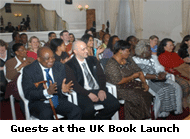 SA: I’m not sure that literary novelists alone have influenced me. I love Jane Austen’s use of characterisation and books like ‘Head above Water’ by Buchi Emecheta, Achebe’s ‘Things Fall Apart’. Then there are children’s authors like Malorie Blackman, Philip Pullman, J.K Rowling and Meg Cabot. However, hearing a good script or plot on TV or film helps too.
My style is fairly descriptive. However within ‘Growing Yams in London’ I incorporate the use of text message and instant messenger as apposed to writing entirely in prose. I did this to reflect the use of technology by teenagers. This aspect of my novel’s structure is not commonplace within its genre, as many authors prefer to write entirely in text message, email, or prose. As we do hear a beep from a mobile phone in films and TV programmes, I think that there is a place for them in novels.
RCA: The publishing industry is hugely competitive and it is extremely difficult for new writers to be published. What obstacles did you overcome and what helped you to stay focused?
SA: In terms of obstacles, the biggest one for me was not having any knowledge of the publishing industry. It meant that I couldn’t appreciate the time scale involved, and the decisions that are made, prior to an offer being made on a book.
After I made contact with my publisher, I had to rewrite my manuscript for them several times before they accepted it. My work had to be in keeping with their house style. That was difficult, as I thought the process would be a lot quicker. In reality, it took two years for them to make an offer, then another year for the book to be published! Even in that final year, I was still writing and correcting a few months before ‘Growing Yams in London’ was released. I stayed focused because I had support from fabulous friends and family, who encouraged me when it got difficult by telling me to get on with it!
I have great parents who supported me throughout this process - without them I doubt I would have had the courage to pursue this dream.
RCA: What advice would you give to people who are considering writing professionally?
SA: I would definitely get feedback on your writing. Also:
My last piece of advice is to just keep going. If you believe in your work and are willing to work on any flaws, it will happen.
‘Growing Yams in London’ is available through Amazon.co.uk, Waterstones, WH Smith, Borders and Foyles.
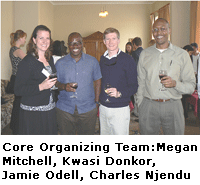 Selorm Adadevoh, Wharton MBA Class of 200, reports on the trip taken to Africa by business school students from Wharton and the growing global appetite for doing business in Africa.
‘Thirty-seven students from The Wharton School, Philadelphia, USA embarked on a three week trip to Ghana, Kenya and South Africa this past May as part of a Wharton initiative, the Africa Global Immersion Program (GIP). On this trip, we were exposed to the realities of the new buzz surrounding business in Africa.
The Wharton School has been ranked as the #1 business school globally by Financial Times for the last five years and GIP is well known as one of the most prominent examples of Wharton's commitment to international business education. For the last 13 years, GIP has immersed students into India, Africa, Europe, China, Southeast Asia and South America with Africa being the most recent addition.
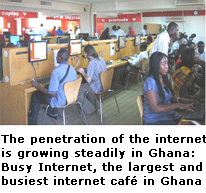 Africa is believed to be the next chapter to global economic growth and this was confirmed not only on our trip but also in a recent Merrill Lynch analyst report titled “Africa: The Final Frontier” which states that: “Africa is filled with potential and risk and, in the next decade, both should provide investors with opportunity”. On our three week trip, we recognized that though the challenges are many, and the risks high, the potential rewards are simply unimaginable.
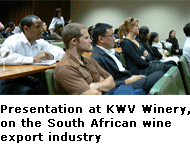 The trip covered West, East and Southern Africa and started out in Ghana, through Kenya and finally ending in South Africa. Firstly, all three economies showed solid real economic growth of over 5.5% in each case last year. Kenya grew at 6.1% (the highest in a decade), Ghana by 5.8% and South Africa by 5.7%. The growth, in the case of Ghana and Kenya was fueled primarily by traditional sectors such as Agriculture and Tourism, and in the case of Kenya also by Manufacturing, which grew by 6.9%. Kenya for one has had a recent buzz driven by investments in infrastructure such as ICT and railways and also by the recent launch of COMESA (the East African Economic Community) extending the markets deeper into East Africa. Similar trends exist in both Ghana and South Africa and therefore not surprising that the economies are underdeveloped and promise huge growth with the right strategic investments.
Secondly, the private sector particularly has shown great signs of progress in the last few years. In Ghana, a visit to Ecobank, Areeba (now MTN) and Domod Manufacturing demonstrated the potential that exists in the Ghanaian market. For starters, these three companies have seen double-digit growth in the last two years despite challenges such as a lack of adequate electricity supply.
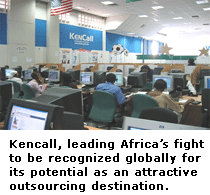 In Kenya, industries such as manufacturing stood out as very established and still growing. Our visit to East African Cables (EAC) for instance, drew our attention to the triple digit growth its share price has experienced over the last year but this is just the beginning as EAC is in the middle of an expansion plan to be able to serve the newly added COMESA markets.
We also visited Kencall; an outsourcing company currently maxed out with contracts mainly from the US. The CEOs of Kencall and EAC both agree that the right investments will greatly enhance the growth of these economies.
 Finally, though, it was refreshing to see that, despite the recent business expansion, the rich cultures have been preserved. In Ghana, we learnt traditional drumming and dancing on Kokrobite beach and enjoyed some rich West African cuisine at Tante Marie in Accra. In South Africa, we learnt about the history of apartheid and the struggle for freedom by visiting Soweto and the Apartheid Museum.
 We also experienced some of Africa’s vast nature reserves while on an exciting safari in Pilanesberg. The tourist industries shout opportunity and the level of appreciation by locals for these assets are growing. I am confident of Africa’s potential and see this realization already leading a new wave of investment and development on the continent.
I left our trip with one message: “Africa is truly poised for growth, and we are currently walking the era of high return investments so buckle up and be part of the ride because the buzz about Africa is real”.
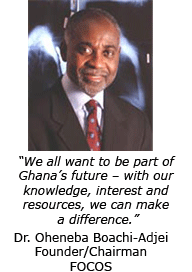 ‘Ghana, the Next 50 Years: Carving a Better and Prosperous Future’ was the theme of a recent conference organized by Ghanaians in the UK which demonstrated how Ghana’s Diaspora is contributing to a better future for the country.
Ghana was the first African country south of the Sahara to obtain its independence from colonial rule and in March 2007 the country celebrated 50 years of independence. Ghanaians around the world have also used the 50 year landmark to examine their role in supporting Ghana’s continued development.
The one-day promotional and investment conference was convened by the GPA Awards as part of the Ghana@50 UK celebrations and in partnership with the Ghana High Commission in the UK. GPA Awards, established by Ghanaian Emilia Bartels to showcase the achievements of Ghana’s professionals and entrepreneurs in the UK, has also shown its interest in promoting international trade for African-owned businesses.
The aim of the conference, according to the organizers, was to articulate Ghana's vision and goals for the next 50 years and to outline to its stakeholders Ghana's achievements as a launching pad for the next half century.
Opening the plenary session, Nii Adjeidu Armar, a Consultant Gynaecologist based in the UK, touched on Ghana’s key achievements since independence and noted that “there is a tremendous amount to be proud of.” However, the challenges the country faces today, he said, are still significant.
“We are at a crossroads and, in spite of the notable achievements of many, many others are still attempting to cross oceans towards what they perceive to be greener pastures,” he added. “Nobody is waiting for us to catch up; we need to leapfrog and learn from what others have already achieved.”
In his keynote address, HE Mr. Annan Arkyin Cato, Ghana’s High Commissioner to the United Kingdom, considered Ghana’s place in Africa’s history. “50 years ago our founding fathers recognized the challenge that Ghana could not live as an island and Nkrumah committed Ghana to liberating Africa from colonialism,” he said. “Ghana’s role as a pioneer has continued in the role it continues to play in Africa and I happen to be among those who believe that our pitfalls and mishaps notwithstanding, at 50 years we have made progress and taken some commendable strides in addressing the needs of our people.”
Ghana’s future, the High Commissioner said, would depend on her people – both within and outside the country. “Human resources will play a key role in the challenge Ghana has to face in the next 50 years.”
 The importance of Ghana’s human capital was echoed by actress and writer Adjoa Andoh who introduced the opening session.
“We are a fantastically loving, resourceful and intelligent nation and it is our duty to harness all our resources to move things forward for Ghana and the rest of the continent,” she said.
Demonstrating how Ghana’s Diaspora can have an impact on the country, renowned spine surgeon Dr. Oheneba Boachie-Adjei delivered a presentation on the work of his organization FOCOS in addressing the health issues faced by people in Ghana and other parts of Africa. Despite the fact that Ghana has lost a significant part of its health expertise to the West, “we have lost about 60% of our doctors; there are 600-700 Ghanaian doctors in the USA, about 50% of the doctors we now have in Ghana,” there are still ways in which medical and other professionals can contribute to the country, he said.
A graduate of the Columbia University College of Physicians and Surgeons in New York, Dr. Boachie-Adjei is the founder and Chairman of FOCOS (the Foundation of Orthopedics and Complex Spine) which he set up to facilitate international cooperation among specialists to advance the diagnosis, treatment and control of injuries and disorders of the musculoskeletal and spine systems in developing countries.
Healthcare has to be seen as a priority for developing countries, given its impact on a country’s productivity, Dr. Boachie Adjei said. “80% of working age Africans are unemployed. Disabled people form around 10% of the population, yet are 20% of the poor.”
To date, Dr. Boachie-Adjei said, FOCOS has saved over $35 million in healthcare costs to developing countries through its work. The Foundation is now planning an orthopaedic centre of excellence in Ghana which is expected to cost around $8 million. In 2008, his organization also plans to establish a West African Humanitarian Education Programme in Ghana to provide training and capacity building in orthopaedics. By expanding the number of care givers in this area, Dr. Boachie-Adjei believes that disability rates can be significantly reduced among patients. “We have changed people’s lives – young and old,” he said. “We all want to part of Ghana’s future and without our knowledge, interest and resources we can make a difference to Ghana’s health.”
Much has been written about Ghana’s history over the last 50 years and the present Government has been instrumental in developing a solid platform for Ghana’s future, noted the Ghanaian Minister for Information and National Orientation, Mrs. Oboshie Sai-Cofie, in her presentation to the conference.
“We have come a long way. In the last six years we have succeeded in stabilizing the economic environment, inflation has reduced and interest rates have dropped substantially,” she said. Citing the recent redenomination of Ghana’s cedi as evidence of the Central Bank’s management of the economy, she stressed the need for private sector development.
“One of the most important lessons we have learned is to respect the private sector and to give it the necessary support, and not just lip service,” she added. Business confidence has been rising and is reflected, she said, in the numerous enquiries from Ghana’s citizens overseas for opportunities for investment. “We recognize that there is still a long way to go but the climate has improved and people are more ready to do business,” she observed. Reforms in the financial sector have led to 23 commercial banks now operating actively in the country and Ghana’s improved international credit rating.
Reflecting on the need for the country to improve its human resource base, the Minister spoke of new educational reforms to expand the curriculum and to prepare Ghana’s youth “more adequately to participate in the global village”. School enrolment has increased, she added, with the country’s tertiary educational sector now boasting 42 institutions after many years with just 3.
Ghana offers a host of opportunities for investment by her Diaspora and others, according to International Trade Advisor Robert Hurley. In his presentation he identified a number of sectors that could offer excellent returns. Mining, agriculture and manufacturing have all seen recent foreign investment while tourism is already Ghana’s third biggest export earner.
The building and financial sectors, said Hurley, also offer excellent opportunities. Ghana is also well placed, he suggested, to follow South Africa and Mauritius’s lead in building its BPO (business process outsourcing) sector. “This is a $100 billion market which is estimated to grow at 30% annually.”
Corporate Affairs Director of Diageo Africa, Norah Odwesso, spoke of Ghana’s strategic importance to her company as the sixth largest market for Guinness, and pointed out that “our investment in Ghana has been fruitful because of Ghana’s investment climate.”
 Our development must be based on the advantages we have today and I think it is time we begin to think outside the box,” said Ghana’s former Finance Minister, Hon. Yaw Osafo Marfo, in his address to the delegates.
Ghana’s development strategy since independence, he said, has been based on the country’s natural resources and particularly on gold and cocoa. He stressed that economic development called for Ghana to leverage its natural advantages over its competitors; advantages that he cited as Ghana’s location in the heart of West Africa, its stable currency, political steadiness and skilled labour.
“We must begin to look at a new structure of development and focusing on things other than our extractive industries,” he said. “Ghana should take advantage of its nature, stability and location and make itself the service centre for West Africa. Let us consciously develop our skills, use our Diaspora and become the financial centre for West Africa. Other services – e.g. insurance and ICT - will follow. Tourism will also follow this as a matter of course and promote Ghana as a destination for West Africans.” Ghana could, in time, dispense with foreign aid, said Mr. Osafo Marfo, if it committed itself to servicing the sub-continent.
In a blunt assessment of Ghana’s future, Ghana Social Marketing Foundation CEO, Alex Banful, called for a paradigm shift in thinking for Ghanaians. “We should emphasise skills in critical thinking and critical problem solving if we are to be competitive,” he said. Ghana needs to implement radical changes to its social capital, added Banful and the country needed to change from “mediocrity lovers” to demanding the highest quality of performance in daily life.
“This requires us to look again at our slipping ethics and values and reward distinction,” he said. “We need discipline in our appointment regime and not cronyism; we need to use our best talent, irrespective of political persuasion, focus on Ghana as a business entity and run it as such.” For Ghana to move forward into the future successfully, he remarked, a change of mindset is critical. “If we can reform our thinking and managerial practices”, he said, “the future looks bright.”
Human resources development represents one of the six key pillars of Ghana’s development and Ghana’s estimated 2 million Diaspora constitute one of the most important resources of the nation, said Dr Ekwow Spio Garbrah, the CEO of the Commonwealth Telecommunications Organisation (CTO). The former Ghanaian Minister of Information urged Ghanaians outside the country to network with those at home and to support the country’s labour and technical requirements.
“Today Ghana needs human resources to transform its economy, create wealth and make the best use of all its human capacity,” he said. For the country to succeed in today’s information age, he said, it needs to utilize the full capacity of all Ghanaians, wherever they are.
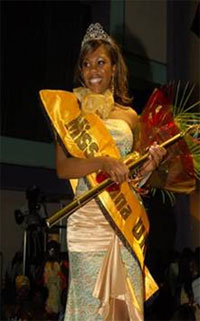 Fresh from her recent success in demonstrating how talent and beauty can create a powerful combination, we speak to Rhema Nti, the newly crowned Miss Ghana UK about her life, ambitions and cultural identity.
Beauty contests are not for the faint hearted. Taking to the stage to demonstrate grace, intelligence – and, of course, beauty - is a daunting thought for most people. Yet, despite provoking the occasional controversy, beauty pageants also offer young people the opportunity to raise their profile and – in terms of those within the African community – to take on the challenge of becoming a positive role model.
Established in 1994, the Miss Ghana UK beauty pageant is now recognized as one of the most successful beauty pageants of its kind. According to one of the pageant’s sponsors, Akwaaba, the primary aim of Miss Ghana UK is to highlight Ghana’s rich cultural background heritage whilst placing great emphasis on Ghanaian attributes and lifestyles in the UK and abroad.
However the importance of the event spans much further afield as the organisers aim to bring together all UK-based Ghanaians, thereby providing an opportunity for young people to gain a valuable network of contacts with professional Ghanaians. The event also supports the treatment of sickle cell anaemia in Ghana and cites the Korle Bu Teaching Hospital in Accra as one of its beneficiaries.
ReConnect Africa spoke to Rhema about the challenges of the Miss Ghana UK pageant and how she intends to build on her early success.
RN: Thank you very much. Well, as you know, my name is Rhema Nti. I am 18 years old and I am crrently studying for a BSc in Business Management at Queen Mary University of London. Most of my spare time is taken up by traveling, shopping, ballet, socializing with friends and at church.
RN: Although I was not entirely 100% sure about entering, I realized that it would be a great opportunity to meet new people and to gain certain skills which I didn’t already possess or could develop.
 I also thought that I could aim to make a difference if I did win the competition, as opportunities would arise from this position, such as working to help deprived children, both in Africa and here in England. Not to mention also interacting with the youth of today and encouraging young girls like me to fulfill their potential.
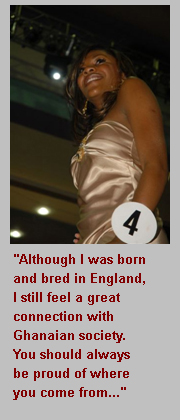 RN: We had 10 weeks of pageant training which included practicing walking, speeches and our talents.At home, I worked on the more physical aspects of the competition, such as going to the gym regularly and eating healthily. This was not as bad as it sounds! Some of these skills learnt in Miss Ghana I can apply to everyday life, which is always good.
RCA: How do you think winning the title will be of benefit to you?
RN: I know I am only young myself but I would just love to see the youth of today, especially young black Ghanaian girls, reach their full potential and be comfortable with themselves.
I am working at this through getting involved in networks and societies, especially in London and Milton Keynes, and evidence of this should soon be visible. I do also aim to work with the Miss Ghana UK 2008 pageant girls this year to share my experiences and to encourage them to stay true to themselves - and show that there aren't only perks for the winners. The pageant has opened up new doors and opportunities for all the girls that took part.
RN: Although I was born and bred in England, I still feel a great connection with Ghanaian society. You should always be proud of where you come from - and I sure am! It’s interesting to share and learn more about your culture, although it can be quite hard to embrace it, being such a conservative society. However, I can always come home to find traditional food and I am still brought up by Ghanaian morals, so Ghana will always be close to my heart.
RN: I think that the major issue facing beauty pageants today is the weight debate which is becoming such an issue within society as a whole. There is a way to maintain weight and stay healthy at the same time, as well as there being a much more beneficial way to losing weight without skipping meals.
There is a healthy way of losing weight, if one wishes to. But I also believe that one has to learn to be confident and comfortable within you. Being Miss Ghana UK, I am going to be addressing these sensitive topics and, no matter what, I know that I have to lead by example.
RN: Well, I am studying for a BSc in Business and Management at Queen Mary University of London. I would love to go on to do a postgraduate MBA at London Business School.
I am a person who is interested in many things and, although now I do not particularly know which exact path I would like to undertake, I love fashion and also wouldn’t mind getting involved in real estate investment.
Miss Ghana has opened my eyes to a lot of business opportunities, both here and in Ghana, which would also be challenging and yet fulfilling. I am leaving my career direction up to God, as I believe that He has a great plan for my life.
 With Ghana turning 50 this year, Ghanaians the world over have made a deliberate attempt to celebrate Ghana’s achievements and discuss the agenda for the next 50 years. International performance poet Andrew “Tuggstar” Togobo examines how young Ghanaians in the Diaspora can make an impact.
Since 1957, much has changed. The global economy has become a lot more sophisticated. The balance of world power shifted from Europe to the United States, with Asia now lurking in the background. However, perhaps the most significant development has been the increase of the African Diaspora.
Earlier this year, I was funded by the arts council to partake in a project, entitled, From Here to There and Home Again. Part of its aim was for me as a Ghanaian poet based in Britain to use my art to connect with Ghanaians based in Ghana.
My workshops in Legon University and the International Press Centre spawned interesting dialogue. Even though most people had friends and families across generations that were abroad, there was an enormous gap in knowledge as to why Ghanaians initially left Ghana and what their experience as immigrants has been.
I believe history is a living breathing thing contained in all of us. And the significance of a milestone such as Ghana’s 50th independence is that we have generations who lived in that moment of history, mixing with a younger generation who immortalise that same period. My father was part of the early wave of students who were sent abroad. That in itself is history. So for me to understand that period, I didn’t need to look much further then my own family.
 The agenda for students like my father, who were recipients of Nkrumah’s scholarships, were to attend European Universities and gain the necessary skills needed for the development of Africa. However, every year since, there has been an influx of Africans to European and American countries, not necessarily with the intent of returning.
Consequently, the population of the African and Ghanaian Diaspora is booming. There are Ghanaian children born all over the globe. While this potential may be great, I find that Ghanaians wherever they are have more question than answers. While being in Ghana, I got the sense that some people believed the development of Ghana is a role only for those at home. There was an underlying sense of being abandoned by the Ghanaians abroad. It was significant that President Kufuor in his Independence Address mentioned the importance of the Ghanaian Diaspora and of making the country so attractive that professionals do not feel they have to leave. I believe the Ghanaian Diaspora is a sleeping giant that needs to awaken and to utilise their global locale like the Asians (Indians, Pakistanis, Chinese and Japanese) have done.
As a poet, I have taken this mission to heart. I am attempting to use my skills in telling stories to remind Ghanaians both in Britain and Ghana that we are still Ghanaian, we are still relevant, and beyond sending back money for families, ask ‘how can we make an impact that could really shake this world?’ I believe this is the important question of our time.
I believe the first generation born abroad holds a significant part of the answer. Being born in the Diaspora gives them the benefits that their parents didn’t have; access to British society and an instant understanding of the multi-cultural climate. But, being that their parents are migrants, they also have an instant connection to their home nations.
Part of my Arts Council project involved working with film maker Sonia Godding. We put together a short film to accompany a poem which tackles all the above issues. It creatively connects the plight of the Ghanaian Diaspora with the Ghanaian at home, and the impact independence and its subsequent failure had on the first Diasporic generations.
During the reign of Kwame Nkrumah, the arts were seen as a tool. Nkrumah understood the power of using cultural artists to help propagate the celebration of the African personality. Artists have the ability to convey powerful socio-political messages to an audience who may otherwise not be interested.
The artists are still here, work still needs to be done. I hope you get a chance to enjoy the video, and put this artist to work.
www.myspace.com/tuggstar (to watch the video)
www.tuggstarthepoetman.com (for more information)
 Tuggstar is an international performance poet, who mixes history and politics in his art. He has won{mosimage} many awards for his work and currently has 2 releases. 1) The Way of the Word (book) and The Africa E.P: From Here to There and Home Again. (C.D)
Question: ‘I’m a writer with no connections, a recent graduate looking for work during a recession, and a creative person full of ideas with no career strategy. Where do I go?’
There was a time when I asked myself this question repeatedly before going to sleep each night, and as I woke up each morning. This anxiety-driven quagmire made it difficult for me to celebrate any micro-wins, as I was always looking for the next opportunity; bouncing around from one internship to another, building my CV block by block, all while signing on. Fun times :(
Although surrounded by other creatives in the same predicament, we seldom spoke about this —no one wanted to be the first to confess they were stuck, overwhelmed and terrified for the future, or never 100% sure they were making the right decision.
Advising from First-Hand Experience
Then in 2010, I accidentally (on purpose) prodded the elephant in the room: I was writing for the BBC and Royal Court Theatre Young Writers’ Programmes, had just finished working on a documentary that was screened at the BAFTA and BFI, had a play commissioned by a youth theatre who took my work as far as China and Tanzania, my art collective was doing some amazing things in the most peculiar of spaces, and all the while, I was still in the box room at Dad’s, asking the same question and feeling the same sense of failure.
That is, until I took a paid internship at the Southbank Centre’s Marketing department and met members of their residential youth group, SE1 United.
I was surprised they were asking me for advice—I felt far from being qualified to give an answer. The best I could offer was my first-hand experience which, apparently, was all I needed to lay the foundations for the inciting incident in my career journey.
The Programme Manager for SE1 United spotted me at the head of the table, leading a discussion on what I now know as script analysis. She asked me if I’d be interested in delivering a workshop, and the rest is history.
Scribble Ink Academy
Scribble Ink was initially a script consultancy, which made sense because the bulk of my experience was in scriptwriting. But, over time, I found myself working with artists in all disciplines. My role was no longer about supporting script development, but rather mentoring practitioners throughout their creative process—a combination of project management and story development. Consequently, Scribble Ink became a story consultancy, offering creative writing programmes. All was going pretty well—I’d moved from one box room to another (Central London prices), completed my Masters and gained a lot of experience working in education. All the while, keeping Scribble Ink above water.
I continued to grow as a freelancer, with a few bumps and scrapes along the way, and despite the drips of progress, found myself asking the same question that had swirled in my mind all those years ago, but with add-ons: ‘The gig economy is rising: Forecasts suggest 50% of the UK will freelance by 2020 [fenews.co.uk] proving it to be a leading business model for our digitised society. However, establishing and managing a freelance career is seldom taught, and many of us, although passionate and talented, lack the business acumen and life skills to sustain successful self-employment. Where do we go?’
Then, I had a lightbulb moment! I got to brainstorming, vision-boarding and researching—all of which ignited my most exciting project yet!
Scribble Ink 2020 Programmes
I'm thrilled to announce that from January 2020, I'll be hosting two creative enterprise programmes in two prestigious London-based arts organisations — The BFI and Waterstones!
As a result of joining Scribble Ink Academy, creative practitioners at any level, whether writers, filmmakers, musicians, designers, photographers, bloggers, vloggers and all the in-between, will have the necessary tools to become well sought-after freelancers in 12 weeks!
Each workshop covers a new and exciting topic — from brand identity, project planning, budgeting and operational strategies, to managing a professional online presence, team building and outsourcing, pitching and networking and so much more.
At the end of each workshop, you'll leave with a subject-specific workbook, a full stomach (tea and cake are provided) and the revitalised, empowered, unquenchable fire in your core, necessary for tailoring an exciting career that nurtures your talents, gives you creative control and pushes you to realise your purpose. Visit the scribbleink.com/academy for the full syllabus and to book tickets.
Want to trial a workshop before committing to the full programme? Not a problem! Join the Scribble Ink Academy Meet Up group and sign up to a taster session.
Put simply, I wanted to answer my own question by offering something I wish was there for me when I was starting out. The answer is an ever-evolving process which I’m delighted to share in the form of Scribble Ink: The Writers’ Revelation Revolution.










 Keep yourself updated with our FREE newsletters now!