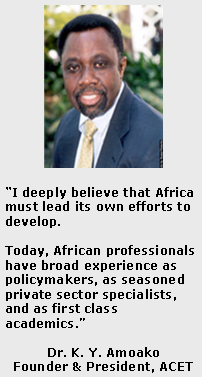
 Through African experts delivering top quality advisory services to African policy-makers, the African Centre for Economic Transformation (ACET) is supporting the long-term growth and transformation of African economies.
For the first time since independence, several African countries are enjoying steady economic growth. GDP is no longer stagnant across the continent, with 16 countries having an average growth rate of 4.5% since the mid-1990s.
Yet, while countries such as Botswana and Mauritius are seen as beacons of hope for sustained growth and economic transformation, the majority of countries across the continent are still increasingly dependent on imports and overly reliant on low-productivity agriculture and the export of a limited range of natural commodities.
This contrasts starkly with the progress made by developing countries in Asia where, although per capita incomes for Africa and East Asia were the same in 1960, by 2004 East Asia’s per capita incomes were five times higher than Sub-Saharan Africa. Countries such as Korea, Malaysia and Singapore have achieved impressive economic turnarounds and growth paths by emphasizing technological innovation and supporting modern industry and services which, in turn, has led to reductions in poverty.
The key difference between the successful and less successful countries in Africa, says Dr. K. Y. Amoako, founder and President of the African Centre for Economic Transformation (ACET), is that today’s economic beacons of hope in Africa have managed to implement locally developed and owned economic policies involving a true transformation to a diversified economy with high value-added opportunities for employment and longer-term growth.
The African Centre for Economic Transformation
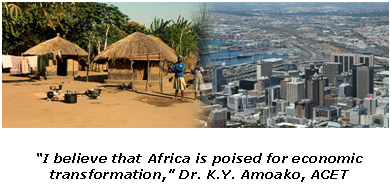
“I believe that Africa is poised for economic transformation,” says Dr. Amoako. According to the former Executive Secretary of the United Nations Economic Commission for Africa (UNECA), there is no doubt that development in Africa has improved considerably in the last decade. “We have seen growth rates steadily accelerating, democratic systems widely adopted, continental leadership and direction renewed and civil society rapidly expanding at the grass roots.”
But if previous attempts at poverty reduction – often backed by huge injections of foreign aid - have resulted in only limited success in dealing with the structural challenges faced by most African economies, what else can be done?
The answer proposed by the ACET team lies in a new, ambitious and comprehensive approach to tackling the interlocking problems that are impeding the growth and development of African economies. A new approach to ensure that African countries can fundamentally re-orient themselves and realize sustained economic transformation.
While there have been many previous efforts to provide research and capacity development to Africa’s policy-makers, much of this has failed to deliver real impact or to create an agenda for real change. With the establishment of ACET, Dr. Amoako and his team are taking a new approach by providing high-quality policy analysis and advisory services to African governments to address some of the policy and institutional barriers that have hampered sustained economic growth on the continent, with the objective of achieving long-term growth and transformation of African economies.
Approaching Transformation from the Inside
“I deeply believe that Africa must lead its own efforts to develop,” says Dr. Amoako. “For far too long the policy advice received by African governments has come from outside Africa, through international technical assistance or donor programs.”
Today’s economic beacons of hope in Africa have managed to implement locally developed and owned economic policies involving a true transformation to a diversified economy
Identifying the ‘outside-in’ approach to advisory support for Africa as a key factor in the failure in transforming African economies, ACET’s approach is to drive transformation from within through Africa’s own talent base, both within the continent and in the Diaspora.
“Today, African professionals have broad experience and solid reputations as policymakers at the national level, as senior staff of international organizations, as seasoned private sector specialists, and as first class academics,” says Dr. Amoako. However well intentioned, he notes, much of the policy advice currently available to decision makers comes directly from donors who often lack a richer understanding of the local context that African advisors could provide.
Paul Kagame, President of Rwanda and one of a number of African heads of state that have endorsed the establishment of ACET, echoes this view, pointing out that for Africa to become “a viable actor in the global economy,” it is imperative that “we nurture home grown approaches in developing both short-term and longer-term strategies.”
It is with this focus that ACET, with its headquarters in Accra, Ghana, is aiming to attract highly qualified African talent from the Diaspora to contribute solutions to the most challenging problems facing the continent.
Combining their external experience with their inside knowledge of Africa, ACET will be fielding a team of experts to access and influence African policy makers at the highest levels, providing them with an African perspective on policy analysis and research that translates to country-specific applications and advice. ACET’s approach will focus on the “how-to” of policy reforms, drawing on practical experiences and best practices from within and outside Africa.
Seeking African Professionals in the Diaspora
In instances where the required package of advisory services extends beyond its available core Secretariat capability, ACET will identify and collaborate with a range of external advisors. ACET will seek to deploy African professionals possessing broad experience and solid reputations as policy makers at the national level, as senior staff of international organizations, and as seasoned private sector specialists to provide advice that bridges analysis and practice.
ACET’s approach to delivering advisory services recognizes that economic reforms involve technical, political and institutional issues. The use of top-level expertise, within Africa and for Africa, that is sensitive to its local political and economic particularities and nuances but also aware of the need for urgent decisive reforms, will lead to not only better quality advice but also speedier and more acceptable action.
The benefit of ACET’s approach has been recognised by African leaders, including Tanzanian President Kikwete, who notes that “for poor countries like Tanzania, this can only lead to better policies that can help accelerate poverty reduction and spur economic growth.”
Liberia’s President, Ellen Johnson Sirleaf, is another African head of state excited by ACET’s engagement with Africa’s Diasporan professionals. “I am particularly attracted to the idea of an African-led expertise dedicated to tackling the strategic issues of significance to Africa’s development. This will give meaning to African ownership of Africa’s destiny.”
“Harnessing existing domestic capacities, tapping the expertise and talents of the African Diaspora, and promoting knowledge sharing across countries are the issues that stirred me into forming ACET”.
By drawing on consultants, wherever possible, from the African region and continent and by creating a mechanism for readily accessing capable African talent both on the continent and in the Diaspora, says Dr. Amoako, ACET will fully leverage this greatly under-utilized pool of capacity to address some of the systemic weaknesses of current advisory models.
“Harnessing existing domestic capacities, tapping the expertise and talents of the African Diaspora, and promoting knowledge sharing across countries are the issues that stirred me into forming ACET”.
An Ambitious Vision for Africa
ACET has an ambitious vision for the continent, which it intends to deliver through a unique integrated approach.
In order to deliver holistic solutions, these advisory services will be supported and enhanced by a combination of both research and capacity building services that will ensure that the outcome of engagement with ACET is not just about a well written report but about transformational results delivered on the ground.
ACET’s distinctive value will therefore come from the interaction between policy advisory services to help policy-makers in African governments respond effectively to specific challenges and opportunities, its policy analysis and research – leveraging its network of local think tanks across the continent – and institutional strengthening and skills building which will place ACET Fellows drawn from skilled African professionals in medium and long-term supporting roles in governments.
Focusing on the Essentials
In order to build and maintain a distinctive set of advisory capabilities, ACET will focus its interventions on a few key areas that it believes can have the most transformational impact. The expertise of both the organisation’s core team of staff at its Accra headquarters and its roster of African and non-African experts will centre on Trade and Competitiveness, Effective Natural Resources Management, Financial Sector Reform and Private Sector Development.
In addressing trade and competitiveness, ACET’s approach will focus on the supply side drivers of competitiveness such as regional integration, robust infrastructure and well-calibrated regulation. With effective natural resources management, ACET will tackle the paradox that Africa’s resource-rich countries have actually performed more poorly on most measures than many less endowed neighbours. Financial sector reform is also seen as critical as transformation remains impossible without financial systems geared towards channelling capital to businesses and offering personal financial management tools to Africans at different income levels.
In addressing private sector development, ACET is looking at disseminating informative analytical tools and educating policymakers on the business environment challenges facing the private sector, and particularly, the role of small and medium-sized enterprises in stimulating broad based economic growth.
Building Africa's Skills and Institutions
 To ensure that African governments have the capacity to implement transformative initiatives, ACET will be piloting a Fellows Programme that will provide governments with access to promising Fellows and Associates to address specific targeted capacity gaps in potentially transformative areas of their policy apparatus.
In the process, the Fellows programme will also help to produce a cadre of well trained new development leaders with experience of working with decision-makers at the highest levels.
ACET will identify a range of candidates for placement with the Fellows programme through a rigorous intake process to attract top talent with strong professional and academic backgrounds. This pool of potential Fellows will be provided with training in ACET’s methodology and resources before being assigned for periods of one to two years.
Combining Unique Access with Quality Delivery
Part of what makes ACET distinctive is its unique access to African leaders and policy-makers, based largely on the reputation and strong networks of its Founder, its Board of Directors and its Advisory Board.
The Centre has already successfully delivered an analysis of key lessons learnt from African post-conflict experiences in Rwanda and Mozambique at a Cabinet retreat convened by President Ellen Johnson-Sirleaf. Subsequently the Liberian government has requested additional support in identifying high priority infrastructure projects and developing innovative funding and implementation mechanisms for these, as well as broader advice on how to approach the country’s medium term Poverty Reduction Strategy.
In Ghana, where the organisation is based, ACET has begun to deliver support to the government around policies for guiding its management of aid resources and its relations with development partners in the run up to the Accra High-Level Forum. The Ghana Government has also requested ACET’s assistance in implementing its evolving strategy to manage new oil and gas finds, in ways that would minimize the country’s exposure to typical features of the resource curse.
“Country-specific policy advice must be derived from practical research, comprising best practices, case studies and innovative thinking.”
ACET has also embarked on an initial wave of independent research looking at the prospects for long-term economic transformation in Botswana, Rwanda, Ghana, Kenya and Uganda. These case studies will seek to leverage examples from Asia to identify potential drivers of success for these very different countries and hopefully draw out some broader implications for the continent as a whole. The studies will be presented at an ACET seminar in July 2008 in Accra which will be chaired by Nobel Laureate Joseph E. Stiglitz, the chair of ACET’s Advisory Board.
ACET's approach to Research
 Transforming Africa is not about imposing a ‘one size fits all’ solution, as ACET is keen to point out.
“I believe that the transformation that African economies are poised to undertake requires that we think through and implement practical solutions to specific economic challenges,” says Dr. Amoako.
With this approach, he adds, “country-specific policy advice must be derived from practical research, comprising best practices, case studies and innovative thinking.”
While high-level policy advice provided by ACET will help improve the quality of policy decision-making in Africa, the organisation also aims to have an impact over the longer term.
To this end, ACET will act as a catalyst to engage the research, policy analysis and advisory capacities of African think tanks, Diaspora researchers and development managers in the policy process, encouraging them to focus on the key drivers of economic growth and transformation.
ACET’s research agenda, like its advisory services, will be structured around the four identified areas and will look beyond the specific concerns of any one client to identify broader trends with implications for transformation efforts.
A key feature of ACET’s research approach will be a case study-based method that recognizes that the most practical lessons for countries will likely be derived from a good understanding of the experience of others and how that may or may not be relevant to their own context. This integrated method, comprising research, advisory and institution strengthening, will help African governments improve their capacities to develop and implement stronger economic policies and to take deeper ownership of the development process. This, in turn, will result in a considerable improvement in the impact and sustainability of plans for economic growth and development.
Recruiting Talent
In order to deliver on its vision, ACET will combine a Secretariat made up of a small core staff headquartered in Accra charged with coordinating ACET’s various operations and programmes and combining leadership capacity in each of ACET’s substantive activities, with a range of affiliated resources including ACET Fellows and international expert advisors.
ACET is actively recruiting for these roles and, to attract the appropriate talent for these roles, the organisation is offering compensation that is comparable to other major international civil service organizations and including benefits such as health coverage.
Through ACET, African professionals around the world have a vehicle to bring their skills to bear in transforming a continent that, says Dr. Amoako, is on the brink of a new renaissance.
Macroeconomic stability is becoming the norm instead of the exception, with inflation at historic lows and budget deficits declining. Foreign direct investment and other capital flows, including remittances and portfolio investments, have increased sharply.
“It is an auspicious time to build on the progress made so far to create stronger, more diverse economies, competitive local private sectors, more facilitative investment climates, and deeper pools of skilled, technical human resources.”
For further information about ACET: http://www.acetforafrica.org/index.html




 ReConnect Africa is a unique website and online magazine for the African professional in the Diaspora. Packed with
essential information about careers, business and jobs, ReConnect Africa keeps you connected to the best of Africa.
ReConnect Africa is a unique website and online magazine for the African professional in the Diaspora. Packed with
essential information about careers, business and jobs, ReConnect Africa keeps you connected to the best of Africa.











.jpg)

 In May 2006 we launched ReConnect Africa.com as the ‘go to’ place for professionals of African origin overseas


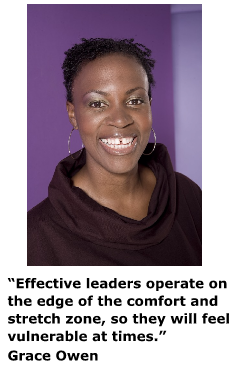 In 2012 Grace Owen experienced ‘the leader’s call’. In her new book, the leadership guru shares her story and how her need to move onto the next level can inspire other leaders.
 Grace Owen: What made me receptive is self-awareness and I have grown in this over many years through developing a practice of deep reflection. It gives you the ability to increase self-knowledge and leads to you becoming more aware of your ‘interior space’.
Human beings are like a Tardis, we have so much going on within us. When we are busy, preoccupied, distracted, stressed or lack the contemplative ‘know-how’ we disconnect from what we value, feel, think and our behaviour becomes incongruent with our authentic self. This ability to be contemplative and a dramatic change in life circumstances (my family and I were in a car crash) meant that I was more sensitive to what was going on within me. That is how I was able to listen to the urge and then investigate what it meant for me, my life and the contribution I am making in the world.
Grace Owen: What made me receptive is self-awareness and I have grown in this over many years through developing a practice of deep reflection. It gives you the ability to increase self-knowledge and leads to you becoming more aware of your ‘interior space’.
Human beings are like a Tardis, we have so much going on within us. When we are busy, preoccupied, distracted, stressed or lack the contemplative ‘know-how’ we disconnect from what we value, feel, think and our behaviour becomes incongruent with our authentic self. This ability to be contemplative and a dramatic change in life circumstances (my family and I were in a car crash) meant that I was more sensitive to what was going on within me. That is how I was able to listen to the urge and then investigate what it meant for me, my life and the contribution I am making in the world. 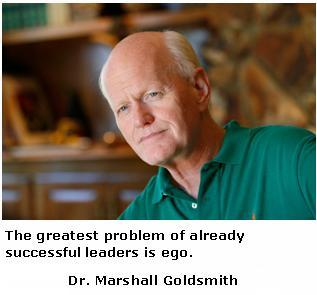 Vera Ng'oma interviews leadership expert Dr Marshall Goldsmith to find out his views on motivation, inspiration and management.
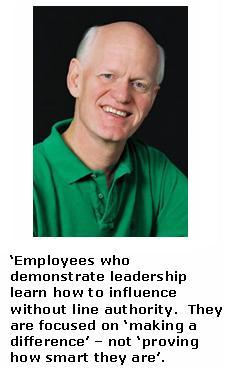 VN: Should leaders in the workplace take a more democratic approach?