RCA Flag
RCA Flag
Connecting Africa’s Skilled Professionals
RCA Flag

ReConnect Africa is a unique website and online magazine for the African professional in the Diaspora. Packed with essential information about careers, business and jobs, ReConnect Africa keeps you connected to the best of Africa.

ReConnect Africa Magazine

Books and Resources

Heading to Africa?

Editorial - Connecting Africa’s Global Talent

In May 2006 we launched ReConnect Africa.com as the ‘go to’ place for professionals of African origin overseas


Recruitment

Engaging African Employers, Recruiters and the Diaspora

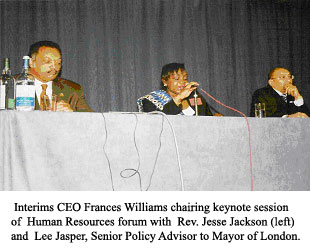
Rev. Jesse Jackson addresses international conference on employment and skills for Africa

A packed London conference centre provided an audience for the Reverend Jesse Jackson as he delivered the keynote speech at an event designed to bring African professionals living outside Africa together with African employers.

ImageThe March conference, organised by AfricaRecruit under the auspices of NEPAD and the CBC, was opened by Professor Wiseman Nkuhlu, Chairman of the NEPAD Steering Committee, at the British House of Commons.  Intended to explore the role of the African Diaspora in promoting skills development in Africa and challenges and opportunities in the African employment market, the two-day conference provided a platform for a range of speakers from the public and private sectors as well as from institutions including ECOWAS and UNIDO.

In his opening remarks, Professor Nkuhlu stressed the need to ally skills with good policies in Africa.  Pointing out that Africa needs teachers, doctors, scientists and professionals now to meet its MDGs, he urged the conference to use the occasion to create partnerships and collaboration and to identify strategies and processes for drawing Africans in the Diaspora into the African renaissance project of NEPAD.  Professor Wiseman added that the continent must underpin all the moves towards good governance by bringing in skilled people to make it sustainable.   He cited the lack of expertise and organisational capacity necessary for the major regional economic communities to play their rightful role and urged the conference to identify flexible models that would enable Africa to tap into the skills of its citizens outside the continent.

Speaking on behalf of the private sector, Alhaji Bamanga Tukur, Chair of the Africa Business Roundtable, stressed that the private sector was not just the engine of growth in Africa but the saviour of Africa. 

“Business has no boundaries,” he said.  “It goes where it is welcome and where it can add value.”

Dr. Yves Amaizo of UNIDO highlighted the impact of the African Diaspora on local culture and cautioned that the Diaspora’s involvement in transferring capabilities and diffusing knowledge should be done in a manner acceptable to local people and should not jeopardise local culture.

“Business has no boundaries. It goes where it is welcome and where it can add value.”

The charismatic American civil rights leader and campaigner, Reverend Jesse Jackson, launched the second day of the conference with an address to over 200 participants.  Central to his keynote speech were the themes of unity and action. 

Stressing that what binds us together is greater than what divides us, the former US Special Envoy for Africa urged the audience to develop new ways to leverage their franchise to open up public and private sector opportunities.

Image 

Reverend Jackson stressed that Africans in the Diaspora are now at the stage where access to capital and technology gives them a presence and influence far in excess of their physical numbers.

ImagePointing to the fact that in big elections small numbers matter, he called upon his audience to reject what he termed “a grasshopper complex” and to build a national presence by focusing on shared needs, struggles, hopes and aspirations.

Touching on debt relief, the Reverend encouraged Africans in the UK to support the efforts of the UK Chancellor, Gordon Brown, to secure debt relief for the continent.  “Debt relief is key to world growth,” he pointed out.  “It helps Africa and provides the West with a bigger market.”

Banking on Recruitment

“If you have ever felt under pressure to recruit, spare a thought for us when we were faced with this dilemma”, writes Vincent Owen, who contributes this case study.

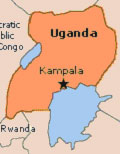
ImageTasked with the job of the recruitment, induction and training of around 60 staff by a major international bank operating in Uganda, Vincent and his team were able to pull out the stops and deliver – just in time.

Background

A local bank in Uganda found itself in financial difficulties and had, as a result, to close down. Other banks operating in the country were offered the opportunity to acquire branches of the closed bank and the subject international bank agreed to take over four branches, one in Kampala and three in other towns a distance away from the capital. A key condition of taking over the branches was that they would have to open within 90 days, offering full services to customers.

The Challenge

The key challenges faced by the international bank included:

  • Recruiting and training sufficient staff to operate the new branches
  • Refurbishing and fitting out the premises to the acquiring bank’s standards
  • Acquiring and providing appropriate technology within the new premises
  • Addressing the operational issues of acquiring new accounts from the previous bank

The Approach

A number of project teams were established under an overall Steering Committee to address the challenges indicated above. My team was specifically charged with addressing the recruitment and training issues.

The Recruitment

The staffing requirements for the new branches were in the region of 60 people of which four per branch were at the middle management level and the remainder at first line management and clerical levels. A few members of the existing staff were identified to play key roles in the new branches but the remainder needed to be recruited, inducted and trained within the 90 day period to ensure that the branches could open on time.

Following advertising, a significant number of applications were received. These were analysed by the Human Resources team and a number selected for interview.
ImageFollowing interviews, around 80 to 100 applicants were short-listed and invited to attend a testing centre to further establish their suitability. Applicants took verbal and numerical reasoning tests as well as completing a personality questionnaire. This enabled the applicant list to be refined further.  On the basis of interviews and test results, the bank made offers of employment to fill the first line management and clerical positions and the vast majority of offers were accepted.

For the managerial positions, there was a further stage of recruitment by means of Assessment Centres and around 30 candidates were invited to attend these Centres to finally determine their suitability.  The Centre, used by the bank in other African countries, was designed to test applicants’ level of capability against a number of managerial core competencies in use in the bank through a series of activities, observed by assessors.  However, it had never been used in Uganda.

A member of the Human Resources team experienced in the use of this vehicle was given the task of training four senior managers for their roles and responsibilities during the event – one day before the Assessment Centre was scheduled to run. The managers were all heads of the respective functions within the bank and, following the completion of the Centre, it was to be their joint decision as to which candidates would receive a job offer.

The Assessment Centres ran successfully and by late into the evening of the second and final day, the managers had identified suitable candidates to fill all the available positions. On the following day formal offers of employment were sent to the successful candidates, all of whom accepted.

In total, the whole recruitment process was completed within a period of four weeks.

A key condition of taking over the branches was that they would have to open within 90 days, offering full services to customers.

Induction and Training

The selected candidates were able to join the bank very quickly and a one-day induction programme was run at a local hotel to introduce the new employees to the organisation, its background and its approach to doing business.

As a good percentage of the new staff was either starting their first job or had never worked in a bank previously, a comprehensive training programme was put in place.  This needed to get everyone up to the required level of expertise, both in the technical banking aspects of their roles and the use of the bank’s systems and technology in readiness for opening.

Experienced staff from both Uganda and neighbouring countries ran a number of training programmes in their area of expertise and a number of the new recruits were sent to other countries within the bank’s African network both to attend specific training courses and to learn about their new roles by working “on the job” in branches.

The Outcome

In parallel with the Human Resources team’s activities, the other aspects of premises refurbishment, technology installation and testing and the operational activities went on in accordance with their objectives.

The four new branches successfully opened on time.

Vincent Owen is a Senior Consultant with Interims for Development and has extensive experience of recruitment, assessment centre design, training needs analysis, design and delivery in Africa.


Training programme in South Africa for Human Resources Managers and International Recruitment Executives

ImageAs local skills shortages impact on business development globally, many businesses must recruit internationally to increase their competitive edge.But identifying skills that are globally transferable is only the first step. Successfully integrating talent from overseas can be the greater challenge.

In association with the South Africa Institute of People Management, the African Human Resources company Interims for Development will be delivering a 2-day training programme designed for international Human Resources and Recruitment executives as well as those responsible for talent development or graduate recruitment within their companies.

“Recruiting and Integrating Global Talent” will take place from 19-20 July in Johannesburg and will assess the business case for global recruitment and how effective integration of international skills can successfully impact on business competitiveness and performance.

Successfully integrating talent from overseas can be the greater challenge.

Recruiting internationally brings its own set of challenges and, as many recruiters will attest, careful selection processes are critical to ensure not only technical, but cultural and personality compatibility.  Once hired, integrating talent from overseas, whether of African origin or not, into companies in Africa can impact adversely on employee performance if this process is not handled properly.  New employees can disrupt the status quo while local employees can feel overlooked or undervalued.

The continuing technical and management skills shortages in many African countries leaves many companies reliant on external skills, both African and expatriate, to meet the demands of their business.  Developing an effective international recruitment policy requires line managers to work closely with Human Resources to select the right talent.  Once a company has invested in international talent, ensuring that it retains these assets will call for clear integration and reward policies for those hired, as well as continuing and positive communication of a career path within the business.

With years of experience of working in Africa, Vincent Owen, a Senior Consultant with Interims for Development, can attest to the effects of poor integration on the business.  “Recruiting into the business from overseas without taking steps to coach new recruits into the home country’s business culture is a sure fire recipe for disaster,” he says.

The South African Institute of People Management, sponsors of the training programme, recognizes that this is a timely issue for their members. 

“Globalisation has nullified geographical boundaries in as far as matters such as business location and talent are concerned”, says Elijah Litheko, Vice-President Stakeholder Relations and Interim CEO of the IPM.  “It is within this background that IPM and Interims Development are collaborating to present this two-day programme in South Africa.  This is the first of its kind in South Africa and IPM has taken the initiative to introduce something new, something innovative and timely into the South African market.”

This comprehensive two-day course will enable participants to review a range of approaches to identifying talent, improve results through building effective relationships with external suppliers and sources of talent, structure effective induction programmes and integrate globally recruited talent into the business.  A working case study will provide a practical opportunity to put into practice the approach needed for increasing performance and optimising the value of external skills to the business.

‘Recruiting and Integrating Global Talent’, 19-20 July 2006 Johannesburg, South Africa.

For further details and to book a place, click here:

African companies increasingly favour careers events for finding African talent in the Diaspora

The rising cost of expatriate labour in conjunction with the exodus of professional skills from Africa in recent decades has increased the focus of African and multinational corporations on African talent outside the continent.  Attracting Africans in the Diaspora back into Africa, once a hard sell, is fast becoming the strategy of choice for some of Africa’s top companies.

An increasingly successful approach to talent spotting, the professional careers recruitment event has become a popular route for companies looking for ways to enhance their competitive advantage by recruiting from the Diaspora.

Global Career Company

Global Career Company, a British company set up in 2002 by Rupert Adcock, has helped some of Africa’s leading companies recruit over 2,000 professionals across Africa.

“Careers in Africa has not only grown as a recruitment event but also as a brand.”

Commenting on the success of his annual Careers in Africa recruitment summits, Adcock says, “Careers in Africa has not only grown as a recruitment event but also as a brand to become the world’s leading recruitment initiative for African professionals abroad.”

The two day event held by Global Career Company in London in April 2006 attracted 40 African companies.  Applicants submit their CV to the recruiters who, along with the hiring companies, pre-select a shortlist for interview. The London event involved 700 pre-selected candidates and over 2,500 interviews took place over the course of the two-day summit.   With companies such as Coca-Cola Africa, BAT, Ernst & Young, KPMG, Nokia, Microsoft, SAB Miller and Vodacom participating, the Careers in Africa event also offered candidates an opportunity to network with recruiting executives at a cocktail event held ahead of the interviews.

By bringing together a diverse range of Africans, careers events also offer companies an opportunity to interact with those who have gained experience of working in the West and who are keen to take up management opportunities opened up by both the traditional extractive industries and the fast developing telecommunication and communication sectors in Africa. 

Cisco Systems, a new participant at Careers in Africa, summed up their experience as “an excellent channel to maximise corporate branding regionally while identifying top talent”.  For many companies, this type of event provides an excellent return on investment.  Almost 90% of the participating companies selected candidates for final round interviews after the pre-scheduled interviews. South African sponsor Eskom made 33 offers, 16 of which were accepted by the candidates, while a third of the candidates offered jobs by construction giant Group Five will be joining the company by August.

Africa is “Open for Business”

The success of Careers in Africa is testament to the fact that Africa is increasingly perceived by its Diaspora as offering a new world of opportunities for internationally trained professionals; from Engineering to Finance, Human Resources to ICT, Sales, Marketing and Professional Services.
The success of the predominantly Anglophone African recruitment event has led to the company branching out into recruitment for Francophone countries. 

Following on from the London event, the Careers in Africa Brussels Summit was held for the second consecutive year and saw a doubling in its numbers from the 2005 Summit. 

Adcock is now looking across the Atlantic for his company’s next move.  “Due to the demand for our services, Global Career Company will be launching the Careers in Africa US Summit later this year,” he says. “Our events prove that Africa is open for business.”

Welcome to the new, upgraded ReConnect Africa website.
Please help us provide you with information relevant to your needs by completing the fields below (just this once!)