
Connecting Africa’s Skilled Professionals

 ReConnect Africa is a unique website and online magazine for the African professional in the Diaspora. Packed with
essential information about careers, business and jobs, ReConnect Africa keeps you connected to the best of Africa.
ReConnect Africa is a unique website and online magazine for the African professional in the Diaspora. Packed with
essential information about careers, business and jobs, ReConnect Africa keeps you connected to the best of Africa.







.jpg)

 In May 2006 we launched ReConnect Africa.com as the ‘go to’ place for professionals of African origin overseas

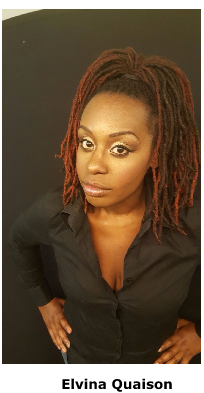
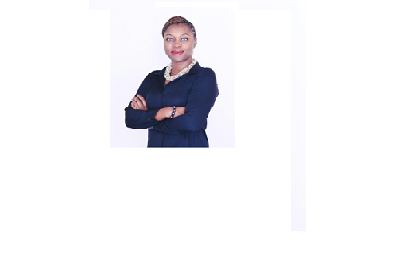
“What’s a vision without action, purpose and implementation?” asks blogger Elvina Quaison.
There are so many topics and situations that arise that you just want to talk about. There are questions to be asked and thoughts to be shared. A space to learn and gain clarity as well as get that frustration off your chest (in a respectful manner) and hear what others think and feel about the same subject.
Let’s talk.
I have worked for charitable organisations for most of my life, with only the odd period spent in the private sector. My experience has shown me that while a vision is a good and often necessary start, it is never enough on its own.
Our current global situation provides a good example of this. Many of us have a vision of living in a peaceful, happy, loving world. Post-gender, post-racial, post-so many other isms that we would all live in accepting and respectful harmony and our theme tune would be What a Wonderful World. However…a vision is not enough.
My various social media timelines - and now creeping into my WhatsApp - are bursting with news and information about events that undermine, brutalise, marginalise and reduce the black/African experience to one of second class or even sub-human status. This tenuous justification for the barbaric and inhumane treatment of black people receives little or no comeback from the media, society watch dogs and vast sections of the population. Indeed, in many cases, the victim becomes the one at fault.
In February 2017 a young African male in Paris was brutalized and assaulted by police in Paris, France. The assault included a policeman sexually assaulting the young man with a truncheon, leaving the victim hospitalized with severe internal damage. I was shocked and disgusted to read that the official investigator concluded that the assault was an accident and should not be classed as rape, which had been the initial conclusion.
Many of us have a vision of living in a peaceful, happy, loving world…in accepting and respectful harmony and where our theme tune would be What a Wonderful World. However…a vision is not enough.
According to my French African colleagues, this type of harassment and abuse by police of black and brown people in Paris, particularly young men, is not new. This young man was not a threat; he was a youth worker who had actually stepped in to defend another young man who was being harassed, until the police turned on him, perhaps incensed that he should feel able to question them.
At this stage, shouting racism at me isn’t enough; there is something deep-rooted and malevolent in the minds of those who won’t acknowledge and denounce this behaviour, no matter the race of the people involved. Yet it happens. We see it in media representation, we see it in political responses, and we see it in general conversation where a white perpetrator is portrayed as mentally ill and a black perpetrator as evil. Or where a black victim is only recognised as a victim when no shred of any negativity in their past can be found to discredit their character and raise questions regarding their true victimhood.
I recently watched Ava DuVarney’s brilliant documentary, 13th, an insightful look into America’s prison system or rather industry. It was both troubling and frustrating, and again raised questions about the perception of the black body, the white response to this, and how this should be treated.
It is easy for us in the UK to look with a (unfortunately) false sense of superiority across the Atlantic and shake our heads at the treatment of black bodies. Yet while statistics of America’s population in 2014 showed black people made up 12-13% it was found 35% of America’s 2.2 million male jail population are black. The UK statistics also raise cause for concern. Out of the British national prison population, 10% are black, which is significantly higher than the 2.8% of the general UK population they represent.
A surface reading - and one media outlet - seem to position criminal proclivity in black people as somehow inherent. Yet what documentaries like DuVarney’s 13th and George Amponsah’s Hard Stop show is that this disproportionate response is neither biological nor accidental, but rather a systematic and institutional response to black people.
My work in the humanitarian sector is seeing a shift in focus to migration, return and reintegration. Here again, we are seeing the criminalisation of those seeking refuge, security and a better life; a liveable life with opportunities that are not present in their home countries due to circumstances far beyond their control.
The same countries that reject, demonise and criminalise these groups are the same countries that perpetuate, profit and benefit from the wars people are running from, or the economic devastation their countries are experiencing through the restrictive loans, trade agreements and trade blocks, leaving them destitute and desperate.
Yet these integral influencing forces are side-lined to focus instead on making the victims the ones at fault. It has been hard going over the past few years; it has been like a bombardment of messaging, imagery and actions to batter the psyche of black people everywhere whether they consciously know it or not. Each image, be it a shooting in America, blown up bodies in Kenya, strewn bodies in a bus accident or bloated bodies from floods in Ghana, or images of knife crime victims in the UK. It is relentless, soul-destroying and traumatic.
So, having a vision is not enough, it needs to be accompanied by action, purpose and implementation. It needs people of all races, colours and creeds to stand up against what is wrong. It takes me choosing to move from talking about change and planning change to making change happen step by step, action by action. What is your vision?
Africans in the diaspora are in a positon to make meaningful things happen; I know because I have seen it, and assisted in the making of it. Chukwu-Emeka Chikezie, the co-founder of the African Foundation for Development (AFFORD), the organisation I work for, will be speaking about the transition from vision to action and the role of diaspora over the next 20 years at a forthcoming event. Chikezie was awarded a Gold Star in Sierra Leone for his services in the response to the Ebola outbreak and recently received an MBE in the UK for his services to the African diaspora. His work has been ongoing for over 20 years and illustrates taking a vision of seeing diaspora being meaningfully recognised as agents of development change and progression, and then dedicating time, energy and resources to make it come to life.
Nana Oforiatta-Ayim has turned her vision for an encyclopaedia of African art, traditional and modern, into reality by opening a vibrant gallery in Ghana. This vision will have an impact on people’s knowledge, perceptions and pride in the skill and creativity to be found on the continent and will inspire many to emulate Nana’s vision.
There are many others who use their talents in film, engineering, advocacy, law and other skills, and the knowledge, passion and abilities they have at their disposal to bring their vision to life. While the journey is rarely easy, smooth or fast, or the outcome always completely satisfactory, it can also rocket beyond your own imagination. Whatever the case, action is necessary if we want to see and live in a world where we can all prosper, breathe easy and just ‘be’.
Then, perhaps, a vision can be enough.
You can tweet me @ElvinaQuaison and share your thoughts with me. In the meantime, Happy Ghana Independence Day and let’s see how we can work together to make our nation great and strong!
Stay in touch and let’s talk! Stay in touch and let’s talk!Blog: https://elvinaquaison.wordpress.com/
Twitter: @ElvinaQuaison